Dar calls for AU reforms
ACCRA: TANZANIA has called for reforms to strengthen the African Union (AU)’s institutional efficiency, accountability and financial sustainability, stressing the need to ensure that resources allocated to the continental body deliver tangible benefits to African citizens.
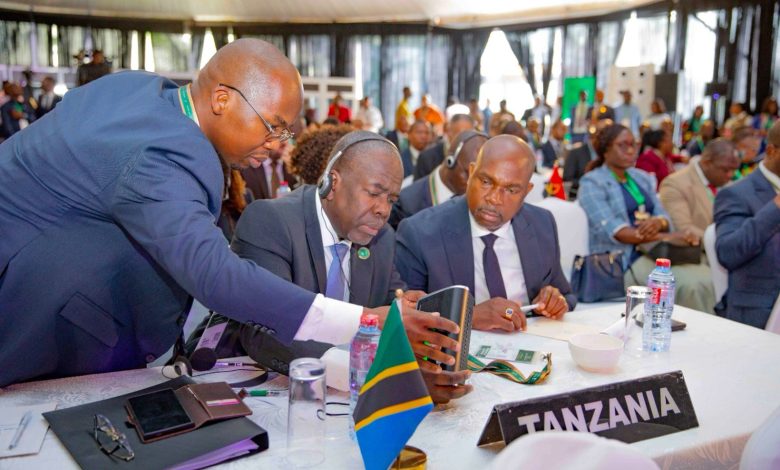
The call was made by Minister for Finance, Ambassador Khamis Mussa Omar, during the 27th Extraordinary Session of the Executive Council of the African Union, dedicated to financing the Union, held on Friday in Accra, Ghana.
The session brought together ministers for foreign affairs and finance from AU member states, senior leadership of the African Union Commission (AUC), representatives of AU organs, Regional Economic Communities (RECs) and international partners to deliberate on strategic measures to secure the Union’s financial sustainability and institutional effectiveness.
The meeting came at a critical stage in the implementation of the AU’s institutional and financial reforms, as the continent seeks to translate its commitment to financial self-reliance into tangible and sustainable outcomes.
Ambassador Omar said increasing financial contributions to the continental body should go hand in hand with addressing institutional efficiency and accountability.”
Before considering increasing resources allocated to the African Union, it is important to assess its structure, responsibilities and efficiency, including those of its institutions, to ensure that contributions from Member States deliver tangible benefits to citizens,” he said.
He said strengthening the AU’s financial capacity should go hand in hand with institutional efficiency and accountability to ensure that available resources are used effectively to advance the interests of African citizens.
He further stressed that measures to strengthen financing for the AU budget should take into account citizens’ welfare and their potential economic implications.
Addressing the Executive Council, AUC Chairperson Mahmoud Youssouf stressed that financing the Union was a fundamental prerequisite for advancing Africa’s collective aspirations under Agenda 2063.
“Financing the African Union is not an end in itself, it is an investment in Africa’s collective determination to realise Agenda 2063, accelerate economic integration, strengthen continental security and secure Africa’s rightful place in the world,” he said.
Highlighting the evolving geopolitical and economic environment, including multiple crises and the declining availability of external financing, Mr Youssouf called for a decisive shift towards greater African ownership, responsibility and self-reliance.
He said the continent must progressively assume greater responsibility for financing its priorities and addressing the challenges confronting it.
In this regard, Mr Youssouf proposed reviewing the existing ceiling on statutory contributions and progressively expanding implementation of the 0.2 per cent levy on eligible imports as a predictable mechanism for mobilising domestic resources.
On the AU Peace Fund, he called for consideration of controlled annual utilisation of its capital to support responses to emerging crises, complemented by an appropriate replenishment mechanism to safeguard its longterm sustainability.
He also proposed establishing a Pact for a More Effective and Results-Oriented African Union (2027–2029), founded on the principle of mutual accountability between member states and the Union.
“Under this proposed framework, enhanced and more equitable financial contributions by Member States would be accompanied by institutional rationalisation, greater expenditure discipline, improved operational efficiency and measurable programme results,” he said.
He further called for concrete institutional reforms and cost-containment measures to ensure that the Union’s resources are directed towards its strategic priorities.
He stressed the importance of translating the principle of African sovereignty into practical institutional and financial arrangements. “African sovereignty must not merely be proclaimed, it must be built, organised and financed,” he said.
During its closed sessions, the Executive Council considered a range of strategic working documents and presentations relating to the financing of the Union.
These included the Report of the High Representative on Financing the Union and the AU Peace Fund, the proposed strategic partnership between the African Union and African Multilateral Financial Institutions, as well as presentations by the President and Chairman of the Board of Directors of the African Export-Import Bank (Afreximbank) and the President of the African Development Bank Group.
The deliberations are expected to contribute to shaping a more sustainable, predictable and African-owned financing framework, while advancing the institutional reforms necessary to strengthen the African Union’s capacity to deliver on its continental mandate and the aspirations of Agenda 2063.