Tanzania seeks innovative financing to restore 5.2 million hectares
DAR ES SALAAM: FOR communities depending on forests, farmland and other natural resources for their livelihoods, restoring degraded landscapes offers an opportunity to improve agricultural productivity, protect the environment and create new economic opportunities.
However, turning this opportunity into reality requires more than planting trees and rehabilitating degraded land. It also demands substantial financial investment, access to appropriate financing mechanisms and the capacity of local communities to manage restoration initiatives as viable economic ventures.
This is the challenge Tanzania is seeking to address as it moves to mobilise resources towards its commitment to restore 5.2 million hectares of degraded and deforested land by 2030 under the African Forest Landscape Restoration Initiative (AFR100).
To advance the agenda, the Food and Agriculture Organisation of the United Nations (FAO), through the AFR100 Supporting Programme, has convened stakeholders to validate a roadmap aimed at improving access to restoration financing and attracting investment into landscape restoration activities.
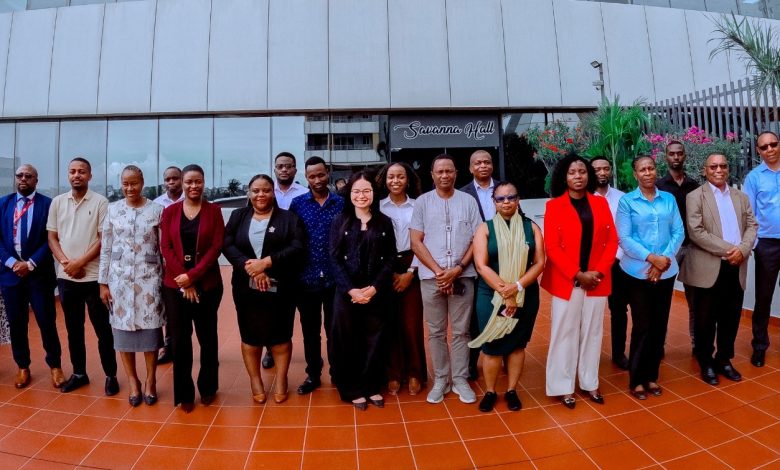
The meeting brings together government representatives, financial institutions, producer organisations, communities and development partners to review capacity gaps, blended finance mechanisms and proposed strategies for scaling up restoration investments across the country.
Opening the stakeholder validation workshop, a representative of the Ministry of Natural Resources and Tourism, Mr Shabil Mzee, said the proposed documents were important in connecting the country’s restoration ambitions with practical financing opportunities.
He said communities and enterprises involved in restoration activities needed adequate capacity to develop viable business proposals and access available financial resources.
“These documents should help connect restoration priorities with workable financial pathways. Capacity development is equally important in enabling communities and enterprises to prepare viable investments and participate meaningfully in restoration financing opportunities,” he said.
The need for innovative financing comes amid challenges that have continued to limit investment in landscape restoration, particularly the long periods required for projects to generate returns, exposure to climate and market risks and limited access to conventional financial services among local communities.
According to assessments presented at the workshop, Forest and Farm Producer Organisations (FFPOs) and other community-based groups require additional support in business planning, financial literacy, governance, digital skills, innovation and market access to become attractive to investors.
Financial institutions also face challenges in assessing restoration-based business models, integrating climate risks into lending decisions, monitoring green investments and developing financial products that respond to the needs of nature-based enterprises.
FAO Project Coordinator, Mr Geoffrey Bakanga, said the validation process was an important step towards translating Tanzania’s restoration commitments into investments capable of delivering benefits to communities and the environment.
“Through this process, we are laying the foundation for mobilising the financial resources required to support Tanzania’s restoration commitments under AFR100. By strengthening capacities and creating enabling financing mechanisms, we can help ensure restoration delivers sustainable livelihoods, economic opportunities and environmental benefits,” he said.
To address the financing challenges, the proposed framework recommends blended finance, an approach that combines public and private resources to reduce investment risks and attract more capital into restoration activities.
The proposed instruments include green credit lines, guarantee facilities, matching grants, results-based financing mechanisms and community revolving funds.
Such mechanisms are expected to create opportunities for restoration enterprises and community organisations that may struggle to secure financing through conventional lending arrangements.
The workshop also reviewed a proposed 2026-2030 roadmap outlining strategic priorities, implementation actions, partnerships and monitoring indicators required to expand restoration financing nationwide.
The roadmap seeks to establish a coordinated approach through which government institutions, financial service providers, producer organisations and development partners can contribute towards mobilising resources and supporting restoration investments.
Participants are expected to validate recommendations, identify priority capacity-building requirements, refine the proposed blended finance options and strengthen the roadmap to guide future investments and partnerships.
Tanzania’s 5.2 million-hectare restoration commitment under AFR100 represents an opportunity to combine environmental conservation with economic development, particularly in rural communities whose livelihoods depend heavily on land and natural resources.
However, achieving the target will require sustained investment and stronger collaboration among stakeholders to ensure that restoration initiatives are not only environmentally beneficial but also financially viable.
ALSO READ: Tanzania’s green industrialisation drive seeks to turn climate ambition into opportunity
With the proposed financing roadmap covering the period to 2030, stakeholders are seeking to establish mechanisms that enable communities and enterprises to participate more effectively in restoration while attracting private capital into the sector.
The success of the initiative will therefore depend on how effectively the proposed financing solutions translate into accessible resources for those implementing restoration activities on the ground.