Why Tanzania–Angola railway link could boost agricultural trade
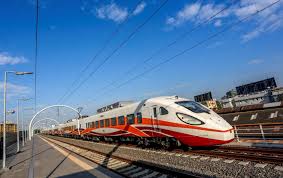
TANZANIA: ON Thursday 30th October 2026, local and international media were awash with news of Tanzania and Angola’s agreement to connect their Indian and Atlantic Ocean transport corridors with a railway link through Zambia and the Democratic Republic of Congo.
This was declared by Tanzania’s President Dr Samia Suluhu Hassan as she was welcoming her counterpart, President João Lourenço of Angola, during his visit to the East African nation.
On the same occasion, Angola welcomed Tanzania to invest in the Lobito oil refinery set to be built, with reports saying that the Tanzania Petroleum Development Corporation (TPDC) is assessing the viability of the partnership.
When this comes into fruition, the world will observe a rare linkage between Dar es Salaam port on the East and Angola’s Lobito port on the Western side of Africa, with TAZARA (the railway that links Tanzania and Zambia) connecting with Angola’s Lobito Railway Corridor.
Once this project materialises, it will certainly bring a lot of transformation in the agricultural sector, in Tanzania and at the continental level at large, than what many can imagine.
The African Union has come up with the African Continental Free Trade Area (AfCFTA) that is envisaged to convert the existing 1.5 billion people into a single market.
But for years it has been said that the absence of infrastructure has been one of the top bottlenecks hindering the realisation of this dream.
The absence of proper infrastructure has made inter-trade impossible or too costly to undertake, making it easier and cheaper for a trader in Tanzania to send a container of Light Speckled Kidney Beans to the United Arab Emirates, which is nearly 4,000 kilometres away, than sending the same amount of product to Botswana that is just less than 2,500 kilometres away.
If there is any winner in this, then Tanzania stands to benefit more than Angola as far as agricultural trade is concerned. Tanzania enjoys higher production rates of food products needed by Angola than the other way around. Tanzania produces about 12 million tonnes of maize and 3 million tonnes of rice.
These are some of the food crops that Angola is widely consuming. Whereas Angola produces an estimated 3 million tonnes of maize, with a deficit of 350,000 tonnes annually that is covered by importing from other countries.
ALSO READ: Tanzania–Angola corridor holds promise for African trade
Rice is also an important crop to Angolans as it produces between 40,000 and 51,000 tonnes per year; nevertheless, thanks to huge rice consumption and low production, Angola faces a deficit of 500,000 tonnes per annum.
With annual production staggering around 1.5 million tonnes, Tanzania is Africa’s top producer of common beans. However, in many cases African nations with low production and high consumption have been importing from outside the continent thanks to less friendly infrastructure.
Currently, Angola imports most of its maize from Argentina, and rice from India and Thailand. Asia, South America, Europe and the United States of America are some of the places that supply Angola with food products that Tanzania significantly produces.
With this new railway connection, Tanzanian pulses farmers can start warming to the new market. Now all these can be some of the important commodities that can exchange routes between these two African nations.
While both of these countries are categorised as lowermiddle-income countries, Angola has higher spending power than Tanzania. Angola’s nominal GDP (at 157 billion US dollars) is 60 per cent higher than Tanzania’s (which is at 96 billion US dollars).
Angola’s GDP per capita (which is estimated to be at 3,900 US dollars) is three times higher than Tanzania’s (estimated to be at 1,300 US dollars). Angola’s oil-driven economy is powering her higher spending power than Tanzania’s, and that speaks volumes on the attractiveness of the market itself.
This factor, coupled with the comparative advantage that these countries have, spurs economic collaboration between them. The significance of this project calls for all those who are implementing it to start now and do it quickly.