Govt pushes modern printing plant to unlock C’s growth potential
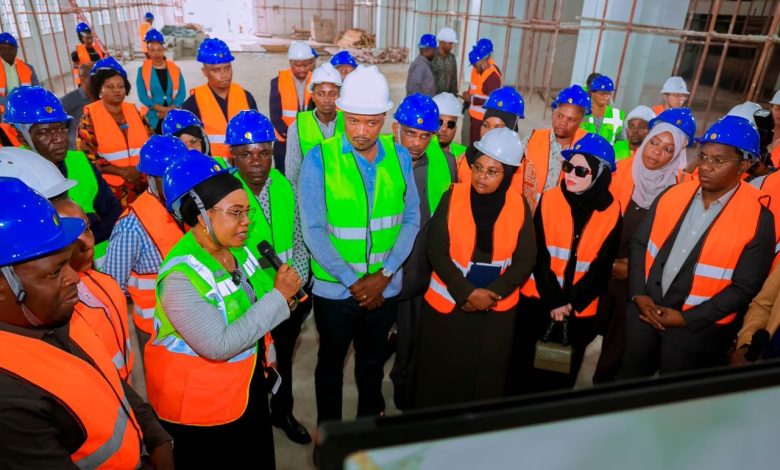
DAR ES SALAAM: AS President Dr Samia Suluhu Hassan marks one year since she was sworn in for her current term, Tanzania Standard (Newspapers) Limited (TSN) is approaching a milestone that could redefine its future, with a 33bn/- modern printing plant nearing completion and promising to turn the state-owned media company into a major commercial printing centre.
The investment is expected to take TSN beyond its traditional newspaper printing business, giving it the capacity to produce books, magazines, journals and other publications for institutions, while creating additional revenue streams and strengthening its financial sustainability.
For a company whose core responsibility includes publishing and printing newspapers, focused on disseminating government and public information, the development represents an important shift in its business ambitions.
TSN is tasked to bridging the gap between the government and citizens by effectively communicating government policies, programmes, plans and other public-interest information.
It also focused on promoting national interests through reporting on key events and facilitating constructive public discourse that advances, protects and promotes the interests of the country.
Rather than relying primarily on its existing publishing operations and digital platforms, TSN is positioning itself to become a major player in the commercial printing market.
The transformation is being driven through Project No 6505, which involves expanding the factory building and procuring, installing and commissioning modern printing machinery at a total cost of 33bn/-.
Launched in 2023, the project was part of the Third Five Year National Development Plan (FYDP III), covering the 2021/22 to 2025/26 financial years.
The plan identified the installation of a new printing facility and improvement of TSN’s products and services as key interventions in the information, sports and creative arts sector.
Presenting the Ministry of Information, Culture, Arts and Sports revenue and expenditure estimates for the 2026/27 financial year in the National Assembly, docket Minister Paul Makonda, assured the House that its completion is approaching.
Mr Makonda said the investment is expected to increase efficiency, improve the quality of printing services in the country and strengthen TSN’s capacity to undertake printing activities.
“The project will enhance the company’s ability to deliver printing services while creating opportunities to expand its operations and improve its commercial performance,” he said.
Speaking with Daily News on behalf of the Acting Director General, TSN Manager of Digital News Services, Mr Sylvester Domasa, said the company has been among the beneficiaries of the government development drive during President Samia’s first year in her current term.
“During this period, we have witnessed the President’s efforts as a champion of development for Tanzanians and a champion of finding solutions to the challenges facing our country,” he said.
He added, “As TSN, we have been major beneficiaries of the government’s efforts, most importantly through the construction of Project No 6505.”
ALSO READ: ‘TSN Forum enhances Dira 2050’
Mr Domasa said the new facility will give TSN an opportunity to serve a wider market by printing publications for other institutions, an undertaking expected to increase the company’s income.
“We are moving towards having our own modern factory that will print not only TSN newspapers but also publications for other institutions that need the service. This will increase our income,” he said.
Mr Domasa said the facility is also expected to reduce operational risks associated with relying on external printing service providers, particularly given TSN’s responsibility to ensure government information reaches citizens accurately and on time.
“We are the company responsible for printing government information for citizens, and we have a duty to ensure that accurate information reaches wananchi,” he said.
The progress made so far reflects the pace at which the project has advanced during the period, bringing TSN closer to realising its ambition of owning a modern printing facility.
Speaking to the Daily News, TSN Printing Services Manager and project coordinator, Mr Selemani Mwaitenga, said that by October 2026, expansion of the factory building had reached 90.47 per cent completion, while procurement of printing machinery stood at 85.20 per cent.
TSN Planning Officer, Mr Daudi Mwaipopo, said that when President Samia began her second term, construction of the building had reached 45 per cent, while procurement of machinery stood at 70 per cent.
“At that time, we had reached 45 per cent on the building and 70 per cent on the procurement of machinery,” he said.
He explained that government funding of 9bn/- during the 2025/26 financial year had accelerated implementation, pushing building completion from 45 per cent to approximately 90.7 per cent, while machinery procurement advanced from 70 per cent to 85 per cent.
Approximately 6.2bn/- of the allocation was spent on completing the second and third floors, finishing and decoration works, epoxy flooring and service infrastructure, including water, sewage and electrical systems, as well as the powerhouse and generator areas.
“The remaining amount covered the importation and clearing of machinery at the port,” he said.
Mr Mwaipopo commended the government under President Samia for increasing development funding, saying the allocations has enabled TSN to accelerate implementation of the project.
As construction activities are moving towards the final stages.
Mr Domasa said the contractor is preparing designated areas for installing the printing machinery, particularly the large newspaper printing press, while completing water tanks, sewage infrastructure and landscaping.
Beyond the printing plant, TSN has also completed the installation of a digital studio at Samora, with initial broadcasts already underway through the Digital News Services Department.
The two investments reflect the company’s efforts to modernise its operations, diversify its services and strengthen its position in an increasingly competitive media environment.
As President Samia marks one year in her current term, the progress at TSN demonstrates how government investment is helping the company build the capacity to pursue greater commercial independence.
Once the printing plant becomes fully operational, TSN will have an opportunity to attract more institutional clients, increase its revenue and reduce dependence on external printing service providers.
For the company, the anticipated commissioning of the facility will therefore represent more than the completion of a construction project.
It will mark the beginning of a new business chapter in which its printing capacity could become a major driver of commercial growth.