Samia charts path towards peace, national unity
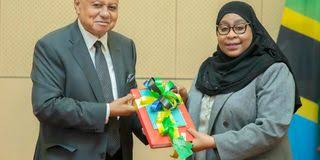
TANZANIA: AS Tanzania marks one year since President Dr Samia Suluhu Hassan was sworn in for her current term on November 3, 2025, attention turns to a period shaped by significant national challenges, difficult decisions and efforts to safeguard the country’s unity and stability.
When President Samia took the oath of office, the country was emerging from one of the most difficult electoral periods in its history, marked by painful events that tested its democratic institutions and longstanding commitment to peace and stability.
The events of October 29, 2025 and the violence that followed left scars and addressing the aftermath has, therefore, required more than restoring calm. It has called for establishing the truth, identifying those responsible, supporting victims and creating avenues for national reconciliation.
One of the administration’s major steps towards addressing the crisis was the establishment of a nine-member Commission of Inquiry chaired by retired Chief Justice Mohamed Chande Othman to investigate the causes, circumstances and consequences of the violence.
The commission began its work on November 20, 2025, and spent 153 days collecting evidence across the country. It visited 202 locations in 21 districts across 11 regions, interviewed 1,323 victims and received thousands of written submissions and digital communications.
Its findings, presented to President Samia on April 23, 2026, exposed the extent of the human cost, establishing that 518 people had died and 2,390 others sustained injuries during the unrest. Among those who lost their lives were 21 children, while 197 people died from gunshot wounds.
Presenting the findings, Justice Chande said the commission had gathered reasonable evidence suggesting that the incidents were planned, coordinated, sponsored and executed by organised groups.
“Some young people were motivated by grievances over unemployment and other socioeconomic challenges, while others were drawn into the violence through financial promises,” he said.
The findings provided an important basis for understanding the crisis and identifying measures needed to prevent similar incidents in the future. More importantly, the commission’s work brought the human consequences of the violence into the national conversation, reinforcing the need to address the experiences of affected families and restore confidence in public institutions.
Receiving the report, President Samia acknowledged the seriousness of the events and the responsibility they placed on her leadership.
“I want to admit that I did not expect this situation to occur during my leadership. This matter has placed a heavy burden on my shoulders,” she said.
She stressed that the country could not move forward without confronting the truth about what happened, warning that peace, once lost, was difficult to restore.
“It is easy to lose peace but not easy to restore it. It is easy to destroy a country but difficult to rebuild it,” she said.
Her remarks underscored the importance of addressing the crisis through accountability, dialogue and reforms rather than treating the return of normalcy as the end of the matter. A major part of the government’s response has been the pursuit of further investigations into those responsible for the violence.
Following the recommendations of the Othman Commission, President Samia directed security organs to investigate individuals involved in planning, financing, coordinating and executing the incidents.
The government subsequently established a special Criminal Commission of Inquiry into violence and violations of the law during and after the October 2025 General Election. President Samia announced its formation on May 18, 2026, before officially inaugurating it at State House in Dar es Salaam on August 7, 2026.
The commission, chaired by retired Court of Appeal Justice Shaban Ali Lila, is tasked with investigating the incidents and identifying those responsible for the violence. During its inauguration, Dr Samia called on Tanzanians and institutions to cooperate with the commission by providing relevant information and evidence.
ALSO READ: No growth without peace, unity
“The effectiveness of this commission will depend on public cooperation and urged citizens not to obstruct or interfere with its work,” she said.
The commission has since begun collecting evidence, including completing its investigations in Dar es Salaam Region after visiting all districts and holding meetings with residents. Justice Lila said the commission was examining evidence in line with its terms of reference, particularly identifying those who planned, financed, coordinated and carried out the violence.
Last Month the commission announced that it has completed evidence collection in Dar es Salaam Region after visiting every district and holding meetings with residents.
Justice Lila said the commission has now begun gathering information to enable it to fulfil its assigned terms of reference, starting with the first, which focuses on identifying those who planned, financed, coordinated and carried out acts of violence during the October 2025 General Election.
“The commission has received evidence relating to various incidents during this stage of its inquiry,” he said.
Lila said the commission will continue to hear from members of the public with relevant evidence and receive supporting materials from individuals and various institutions, including both public and private organisations, to assist its investigations.
The initiative represents another step towards addressing questions surrounding the violence, with its credibility and findings expected to be important in determining public confidence in the accountability process. Beyond investigations, the administration has recognised the need to address the suffering of people directly affected by the unrest.
The Othman Commission recommended mechanisms to ensure that injured victims receive free medical treatment, rehabilitation services and assistive devices, including prosthetic limbs for those who sustained permanent disabilities.
President Samia accepted the recommendation and pledged government support for affected people, noting that assistance should extend beyond immediate medical treatment to help victims manage their daily lives. She also acknowledged the economic consequences of the violence, particularly for smallscale traders whose businesses were affected.
“We will also look at small traders who cannot afford major insurance and assess the losses they suffered and the support we can provide,” she said.
These interventions are important because national healing cannot be separated from the welfare of those who suffered physical and economic losses.
The commission also recommended designating a special National Day of Mourning in honour of the more than 500 people who died during the unrest. The proposal is intended to recognise the loss of life, honour victims and provide an opportunity for national reflection.
Perhaps the most significant long-term measure proposed in the government’s response is the establishment of a National Reconciliation Commission. The Othman Commission recommended the creation of the body under Article 36 of the Constitution of the United Republic of Tanzania of 1977 to lead efforts aimed at healing divisions, identifying lasting solutions to conflicts and restoring national cohesion.
President Samia accepted the recommendation and announced plans to establish the commission, bringing together key stakeholders to lead dialogue and reconciliation.
“In the near future, we will establish a reconciliation commission. However, we will first conduct a thorough investigation into the issues identified by the Commission, as advised,” she said.
She explained that the body would involve important stakeholders in discussions aimed at bridging divisions and rebuilding national unity. The inquiry also recommended establishing a Council of Elders and Advisers comprising retired senior leaders and respected community figures to provide guidance to the proposed reconciliation commission.
Such a council would draw on the experience of former national leaders and other respected personalities in supporting dialogue and finding solutions to disagreements. Alongside reconciliation, constitutional and electoral reforms have emerged as important components of efforts to prevent a recurrence of electionrelated violence.
The Othman Commission recommended establishing a committee of constitutional experts to review the existing Constitution, the 2014 Proposed Constitution and other reports from previous reform initiatives. It also proposed gathering fresh public opinions, noting that approximately 16 million Tanzanians did not participate in the 2014 constitutional process.
The commission proposed completing a new Constitution by 2028, ahead of the next local government and general elections, as part of efforts to strengthen democratic institutions and create a more credible electoral framework.
It further recommended full implementation of the Independent National Electoral Commission law, including provisions relating to the appointment of its chairperson and members and the recruitment of its own staff down to constituency level.
The commission also identified youth engagement as an important element of national reconciliation. It recommended full implementation of the National Youth Council Act to provide young people with a formal platform for dialogue and addressing challenges affecting them.
It also proposed reinstating compulsory National Service training for students completing advanced secondary education, with the aim of promoting patriotism, discipline and selfreliance. The initiatives show President Samia’s commitment to safeguarding peace and national stability as she pledged to maintaining peace, stability and security as outlined in the CCM 2025–2030 Election Manifesto.