Scholarships must deliver more than degrees as Kairuki challenges beneficiaries to drive national development
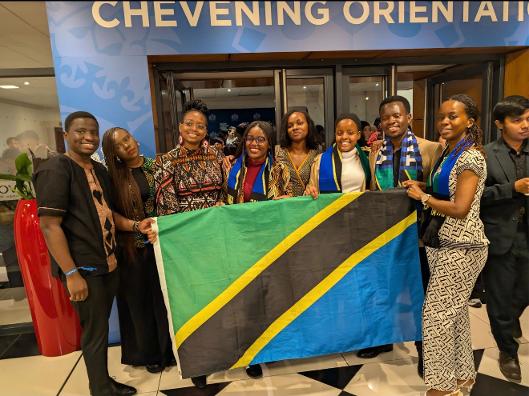
UK: International scholarships should be measured not only by the academic qualifications recipients acquire but also by the practical solutions they develop to improve lives and address challenges in their home countries, Tanzania’s High Commissioner to the United Kingdom, Ambassador Mbelwa Kairuki, has said.
He challenged Chevening scholars to transform their academic experiences, international networks and newly acquired knowledge into tangible contributions to national development, emphasising that the ultimate value of international education lies in its ability to benefit communities beyond individual career advancement.
Kairuki made the call while leading a session on “Promoting Growth and Prosperity” during the Chevening Orientation held in London on October 24, which brought together 700 scholars from 180 countries.
Drawing from his own experience as a former Chevening scholar who studied in the United Kingdom 17 years ago, the diplomat told participants that the relationships, professional exposure and knowledge gained during their academic journeys could have a lasting influence on their careers and the development of their respective countries.
He urged the new cohort to look beyond obtaining academic qualifications and consider how their education could address pressing challenges facing their societies when they eventually return home.
“Could the opportunity here make a difference for people at home?” he challenged the scholars, encouraging them to identify real problems within their communities and develop practical proposals capable of addressing them.
His message placed particular emphasis on bridging the gap between educational opportunities and their application to economic and social development, especially in countries where young people, entrepreneurs and other productive groups continue to face significant challenges.
Turning international engagements into development outcomes
Beyond the classroom, Kairuki highlighted the importance of translating diplomatic engagements and international relationships into concrete economic opportunities.
He cited the recent visit to London by Tanzania’s Prime Minister, Mwigulu Nchemba, which involved engagements with investors, financial institutions and development partners aimed at advancing the country’s development priorities.
According to the High Commissioner, discussions with institutions such as UK Export Finance were intended to strengthen investment opportunities and improve access to financing for businesses and development projects in Tanzania.
However, he cautioned that establishing contacts and holding discussions were only the initial stages of securing meaningful partnerships.
He stressed that such engagements must be followed by well-prepared projects, clear commitments and consistent follow-up to ensure that opportunities identified during international meetings translate into measurable development results.
The same principle, he advised, should guide the scholars throughout their academic experience.
Opportunities to interact with researchers, investors, development practitioners and other professionals should not end with exchanging contacts. Instead, scholars should pursue promising introductions, develop viable proposals and demonstrate commitment by turning discussions into practical initiatives.
Bridging economic potential and employment opportunities
Kairuki also drew attention to the persistent disconnect between Africa’s economic potential and the opportunities available to ordinary citizens, particularly young graduates, farmers and entrepreneurs.
Although the continent has considerable human and natural resources, many people continue to struggle to secure meaningful employment, access markets and obtain financing to establish or expand businesses.
He cited estimates indicating that approximately 12 million young Africans enter the labour market annually, while only about three million formal jobs are created.
The figures, he argued, underline the need for economic growth strategies that deliver wider benefits through employment creation, increased productivity and improved household incomes.
In this context, he encouraged the scholars to consider how their academic knowledge and professional networks could contribute to addressing structural economic challenges rather than remaining focused exclusively on individual advancement.
Using Tanzania as an example, Kairuki referred to discussions with representatives of the Tanzania Agricultural Development Bank in London concerning financing agricultural businesses and connecting viable projects with potential investors.
Agriculture remains an important sector for livelihoods and economic activity, making access to finance, technology and markets essential to improving productivity and expanding opportunities for farmers and agricultural entrepreneurs.
He encouraged the scholars to recognise such opportunities and explore ways of connecting knowledge, financing and innovation to practical development needs.
Technology offers solutions to everyday challenges
To illustrate how locally relevant innovation could address development challenges, Kairuki highlighted two technology-driven initiatives developed by Tanzanians.
The first was Spanner, an artificial intelligence-powered application developed by Tanzanian entrepreneur Julius Mongo to support local vehicle mechanics.
The application helps mechanics access technical information, identify vehicle faults and obtain repair guidance, particularly as modern vehicles become increasingly sophisticated and require specialised technical knowledge.
By improving access to relevant information, the technology demonstrates how digital innovation can strengthen the capabilities of local technicians and help them respond to changing demands in the automotive industry.
The second initiative was Nuru, a smartphone application that uses artificial intelligence to identify cassava diseases and pest damage.
Tested in Tanzania, the application operates without an internet connection and provides information in Kiswahili, enabling farmers and agricultural extension officers to identify crop problems and respond at an earlier stage.
Its offline functionality and use of a familiar local language make it particularly relevant to communities where internet connectivity and access to specialised agricultural information may be limited.
Kairuki said the initiatives demonstrated why innovation should be developed around the actual circumstances, available resources and languages of the communities it intends to serve.
He encouraged the scholars to adopt a similar approach by using their education and international exposure to develop solutions that respond to local needs rather than simply importing ideas without considering their suitability.
International networks can unlock investment
The High Commissioner also underscored the long-term value of building meaningful international relationships, drawing on his personal experience to demonstrate how professional friendships established during his Chevening studies had subsequently contributed to Tanzania’s interests.
He recalled how a former university colleague helped facilitate engagement with a multinational company, eventually contributing to an investment in Tanzania that created employment for more than 500 Tanzanians.
The experience, he said, demonstrated that relationships developed during international academic programmes could generate opportunities long after graduation.
He therefore encouraged scholars to build networks beyond their national communities, embrace different cultures and maintain professional relationships with people they encounter during their studies.
Such connections, when nurtured through mutual trust and continued engagement, can facilitate collaboration, knowledge exchange, investment and other opportunities that benefit their home countries.
He also encouraged the scholars to extend the benefits of their experiences to future applicants by sharing information, mentoring young people and helping prospective candidates navigate the Chevening application process.
A 90-day challenge for every scholar
Moving from inspiration to practical action, Kairuki presented the scholars with a specific challenge intended to ensure that their international academic experience produces identifiable results.
He asked each participant to identify one problem they could address after returning home, establish an institution or partnerships through which to pursue a solution, and set achievable results to be delivered within the first 90 days.
The challenge was intended to encourage scholars to approach national development as an active responsibility rather than an abstract aspiration.
By identifying a specific problem, mobilising relevant partners and setting measurable targets, beneficiaries could begin translating their academic knowledge and international exposure into practical interventions.
Kairuki also expressed appreciation to the UK Government, university partners and other institutions supporting the Chevening programme, describing scholarships as investments in individuals whose benefits should extend beyond recipients to their families, communities and entire countries.
Reflecting on his own journey, he said the Chevening experience had helped shape his career in public service, which has included various government positions, diplomatic assignments across Asia and his current responsibility as Tanzania’s High Commissioner to the United Kingdom.
He wished the new cohort a rewarding academic year, urging them to maximise the opportunities available and ensure that their achievements extend beyond personal success.
By and large, his message was that international education carries a responsibility to contribute to society. For the 700 scholars embarking on their academic journeys, the challenge is not simply to return home with qualifications, but to transform knowledge, relationships and exposure into practical opportunities that improve people’s lives and advance development in their respective countries.