Social security for all puts people at centre of development
TANZANIA: TANZANIA’S ambition to build an inclusive, prosperous and self-reliant society by 2050 is placing social security at the centre of its long-term development agenda, with efforts underway to extend protection beyond formal employment to millions of people earning livelihoods in the informal economy.
The Dira 2050 envisages a Tanzania in which citizens have access to stable, innovative and sustainable social security systems that provide income security and essential services at different stages of life.
The approach recognises a fundamental reality of the Tanzanian economy: social security cannot be built around formal employment alone when a large proportion of the population works outside conventional employeremployee arrangements.
Traders, farmers, small business owners, self-employed workers and others in the informal economy often earn irregular incomes, making fixed monthly contribution arrangements difficult to sustain.
Meanwhile, women, people with disabilities, older people, children and households facing extreme poverty may experience different forms of vulnerability that require appropriate protection and support.
Under Dira 2050, extending protection to these groups is not merely a welfare issue. It is part of a broader strategy to build an economy in which more Tanzanians can participate in and benefit from economic growth.
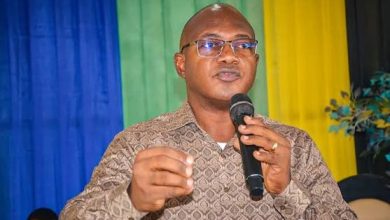
Minister of State in the Prime Minister’s Office responsible for Labour, Employment and Labour Relations, Deus Sangu, said the government was committed to establishing and strengthening an inclusive social security system that covers the informal sector.
“Through Vision 2050, the government is committed to establishing and strengthening an inclusive social security system that will include the informal sector,” Mr Sangu said.
He said broader coverage would help mobilise resources for development, expand social protection and support employment creation. Mr Sangu added that implementation of Dira 2050 began in July this year, with social security forming part of measures to promote inclusive economic growth and employment, particularly through the private sector.
The government expects private investment to play a major role in the first Five-Year Development Plan under Dira 2050, with private capital projected to account for 70 per cent of financing.
This ambition creates a direct link between social security and economic expansion. As more businesses emerge and more people enter productive employment and self-employment, social security institutions must reach a larger and more diverse contribution base.
Mr Sangu challenged the Workers Compensation Fund (WCF) to expand coverage among privatesector workers and invest strategically in areas that could support employment creation.
“We should look at the private sector as a link to economic growth. WCF should design and invest in strategic projects that will accelerate job creation so that the Fund can have more contributors and remain sustainable,” he said.
His remarks highlight a broader question facing Tanzania as it looks towards 2050: how can social security systems protect more people when many workers have neither a fixed employer nor a regular monthly income?
For the National Social Security Fund (NSSF), part of the answer lies in reforming contribution arrangements to accommodate the realities of informal-sector livelihoods.
NSSF Director General Masha Mshomba said the Fund had operated a social security scheme for the informal sector since 2018, but had since reformed the arrangement to make participation more practical for self-employed people.
Under the previous arrangement, members were required to make fixed monthly contributions. For people whose earnings fluctuate, this requirement could make sustained participation difficult.
The revised system allows members to contribute daily, weekly or monthly, depending on their financial capacity. “People can contribute daily, weekly or monthly, depending on their ability,” Mr Mshomba said.
The change is significant because incomes in the informal economy rarely follow predictable monthly patterns. A trader may record strong sales one week and struggle the next.
A farmer may earn most of the year’s income after harvesting, while a small business owner may experience fluctuations depending on customer demand and market conditions.
A contribution system that recognises these realities can make social security more accessible to people who might otherwise remain outside formal schemes.
Under the NSSF arrangement, members can make contributions for themselves, a spouse and up to four children, subject to applicable conditions. Contributions can also be backdated for up to 12 months, in accordance with the scheme’s requirements.
By July, Mr Mshomba said, membership under the scheme had reached 592,791. The scheme also provides medical benefits through contracted health facilities, adding a health component to the protection available to participating members.
However, expanding coverage is not simply about increasing membership figures. It also involves ensuring that people understand the purpose of social security and maintain protection throughout their working lives.
Mr Mshomba said some people leaving employment preferred to receive all their money at once, while the Fund continued to emphasise the importance of maintaining income security beyond employment.
That distinction goes to the heart of social security. Its purpose is not merely to provide money at a particular point in time, but to protect people against risks that can affect their ability to earn an income.
Old age is one such risk. Disability, workplace injuries and other circumstances can also reduce or end a person’s ability to work.
Without adequate protection, a sudden loss of income can affect not only an individual but also an entire household. Children may struggle to remain in school, families may be forced to sell productive assets, and households may cut spending on healthcare or nutrition.
An effective social security system can cushion people against such shocks and help preserve the human capital needed for long-term national development.
This makes social security closely connected to Vision 2050’s objective of developing people’s capabilities and improving social development. The connection also extends to investment. Social security funds mobilise members’ contributions and invest the resources to generate returns and meet future obligations.
When managed prudently, these investments can also stimulate economic activity by financing productive sectors and supporting employment. Mr Mshomba said NSSF expected its projects and activities during the new development-plan period to create more than 13,729 jobs.
The Fund also expects its value to reach 24.75tri/- by June 2031. These targets illustrate the dual role of social security institutions: protecting members while managing resources in ways that support long-term financial sustainability. The WCF provides another layer of protection.
Its Board of Trustees Chairperson, Renata Rugarabamu, said the Fund remained financially sustainable and continued to compensate workers who suffer workplace injuries or other qualifying occupational incidents.
For an injured worker, compensation can provide vital support when the ability to earn an income has been reduced. The Fund’s role therefore extends beyond financial management; it forms part of a wider system designed to protect workers from the economic consequences of occupational risks.
Ms Rugarabamu said the Fund’s value had increased from 26bn/- in 2024 to 51bn/- in 2025. However, contributory social security schemes alone cannot cover everyone who needs protection.
For households living in extreme poverty, the immediate challenge may not be contributing to a pension or another social security scheme, but meeting basic needs. This is where social protection programmes such as the Tanzania Social Action Fund (TASAF) become important.
Through the Productive Social Safety Net (PSSN), TASAF supports extremely poor and vulnerable households while helping them strengthen their livelihoods and develop human capital.
PSSN III focuses on social protection, incomegenerating opportunities, human capital development and systems capable of responding to shocks.
The programme recognises that poverty is not simply a shortage of income. Households unable to afford basic necessities may also struggle to keep children in school, access healthcare, maintain adequate nutrition or invest in activities that could generate sustainable income.
Combining social protection with livelihood opportunities can therefore help households move towards greater economic stability. This approach is particularly important for communities facing geographical, social or economic barriers.
Some vulnerable groups live in remote areas where access to public services is limited, while others depend on livelihoods that are increasingly exposed to climate and environmental changes. PSSN III therefore also focuses on vulnerable communities, including geographically hard-to-reach groups and communities such as hunter-gatherers, pastoralists and agro-pastoralists.
The broader objective is to ensure that social protection reaches people according to their circumstances, rather than leaving those who are hardest to reach outside the development process. This understanding of inclusion is also reflected in the work of the Ministry of Community Development, Gender, Women and Special Groups.
The Ministry has developed the Jamii Agenda 2050 as part of efforts to align community development, social welfare and human capital programmes with the national Vision.
Permanent Secretary Eliakimu Maswi said preparations for implementing Vision 2050 began on June 11, 2026, when the Ministry established a team to analyse the Vision and develop an implementation framework.
The Jamii Agenda 2050 focuses on human capital development, social welfare, gender equality, and the empowerment of women, young people and special groups. Its broader objective is to strengthen participation so that different groups can contribute to and benefit from Tanzania’s economic and social transformation.
This is important because inclusion under Vision 2050 cannot be measured by economic growth alone. A country can record strong economic expansion while sections of its population remain vulnerable because they lack access to income protection, healthcare, education and opportunities for productive participation.
Social security is therefore one of the mechanisms through which economic growth can translate into greater social stability. Dira 2050 places human capabilities and social development alongside the goals of building a strong, inclusive and competitive economy, protecting the environment and strengthening climate resilience.
A population that is healthier, better educated and protected against major economic shocks is better positioned to work, invest, start businesses and participate in national development. Similarly, a growing economy that generates jobs and incomes provides a stronger foundation for citizens to contribute to social security schemes.
This creates a twoway relationship between economic development and social protection: economic growth strengthens people’s ability to contribute, while social security protects the people whose labour, skills and enterprise drive that growth.
The relationship becomes even more important as Tanzania pursues its ambition of building a onetrillion-US-dollar economy by 2050. Achieving that ambition will require not only investment, infrastructure and productive industries, but also a population equipped to participate in economic transformation.
Workers will need protection against old age and workplace risks. People with disabilities will need opportunities to participate in economic and social activities. Women and informal-sector workers will require social security arrangements that reflect the realities of their livelihoods.
ALSO READ: Do social security members really understand their rights, benefits?
Older people will need income security after their productive years, while children from vulnerable households require support that enables them to remain in school and develop the skills needed for the future economy. Social security must therefore be viewed across the entire life cycle.
The challenge for Tanzania is not merely to increase the number of people covered, but to build systems that are accessible, understandable, financially sustainable and responsive to different forms of work and vulnerability. This will require social security institutions to understand the realities of informal-sector workers and design contribution arrangements that match their income patterns.
The NSSF reforms demonstrate one response by allowing people to contribute daily, weekly or monthly rather than relying exclusively on fixed monthly payments. For households that cannot yet participate fully in contributory schemes, programmes such as PSSN provide another layer of protection.
Although these approaches serve different purposes, they contribute to the same broader objective: ensuring that people are not left without support simply because their employment or economic circumstances differ.
Dira 2050 sets a longterm horizon, but the foundations for social security for all are being laid through decisions made today. Expanding informalsector coverage, reforming contribution systems, protecting workers injured on the job, supporting extremely poor households and implementing programmes targeting women, young people and special groups are all part of that foundation.
For Tanzania, the ambition of building a onetrillion-US-dollar economy by 2050 is inseparable from the wellbeing and security of the people expected to build it.
A strong economy requires productive people, while productive people need protection against risks that can interrupt their livelihoods. Social security for all is therefore not separate from the economic agenda of Vision 2050.
By extending protection to formal workers, informal-sector participants, vulnerable households and special groups, Tanzania is seeking to build a development model in which economic growth is matched by greater security and participation.
Ultimately, the country’s journey towards 2050 will be measured not only by the size of its economy, but also by how effectively that economy protects its people and creates opportunities for them to thrive.