Tanzania’s growth ambitions need skills revolution
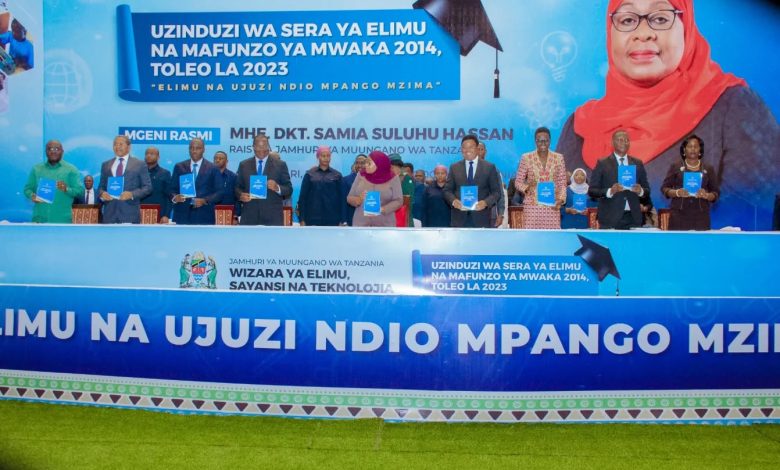
DAR ES SALAAM: KNOWLEDGE, skills, creativity and productivity are emerging as critical drivers of Tanzania’s ambition to build a one trillion-dollar- economy by 2050, with the quality of its human capital expected to play a decisive role in turning that vision into reality.
Tanzania entered the implementation phase of its Dira 2050 on July 1, 2026, following its launch by President Dr Samia Suluhu Hassan on July 17, 2025. The blueprint envisions a prosperous, inclusive and self-reliant nation, with an economy worth one trillion-dollar-economy and per capita income of at least 7,000 US dollars by 2050.
This ambition gives education significance beyond its traditional role as a social service. By 2050, Tanzania will need engineers for industrialisation, technicians for manufacturing and construction, agronomists for modern agriculture, programmers for the digital economy, scientists for innovation, entrepreneurs for new enterprises and skilled workers capable of competing in regional and global markets.
Experts argue that Tanzania cannot achieve its economic ambitions simply by enrolling more children in school. It must build an education and training system that delivers better learning outcomes, relevant skills, technological competence, research, innovation and higher productivity.
At Dira 2050’s launch, President Samia emphasised that the blueprint reflected Tanzanians’ own aspirations.
“We thought for ourselves, we wrote for ourselves, we planned for ourselves and we will implement it ourselves,” she said. This message is particularly important for education.
Transforming the country’s human capital will require the participation of parents, teachers, students, universities, vocational institutions, businesses, investors, researchers and communities, not the government alone.
According to the World Bank, Tanzania’s gross domestic product (GDP) stood at approximately 90.14 billion US dollars in 2025, with real economic growth of 5.9 per cent that year.
Reaching one trillion-dollareconomy by 2050 would require the economy to expand more than tenfold in current-dollar terms over approximately 25 years.
Achieving this ambition will demand sustained growth, investment, technological advancement and rising productivity. A high-quality, inclusive education system can become an economic multiplier across virtually every sector.
Education as the foundation of economic transformation
The National Planning Commission has identified the private sector as a major engine of Dira 2050. In August 2026, its Executive Secretary, Dr Tausi Kida, said the government was developing a framework to strengthen private-sector participation, with businesses expected to contribute 70 per cent of the vision’s implementation.
This places education at the intersection of public policy and private investment. Companies cannot expand sustainably without skilled employees, while graduates cannot fully benefit from their education if businesses fail to create productive employment opportunities.
The challenge is to move beyond an education system primarily designed to transmit knowledge towards one that also develops the practical capabilities required to drive economic growth.
Minister for Education, Science and Technology Professor Adolf Mkenda has repeatedly stressed the need to equip young people with the knowledge, skills and values required to compete in a rapidly changing world.
He has also highlighted technology, policy reform and collaboration as important elements of education transformation.
Tanzania has expanded access to education, but quality remains a challenge. The World Bank has identified unequal access to early learning and primary education, inadequate learning environments, teacher shortages and weaknesses in teacher competencies among the constraints affecting educational outcomes.
Recognising the importance of foundational learning, the Ministry of Education, Science and Technology announced a national programme in 2026 focused on improving reading, writing and numeracy through continuous teacher training, better learning materials, curriculum reviews, regular assessments and community participation.
These basic competencies are essential. Learners who struggle with reading, writing and numeracy are less likely to develop the advanced analytical, technical and problemsolving abilities required by a modern economy.
Tanzania’s economic transformation must therefore begin in the classroom, where children acquire the foundations for further education, professional training and innovation.
Turning the youth dividend into productive capacity
Tanzania’s demographic trajectory makes investment in secondary education, vocational training and higher education increasingly urgent.
In September 2026, the National Planning Commission reported that the population was growing at approximately three per cent annually and could reach 118 million over the next 25 years, with young people expected to account for about 54 per cent of the population.
If equipped with quality education, technical skills and access to productive employment, this growing population can expand the country’s skilled workforce, consumer market and entrepreneurial base.
If education provision and job creation fail to keep pace, however, population growth could intensify pressure on households, schools and labour markets.
Technical and vocational education and training must therefore occupy a central position in Dira 2050. The National Council for Technical and Vocational Education and Training (NACTVET) lists more than 1,100 registered colleges and Folk Development Centre institutions.
The Ministry also reports 1,865 middle-level colleges and 53 university institutions across the country’s education landscape.
The opportunity is to turn these institutions into engines of production, innovation and practical problem-solving rather than merely places where qualifications are awarded.
Technical institutions should work closely with employers to identify emerging skills needs, update training programmes and provide meaningful workplace experience.
Training in manufacturing, construction, agriculture, mining, renewable energy, logistics, tourism and information technology must reflect the demands of the economy.
Such alignment would help reduce the gap between education and employment while enabling businesses to recruit workers capable of improving efficiency and expanding production.
Universities must become centres of innovation
Tanzania’s higher education sector offers opportunities to strengthen collaboration between academia and industry.
A 2025 study published in the University of Dar es Salaam’s Tanzania Journal of Engineering and Technology examined collaboration between higher-learning institutions and industry under the Higher Education Economic Transformation (HEET) project.
The study found that participating institutions had established multiple industry partnerships, with practical skills development, curriculum reviews and stronger institutional relationships among the approaches used to align education with labourmarket needs.
Such partnerships can help universities move beyond conventional teaching towards applied research, commercial innovation and solutions to real economic problems.
Statistics from the Tanzania Commission for Universities (TCU) show that university institutions enrolled 259,434 students in the 2024/25 academic year.
Only 677 were international students, representing approximately 0.26 per cent of total enrolment. TCU has identified internationalisation as an important priority for improving the competitiveness of Tanzanian universities.
Universities must do more than produce graduates. They need to generate research, intellectual property, patents, technologies, new enterprises and specialised expertise.
Stronger business partnerships can help commercialise research and develop programmes that respond to emerging economic opportunities. The HEET project is intended to strengthen this capacity.
In December 2025, Prof Mkenda said the approximately 1tri/- project was supporting institutional transformation through infrastructure, including 452 classrooms, lecture halls and laboratories, 26 student hostels and 309 laboratories and workshops, alongside academic staff scholarships.
Such investments provide platforms for developing skills, testing ideas and conducting research. However, buildings alone cannot guarantee transformation.
Institutions also need qualified staff, relevant curricula, adequate operating budgets and strong research partnerships.
ALSO READ: VETA scales up training to power local skills revolution
Investing in science, technology and digital skills
The ministry has identified science, technology, innovation and digital skills as priorities for Tanzania’s future competitiveness.
In March 2026, 32 Tanzanian students under the Samia Scholarship Programme secured admission to pursue undergraduate studies at the University of Limerick in Ireland.
Launched in July 2025, the programme is intended to develop specialists in emerging science and technology fields who can support innovation and economic transformation.
Such investments can help Tanzania develop expertise in artificial intelligence, engineering, biotechnology, advanced manufacturing, renewable energy and data science.
However, overseas scholarships must be complemented by strong domestic research institutions, modern laboratories and career opportunities that enable trained specialists to apply their knowledge at home.
The goal should be a national knowledge ecosystem in which education, research, industry and investment reinforce one another.
Teachers are central to the revolution
No education transformation can succeed without investing in teachers. At the launch of a programme to improve the teaching profession in 2024, Prof Mkenda said the government would continue building teachers’ capacity through lifelong learning and improvements in teaching skills. He also emphasised the importance of protecting the profession’s dignity.
For Dira 2050, this requires sustained investment in teacher preparation, professional development, teaching resources and supportive working environments.
Teachers need opportunities to master new curricula, use digital tools, interpret assessment data, teach practical problem-solving and respond to learners’ diverse needs.
Teacher-training institutions must prepare educators not only to deliver lessons but also to cultivate curiosity, creativity, critical thinking and lifelong learning.
Ultimately, the quality of teaching will determine whether investments in school buildings, technology and learning materials translate into better educational outcomes.
Recognising skills beyond formal qualifications
Tanzania is also working towards integrating education information systems to track learners from early childhood through higher education and across different education pathways.
Better coordination could help policymakers monitor participation, identify gaps and understand how learners move between general education, vocational training and higher education.
The Ministry’s Skills Recognition and Certification Programme offers another approach to developing human capital.
Launched in 2026, the government-funded initiative aims to recognise skills acquired outside formal education and reach 80,000 young people by June 2027.
During the initial exercise in April 2026, 14,400 people registered across 11 regions. The programme recognises that valuable skills are not always accompanied by university degrees or formal vocational certificates.
Young people acquire competencies through apprenticeships, informal employment, family businesses and practical experience.
Recognising these skills can improve access to jobs, further training and business opportunities, while helping employers assess workers’ capabilities.
A more inclusive education system should allow people to continue learning throughout their lives, move between training pathways and have their skills recognised regardless of where they acquired them.
Private investment can accelerate education reform
Tanzania’s education transformation represents an investment opportunity as well as a social responsibility. The Tanzania Investment Centre identifies education infrastructure, education technology and formal education among potential investment areas.
Opportunities include schools, universities, vocational colleges, laboratories, student accommodation, digital learning platforms, assessment technologies, educational content and assistive technologies. Private institutions already play a substantial role in Tanzania’s education system.
In higher education, TCU’s register includes institutions such as Aga Khan University, St Augustine University of Tanzania, Kairuki University, Tumaini University Makumira and St Joseph University in Tanzania.
The objective is not to replace public education with private provision, but to create an ecosystem in which both complement one another while protecting quality, affordability, accreditation and inclusion.
Private investment can expand capacity and introduce new technologies, while public oversight ensures that qualifications remain credible and commercial interests do not undermine learning standards. Partnerships between universities and businesses can also connect education with economic production.
In August 2026, the University of Dar es Salaam and PwC Tanzania signed a three-year partnership aimed at strengthening professional skills, industry exposure, research, placements and knowledge exchange.
In September 2025, UDSM also partnered with the Mo Dewji Foundation under the Mo-Kerry Scholarship Programme to develop industryrelevant skills in food and agricultural sciences.
The Permanent Secretary in the Ministry of Education, Science and Technology, Professor Carolyne Nombo, described collaboration between academia and industry as important for bridging the gap between theory and practice.
Such partnerships can help universities develop relevant curricula, expose students to professional environments, support applied research and improve graduate employability.
The National Planning Commission’s 2026 private-sector participation framework is intended to strengthen coordination, investment and innovation across Dira 2050’s priority sectors.
Education must be central to this effort because the availability of skilled workers influences investment decisions throughout the economy.
Taking Tanzanian education to regional and global markets Beyond meeting domestic needs, Tanzania can position its education system as a source of regional competitiveness and foreign-exchange earnings.
The country has opportunities to attract international students, establish regional centres of excellence, export online education, train technical workers for regional industries and develop its universities as African research partners.
The low proportion of international students in Tanzanian universities highlights the potential for expansion. Realising that opportunity will require competitive academic programmes, internationally recognised qualifications, modern facilities, effective student services and stronger international partnerships.
Tanzania could also develop regional centres of excellence in mining, construction, agriculture, renewable energy, logistics, tourism, manufacturing and maritime skills.
To succeed, institutions must maintain high training standards, build strong employer relationships and offer qualifications that respond to regional labour-market needs.
Internationalisation should therefore be treated not simply as an education-sector objective but as part of the country’s broader strategy to expand services exports, strengthen regional integration and improve economic competitiveness.
A shared national responsibility At the launch of Dira 2050, President Samia warned that Tanzania would not achieve its ambitions by continuing to work in the old way.
She called for a change in mindset and practice, insisting that performance should be measured by results.
That principle must guide the education transformation. The government must establish standards, finance essential public services, regulate fairly and ensure that no child or community is left behind. Businesses must invest, innovate, create productive jobs and connect education with industry.
Universities and research institutions must generate knowledge and practical solutions, while teachers, parents and communities must support meaningful learning. Young people must acquire skills and turn them into productive activity.
Investors must recognise education not merely as philanthropy but as a long-term economic asset capable of strengthening the workforce, improving productivity and supporting innovation.
Progress should be measured not only by the number of schools built, students enrolled or qualifications awarded, but also by improvements in learning outcomes, graduate employability, research, technological adoption, business creation and labour productivity.
Ultimately, Tanzania’s economic ambitions will depend on its ability to turn human potential into economic value. Natural resources, infrastructure and capital can create opportunities, but skilled people are needed to use them effectively, develop new industries and sustain growth.
A high-quality, inclusive and economically relevant education system is therefore not simply one component of Dira 2050. It is one of the foundations on which the entire vision must rest.
Tanzania’s economic future begins in the classroom, but its success will be measured in the skills its people develop, the innovations they create and the prosperity they build.