How IPU Assembly branded Tanzania
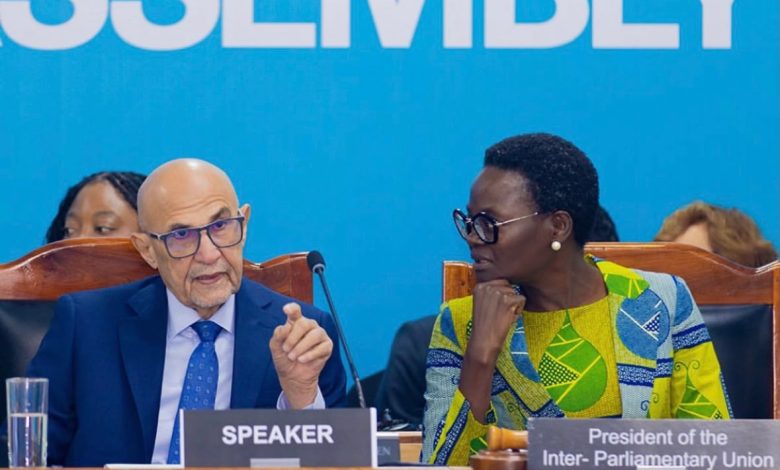
ARUSHA: THE 153rd Inter-Parliamentary Union (IPU) Assembly has offered Tanzania an opportunity to showcase its identity, economic potential and capacity to host major international gatherings, with strategic branding playing a central role in shaping the experience of delegates and other visitors.
Held in Arusha from October 5 to 9, 2026, the Assembly brought together parliamentarians and other international participants, placing Tanzania at the centre of global parliamentary diplomacy, cooperation and media attention.
Beyond discussions on governance, democracy and international cooperation, the gathering provided a platform to market Tanzania as a destination for tourism, investment, business events and international partnerships.
At the centre of efforts to communicate this broader national story was Sadio Events, which led and coordinated the Assembly’s branding and destinationpresentation strategy in collaboration with the Parliament of Tanzania, the IPU, the Arusha International Conference Centre (AICC), government institutions, the Regional Commissioner’s Office, technical partners, the media and local service providers.
For Sadio Events, the assignment went beyond producing banners, backdrops and other visual materials associated with international conferences. It involved creating a consistent national image and ensuring that Tanzania’s identity was reflected throughout the delegates’ experience.
The aim was to present the country as welcoming, culturally rich and capable of hosting complex international events while communicating its wider economic and development ambitions.
Sadio Events Executive Director Saada Sipemba said branding was not merely about decoration but also about managing the country’s reputation during one of the most significant international parliamentary gatherings it had hosted.
An international event communicates its host country through more than official speeches and conference proceedings. Signage, hospitality, transport, technical services, cultural experiences and interactions with local communities all influence visitors’ impressions.
For Tanzania, Ms Sipemba explained, the Assembly presented an opportunity to communicate its identity through both its message and the experience offered to participants.
Selling Tanzania beyond tourism “Sadio Events’ branding vision was to sell Tanzania first, ensuring that international visitors saw more than a conference venue or a tourist destination,” she said.
The broader message was that Tanzania’s potential extends beyond wildlife, national parks and other established tourism attractions to opportunities across agriculture and agro-processing, transport and logistics, energy and infrastructure, mining and value addition, manufacturing, technology and digital services, sports, the creative economy, real estate and hospitality.
The meetings, incentives, conferences and exhibitions industry was another important component of this presentation, highlighting the potential of international gatherings to attract visitors, stimulate business relationships and open doors to investment.
The approach also linked the Assembly to Tanzania Development Vision 2050, which aspires to build a prosperous, inclusive, just and self-reliant nation supported by a competitive private sector, modern infrastructure, science, technology, innovation and digital transformation.
Through the Assembly, Tanzania had an opportunity to make these ambitions more visible to an international audience.
“We did not begin with the backdrop. We began with the country,” Ms Sipemba said.
The emphasis on national branding echoed remarks by Speaker of the National Assembly Mussa Azzan Zungu, who described the Assembly as an opportunity for Tanzanians to promote local products, establish business contacts and explore new markets.
“It is a major opportunity for the people of Arusha to participate in international, economic and commercial activities, meet people from different countries and contribute to the growth of Arusha and the national economy,” he said during preparations for the event.
“Many of those coming are businesspeople and politicians who are also involved in business. They need various products, and Tanzania has many products with great potential to find markets,” Mr Zungu added.
He thanked President Samia Suluhu Hassan for agreeing to Tanzania hosting the Assembly, describing it as an important opportunity for the country, particularly Arusha.
Former IPU President Dr Tulia Ackson also highlighted the opportunity for delegates to experience Tanzania beyond the conference venue, including its attractions, cultural diversity and hospitality.
Local businesses feel the impact
For small-scale entrepreneurs, the presence of international delegates created opportunities through everyday transactions involving meals, refreshments, clothing, souvenirs and other local products.
Food vendors, traders and shop owners experienced additional customer traffic as visitors moved around the city, while the hospitality and transport sectors served the increased demand associated with the gathering.
Asha Mollel, a food vendor in Arusha, said customers increased as more visitors arrived in the city.
Clothing shop owner John Simon also reported stronger sales of locally made garments, including khanga and shirts, during the Assembly.
“The presence of international visitors created additional demand for locally made clothing, fabrics and other products,” he said.
Restaurants, handicraft sellers and local producers were also positioned to benefit from spending by delegates and other visitors.
Juma Omary, a tour guide with 15 years of experience, said the meeting presented Arusha not only as a safari destination but also as an international conference city capable of attracting visitors and supporting employment.
Transport operators were similarly engaged as delegates travelled between hotels, AICC, airports, restaurants, tourist attractions and other venues. The movement generated business for taxi operators, ride-hailing services, car-hire firms and other transport providers.
Mr Omary urged local stakeholders to make the most of the international presence by providing visitors with memorable experiences.
“Let us use the presence of these visitors to showcase what Tanzania has to offer,” he said, noting that positive experiences could encourage delegates to return or recommend the country to others.
A test of international hosting capacity
The Assembly also provided an opportunity to demonstrate Tanzania’s preparedness to host other large-scale international events.
Tanzania’s Permanent Representative to the United Nations Office and International Organizations in Geneva, Switzerland Ambassador Abdallah Posi said the gathering was particularly significant because it marked the first time Tanzania had hosted an IPU Assembly, allowing the country to demonstrate its organisational and logistical capacity before the international parliamentary community.
He said successfully managing an event involving participants from numerous countries could strengthen Tanzania’s experience and position it to attract other major international gatherings.
Ambassador Posi also highlighted the diplomatic significance of the Assembly, noting the role played by Tanzania’s representatives within the IPU and in Geneva in connecting the country, its Parliament and the international parliamentary organisation.
He urged government institutions, the business community, the media and the public to help maximise the opportunities presented by the event.
The economic impact, he said, could extend well beyond the conference venue as delegates required accommodation, transport, food and other services, while also having opportunities to visit tourist attractions and purchase local products.
Marketing Manager at the Tanzania Tourist Board, Ms Vivian Temi, said delegates at the previous IPU Assembly in Istanbul had shown strong interest in Tanzania’s tourism and investment opportunities.
She added that many delegates wanted to do more than attend meetings in Arusha, expressing interest in visiting the country’s attractions.
Such interest presented commercial opportunities for tourism operators, particularly those offering short packages to destinations such as the Serengeti, Ngorongoro, Mount Kilimanjaro and other attractions on the northern tourism circuit.
Arusha Regional Administrative Secretary Toba Nguvila urged tourism and hospitality businesses to develop innovative packages for delegates and improve the quality of services offered to international visitors.
He also called for tour guides and drivers to receive appropriate training, noting that good service could encourage delegates to return with their families or recommend Tanzania to others.
The government also emphasised the importance of reliable banking and telecommunications services during the Assembly, recognising that visitors needed access to foreign exchange, mobile money, communications and digital services.
Preparing the destination
The branding strategy began well before delegates arrived, with preparations intended to raise awareness, coordinate stakeholders and ensure a consistent message about the Assembly and its host country.
Sadio Events coordinated stakeholder engagement, media briefings, promotional jingles, digital and social media communication, airport and city branding plans, delegate information materials and preparations involving hotels, transport providers and tourism operators.
The team also coordinated technical planning, rehearsals, English and French content verification, community engagement and the development of the Official Arusha City Guide.
The digital guide was designed to bring essential information about the city and the delegate experience together on an accessible platform, helping visitors navigate Arusha while connecting them with local services.
Promotional jingles extended awareness beyond the conference venue, communicating Tanzania’s preparations to receive an international audience and encouraging public participation.
Engagement with regional authorities and local businesses was equally important. Hotels, restaurants, transport operators, tour companies, artisans, suppliers and other service providers formed part of the wider environment through which delegates experienced the city.
The engagement sought to familiarise these stakeholders with the importance of the Assembly and international service expectations, including customer care, transparent pricing, cleanliness, safety and opportunities to promote Tanzanian products and experiences.
This approach connected a major international institutional event with businesses operating within the host city, including small and medium-sized enterprises.
It also recognised that destination branding depends not only on promotional messages but on the people, services and experiences visitors encounter beyond the conference venue.
Delivering the promise
During the Assembly, the challenge was to ensure that the actual experience matched the image communicated beforehand.
Sadio Events’ responsibilities covered branding arrangements associated with registration and accreditation, protocol and VIP movements, venue and room identification, directional signage, transport coordination, media operations, hospitality, cultural programmes, exhibition and information areas, technical production and digital information services.
Coordinating these elements required close cooperation among institutions and service providers working within a limited period.
Ms Sipemba said accuracy was particularly important because errors involving flags, logos, official titles, languages, room names or protocol designations could undermine the professionalism expected at an international gathering.
To manage these risks, the company relied on centralised brand guidelines, content approval procedures, English and French language checks, production schedules, physical proofs, venue inspections, technical rehearsals and regular coordination meetings.
ALSO READ: IPU touts better governance
The process also required flexibility and continuous communication to reconcile international expectations with local delivery requirements.
Technology was another critical component. Professional sound and visual systems, conference microphones, presentation equipment, reliable internet connectivity, broadcast feeds and simultaneous interpretation facilities were essential to supporting meetings involving participants from different countries and language backgrounds.
These arrangements were integral to the event’s accessibility, inclusiveness and credibility rather than simply additional technical features.
Media operations also carried considerable significance. Preparations were made to accommodate approximately 200 international and national media professionals, with arrangements covering accreditation, working facilities, access protocols, interviews and information services.
Journalists were not merely reporting on the Assembly. Their photographs, interviews, broadcasts and digital stories were also helping shape international perceptions of Tanzania.
Turning visibility into lasting value
The long-term value of the Assembly’s branding will depend on how effectively the international attention generated can be translated into lasting opportunities for Tanzania.
The gathering demonstrated the contribution of Tanzanian professionals across several fields, including design, printing, installation, event management, interpretation, audiovisual technology, transport, hospitality and tourism.
The experience can help strengthen local expertise and confidence in the country’s ability to organise complex international meetings.
Business events can also generate economic opportunities beyond conference venues and hotels, supporting airlines, transport operators, restaurants, local suppliers, creative professionals and technology companies.
They provide platforms for knowledge exchange, policy dialogue, networking and relationships that may lead to future partnerships.
However, sustaining these benefits requires continued promotion of Tanzania’s hosting capacity, strategic use of the Assembly’s media coverage and visual content, and follow-up on relationships established during the event.
Ultimately, the success of the branding effort will be measured not only by how Tanzania was presented during the Assembly but also by whether that visibility helps attract repeat visitors, new business connections, investment and future international events.