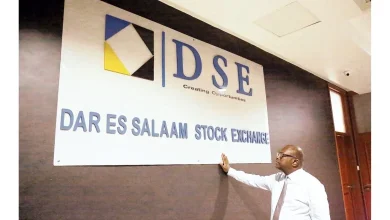
Rising capital market: Bringing more people on board

DAR ES SALAAM: IMAGINE a Tanzania where more families build wealth through investments, more businesses raise capital to expand and more young people understand how to make their money work for them.
This future is within reach. In fact, the progress of Tanzania’s capital market suggests that we are moving in the right direction.
The Dar es Salaam Stock Exchange (DSE), in its report for the third quarter of 2026, recorded growth across all measured market indicators.
Among the most notable milestones was total market capitalisation reaching 40.5tri/- by the end of September this year an unprecedented level in the market’s history.
This achievement is more than a statistical milestone. It reflects the growing role of the capital market in Tanzania’s financial system and presents an opportunity to accelerate public participation in wealth creation and business development.
The market’s achievements deserve recognition. The DSE continues to provide the infrastructure through which investors trade securities and companies access capital.
The Capital Markets and Securities Authority (CMSA) plays an important role in regulation, investor protection and market development, helping to build confidence in the investment environment.
Listed companies also deserve credit for contributing to market growth, while investment advisers, brokers, fund managers, custodians and other market intermediaries connect investors with opportunities and facilitate participation.
The expansion of collective investment schemes, including unit trusts, has also helped make investing more accessible to people who may lack the capital, experience or time to invest directly in individual securities.
ALSO READ: Making Dira 2050 investable through capital markets
Equally important are the contributions of the government, financial institutions, development partners, media organisations and financial educators in strengthening economic confidence and promoting investment awareness.
Ultimately, a capital market does not grow through the efforts of one institution. It advances when regulators, market operators, businesses, intermediaries and investors work towards a shared objective.
Despite this progress, an important question remains: How can we translate market growth into broader financial inclusion and wealth creation? Rising market capitalisation is encouraging, but it does not automatically mean that more Tanzanians are investing.
Market capitalisation can increase because of share price appreciation, new listings or other market developments.
Therefore, market growth must be complemented by efforts to broaden investor participation.
First, we need to intensify capital market education, particularly among young adults, salaried workers, entrepreneurs and people in the informal sector.
Many people still associate investing with wealth reserved for the financially privileged.
Yet, through accessible investment products such as collective investment schemes, people can begin investing with relatively modest amounts.
Second, we should strengthen the distribution of investment products through digital platforms, mobile money services and partnerships with financial institutions.
Making investing easier, more convenient and more accessible can help turn interest into actual participation.
Third, more companies should be encouraged to explore capital market financing.
A vibrant market must not only provide opportunities for investors but also enable businesses to raise long-term capital for expansion, innovation and job creation.
Capital market education should not be confined to investment conferences, financial institutions or occasional public campaigns. It should become part of our everyday social interactions.
At workplaces, employees can discuss saving and investment during staff meetings and financial wellness sessions. In universities, students can participate in investment clubs and practical financial literacy programmes.
Churches, professional associations, community groups and social gatherings can also provide platforms for conversations about responsible investing and longterm financial planning.
Families can introduce children and young adults to the principles of saving, investing and compounding.
Meanwhile, social media platforms can help simplify investment concepts through short videos, live discussions and practical examples in both Kiswahili and English.
The objective is not to encourage everyone to invest without understanding the risks.
Rather, it is to ensure that people have the knowledge to make informed financial decisions and distinguish legitimate investment opportunities from fraudulent schemes.
A strong capital market is not defined solely by the wealth it represents, but also by the opportunities it creates and the number of people it empowers.
If we make investment education part of our everyday conversations and collective development agenda, today’s market milestone can become the foundation for a more financially informed, inclusive and prosperous Tanzania.