This is a story of evolution of speed in the Savannah
DAR ES SALAAM: THE Peregrine Falcon became the fastest animal in the sky of savannah through a series of dramatic evolutionary changes that took place mainly over the last ten to two million years.
Different research works show it did not evolve from a fast bird that became faster, but from a small, falcon like ancestor that hunted insects and lizards close to the ground, in a niche that was crowded with hawks, eagles and owls.
On their side, palaeontologists say competition for food on the ground forced it to look up to an untouched food source.
From that point it followed other birds in full flight, and that single decision changed its entire body and attitude.
The wings were the first major transformation, to survive air pressure at nearly 400 kilometres per hour, the wings had to become much stiffer, not more flexible in the usual sense.
The bones of the wing, especially the humerus and ulna, became shorter and thicker, and the joints tightened with stronger ligaments so the wing would not flutter or break.
The flight feathers themselves evolved unusually stiff interlocking barbules, creating a smooth, knife-like surface.
The true flexibility is in shape-shifting. The falcon can sweep its wings back progressively during a stoop, from spread wide for soaring, to tucked into a tight fist against its body with only the primary tips acting as rudders.
Scientists say that transformation was driven by hugely enlarged chest muscles that can change the wing shape in less than a tenth of a second, making it as manoeuvrable as a fighter jet.
The eyes had to change at the same time to cope with fastmoving air and extreme speed. On their side, historians say that occurred mainly during the Pleistocene period or about 2.6 million to 11,700 years ago.
Zoologists say the most important adaptation is a much tougher and faster third eyelid, the nictitating membrane, which acts like built-in sunglasses.
During a dive it sweeps across the eye every few seconds, keeping the cornea moist, clearing dust, and protecting it from drying out while still allowing vision.
The eyeball itself became larger and more tubular and is locked by a ring of bony plates called the scleral ring, which prevents it from flattening under air pressure.
Inside, the retina developed two deep foveae packed with photoreceptors and a flicker fusion rate of over 150 frames per second, compared to 60 in humans. This means even at 100 meters per second, the ground does not blur but appears in sharp, slow motion.
Different researches show as it became a high speed hunter, the method of killing also shifted. Early falcons killed with their feet like hawks, but at extreme speed grabbing and squeezing would break their own legs. Palaeontologists say the killing job moved to the beak.
About twenty million years ago, modern falcons developed special tooth, a sharp triangular notch on the upper mandible that works like pliers and a knife.
The peregrine’s beak became especially pronounced, shorter, deeper, more hooked and with stronger jaw muscles. After striking prey with its feet, it uses this tooth to split the spinal cord at the base of the skull for an instant kill.
This is why falcons are now known to be closer to parrots than to hawks. The legs and claws evolved away from crushing and toward a high-speed capture system. The tarsus, the bare part of the leg, became longer and armoured with thick overlapping scales.
The muscles changed from sustained grip to explosive punch power. In a stoop the peregrine does not grab, it punches, clenching its foot into a fist and striking with the projections and the long, sickle-shaped rear talon.
Zoologists say this impact alone stuns or kills. The talons became thin, curved and needle-sharp for piercing rather than thick and blunt for crushing, and the toes developed a ratchet-like locking tendon so once closed, they stay closed with almost no effort while tumbling through the air.
Historians say from time to time, the textured pads on the soles provide extra grip.
These physical changes were driven by a change in attitude forced by food competition. To exploit birds in flight, the peregrine had to become extremely bold, patient and territorial.
It evolved to seek the highest perch and wait for hours, then commit completely to a high-energy dive that cannot be repeated easily.
It also became one of the most aggressively territorial birds on earth, defending huge airspaces against eagles and humans, because good nesting cliffs on migration routes were rare and sharing meant starvation.
Today the beautiful bird is facing a different word full of challenges almost entirely from human activities.
In the 1950s and 60s the pesticide DDT made its eggshells so thin that they broke, wiping the bird out from much of Europe and North America. It was saved by the banning of DDT and by large captive breeding programmes.
Now that it has adapted to cities, because skyscrapers mimic cliffs and pigeons are abundant, it faces collisions with glass, electrocution, disturbance from drones and climbers, and poisoning from rodenticides.
Scientists say unlike many times in history, climate change is shifting the migration timing of its prey. It is surviving because the same traits that made it a super predator make it highly adaptable.
It switches prey easily from wild ducks to city pigeons, tolerates humans near its nest, and uses buildings, bridges and cell towers as nesting sites.
With legal protection worldwide and monitoring of nests, including in cities like Dar es Salaam, its population has recovered from near extinction to over 140,000 birds globally, and this is one of the rare conservation success stories.
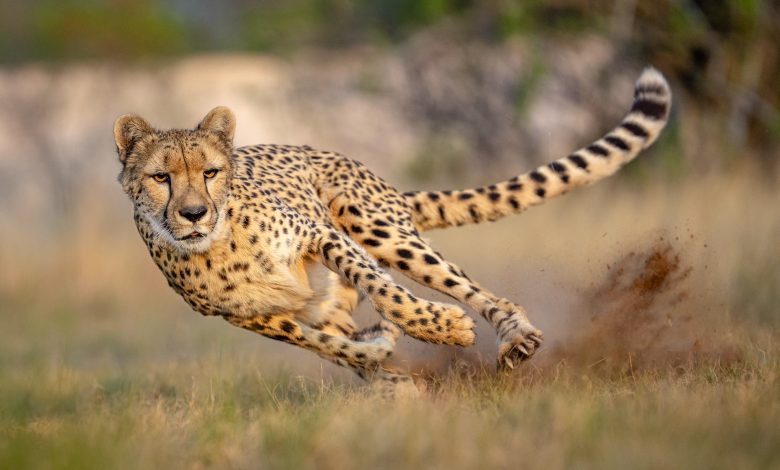
On the other side, it is not easy to define speed in the savannah of Africa without putting the cheetah on the list. From animal sanctuaries of Serengeti, Tarangire, Ngorongoro, Ruaha to Maswa game reserve, the cheetah is the fastest land animal on the Earth.
Historians say the beautiful mammal managed to claim that position because it became stronger, on its side the evolution process rebuilt its entire body for speed and avoidance over the last 4 million years.
ALSO READ: Rural energy revolution: TZ’s journey towards Universal Electricity Access by 2030
It has no wings, so every adaptation was aimed at powering its legs, extracting oxygen, and staying stable at over 110 kilometres per hour.
The engine of this speed is a disproportionately large heart. Relative to body weight it is about 50 per cent larger than a lion’s, with a much thicker left ventricle that pumps more blood with each beat.
At rest it beats at 120 to 170 times per minute, but during a sprint it exceeds 250 beats per minute, pumping up to five times more blood than a similar-sized animal.
This blood is pushed almost entirely to the running muscles, the heart itself and the brain, while the digestive system is temporarily starved of flow. That heart would be useless without a supercharger to feed it oxygen.
The nostrils and nasal cavity became wide and rounded, with enlarged, folded turbinate bones that can pull in over 150 litres of air per minute during a chase.
Palaeontologists say the lungs became about twice as large relative to body size as in other mammals, with far more alveoli and a thinner membrane for gas exchange, allowing oxygen to enter the blood in a fraction of a second.
On their sides, zoologists say that combined with a high concentration of red blood cells, this system ensures the heart is pumping oxygen-rich blood even at full gallop. To translate that power into distance, the skeleton became a flexible spring system.
The lumbar vertebrae elongated and their ligaments became elastic, so the spine coils to bring the hind feet in front of the fore feet and then fully extends, adding nearly half the length of each 8-meter stride.
The leg bones grew long and thin, with the heavy muscle mass pulled up to the shoulder and hip so the lower leg swings like a light pendulum.
The shoulder blade is free-floating without a collarbone, adding extra reach, while the feet became narrow and dog-like with hard pads and semi-retractable claws that act like track spikes. Stability for this extreme flexibility comes from the tail.
It is the longest and most muscular tail of any big cat relative to its body, acting as a counterweight and rudder.
In a straight line it streams behind for balance, but when prey turns sharply the tail whips in the opposite direction to shift the centre of mass and prevent the animal from rolling.
The eyes were reshaped for daytime high-speed tracking, not for coping with wind pressure.
About three to two million years ago they moved to a high, forward-facing position giving 210-degree binocular vision and depth perception.
The distinctive black tear lines absorb glare and channel dust away from the eye, while a high density of cone cells in an elongated fovea gives acuity four to five times that of a human in daylight.
Tiny stabilising muscles counter-rotate the eyeball to keep prey in focus while the head bounces, allowing the brain to predict movement rather than see blur.
Zoologists say this is a specialisation for bright sun, and that is why cheetahs rarely hunt at night.
The jaws evolved in the opposite direction to other big cats. As the skull became lighter and narrower for aerodynamics and larger nasal passages, jaw muscles shrank by about 30 per cent compared to a leopard and bite force dropped to around 500 newtons.
Zoologist say the cheetah cannot crush bone or snap necks. Instead, it kills by precise suffocation, clamping its narrow muzzle around a gazelle’s windpipe and holding it sealed for five to ten minutes until the prey dies of asphyxiation, breathing itself through its enlarged nostrils while holding on.
This entire physical transformation was forced by competition for food. About three to two million years ago, as lions, leopards and hyenas became larger, social and dominant, cheetah ancestors were pushed off large kills and killed at carcasses.
The only abundant food they could exploit was small, fast antelopes on open plains that heavier predators could not catch.
To survive on that, cheetahs abandoned bold, nocturnal, confrontational behaviour and became shy, solitary, diurnal and avoidant.
Zoologists say due to these, hunting for a cheetah starts between 8am and 5pm when lions sleep, abandoning hunts quickly and surrendering kills without a fight. Females roam up to 1,500 square kilometres alone to avoid overlap with lions. Today that strategy of avoidance is failing against a new competitor: humans.
Fewer than 7,000 adults remain in the wild, having lost 91 per cent of their historic range to farmland, fences and settlements. Fragmentation forces them closer to lions, where cub mortality can reach 90 per cent, and closer to livestock farmers who kill them.
Palaeontologists say a genetic bottleneck 12,000 years ago left all cheetahs in a delicate situation, the changes gave them weak immunity and low fertility ability.
Their prey of gazelles and hares is also declining from human hunting. They survive now through both natural flexibility and human intervention.
They take a wider range of small prey, become more secretive and travel long distances between reserves. From South Africa, Namibia, Botswana and Kenya different efforts are underway to protect the cheetah.
In Tanzania conservation efforts by the government have created special parks like Serengeti, Tarangire, Ngorongoro, Mkomazi and Maswa game reserve to be special natural sanctuaries for the beautiful animal.
Reintroduction programmes have returned cheetahs to India after 70 years of extinction. Without open corridors and active management, the specialisation that once let the cheetah avoid lions is no longer enough to avoid people.
Emails: rstanslaus@yahoo.com