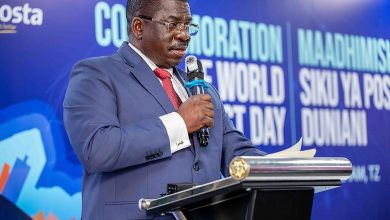
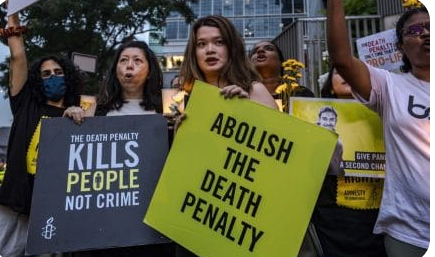
Global parliamentarians suggest measures to abolish death penalty
ARUSHA, TANZANIA: Global parliamentarians who met in Arusha for the 153rd Inter-Parliamentary Union (IPU) Assembly have reaffirmed their commitment to the abolition of the death penalty, suggesting four key measures that states can take to end capital punishment.
A statement issued by the International Commission against the Death Penalty (ICDP) ahead of World Day against the Death Penaltysaid participants agreed that parliamentarians remain decisive in advancing abolition through legislation.
They suggested this as they cited the Lebanese Parliament’s action in August 2026.
Other areas where lawmakers can make a difference include oversight and fair-trial safeguards, public engagement and civil society consultations, and voting to advance international abolitionist commitments, such as becoming a State Party to the Second Optional Protocol to the International Covenant on Civil and Political Rights, as Suriname’s Parliament did in July 2026.
The thought-provoking panel was moderated by Ms Claudia Roth, Member of the German Bundestag and former Vice-President of the Bundestag. Panelists included ICDP Commissioners Barbara Lochbihler, former Member of the European Parliament, and Sylvie Kayitesi, former Deputy Chief Justice of the Supreme Court of Rwanda and former Commissioner and Chairperson of the Working Group on the Death Penalty in Africa of the African Commission on Human and Peoples’ Rights.
Others included Ms Millie Odhiambo, Member of Parliament of Kenya, and Mr Chonlathan “Ice” Supphaiboonlerd, Member of Parliament of Thailand. Both Kenya and Thailand are death penalty retentionist countries.
The discussion took place amid stark contrasts. While Lebanon became the 114th country to abolish the death penalty for all crimes in August 2026, Amnesty International recorded at least 2,707 executions in 2025—the highest number since 1981—across 17 countries, even though at least 140 countries have abolished the death penalty in law or practice.
Highlighting regional progress, ICDP Commissioner Sylvie Kayitesi noted that Africa is leading the abolitionist trend.
Since 2020, Chad, Sierra Leone, the Central African Republic and Zambia have abolished the death penalty for all crimes; Equatorial Guinea and Ghana have abolished capital punishment for ordinary crimes; while Zimbabwe has abolished it except during a state of national emergency.
ALSO READ: Global parliamentarians challenge death sentence at IPU Assembly
Kayitesi also called on African Union Member States to advance the adoption of the Draft Protocol to the African Charter on Human and Peoples’ Rights on the Abolition of the Death Penalty in Africa.
As the World Day against the Death Penalty approaches on October 10, the ICDP urged parliamentarians globally to leverage their legislative, oversight and advocacy powers to move countries away from capital punishment.
“Parliaments are where abolition becomes law. Every country that has abolished the death penalty has done so because legislators showed political leadership and thereby created a legacy for life, which significantly reduces the space for related human rights violations,” said ICDP Commissioner Barbara Lochbihler.
She added that experiences in Arusha show there is no single path to abolition, which can include restricting the scope of the death penalty, adopting moratoriums or strengthening fair-trial guarantees.
The ICDP expressed gratitude to the IPU, Ms Claudia Roth, and all speakers and participants for their contributions.
Established in 2010, the International Commission against the Death Penalty is led by President Judge Navi Pillay, former United Nations High Commissioner for Human Rights, and composed of 26 Commissioners of high international standing from around the world.
Operating with total independence, the Commission is supported by a geographically diverse Support Group of 24 Member States. It promotes the complete abolition of capital punishment in law where de facto moratoriums are observed, advocates for moratoriums in retentionist states, and collaborates with the UN, regional organisations, governments and NGOs from its Secretariat based in Madrid.