

Why companies must stay compliant to protect value
DAR ES SALAAM: FOR a company, complying with registration and reporting requirements is more than a legal obligation.
It keeps the business legally visible, protects its corporate identity and helps preserve the rights, assets and relationships built around it.
When these obligations are neglected, however, a company can gradually lose its standing with the regulator even when it may still have assets, contracts, creditors, employees or plans to resume operations.
The Business Registrations and Licensing Agency (BRELA) has issued a final notice of its intention to strike off 5,277 companies, giving affected companies, directors, shareholders and secretaries 90 days to object. The companies have not yet been struck off.
Published in the Government Gazette on September 18, 2026, as Government Notice No 16308 under Section 403(3) of the Companies Act, Cap 212, the notice follows earlier notices issued in June and July 2022 asking the companies to confirm whether they were still carrying on business.
If no objection is received within the prescribed period, BRELA says it will proceed with the removal. For Tanzania, the exercise is therefore about more than deleting inactive names.
It is about strengthening corporate accountability while ensuring that businesses with genuine economic value are not lost simply because they have fallen behind on regulatory requirements.
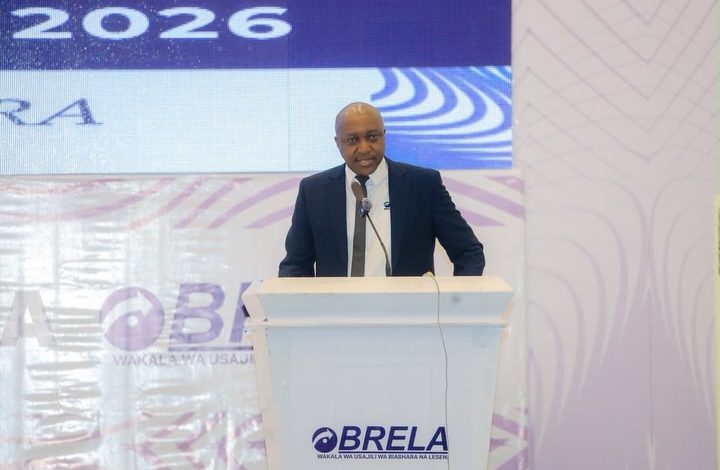
BRELA Chief Executive, Mr Godfrey Nyaisa, says the proposed strike-off is driven by several forms of non-compliance, including failure to submit annual returns, failure to update beneficial ownership information, stopping operations and failing to respond to correspondence from the Registrar.
Other grounds include providing false or inaccurate registration information, conducting illegal activities or operating outside a company’s constitution, as well as circumstances involving directors legally prohibited from operating a business.
The regulatory action reflects the importance BRELA places on keeping the Companies Register accurate and ensuring that registered entities meet their statutory obligations.
But while compliance is the responsibility of every company, the economic question becomes more complex when a company that appears inactive may still have value.
Nyaisa said a deleted company loses its legal personality and ceases to exist as a legal entity.
Bank accounts can be affected, contracts may lose their legal force and assets can become bona vacantia, property without a legal owner that can pass to the government. Restoring a dissolved company can also be costly and involve lengthy proceedings through the courts or BRELA.
This makes compliance more than paperwork. It is part of protecting the legal structure through which a business owns assets, signs contracts, maintains banking relationships and conducts commercial activity.
Dormant does not mean dead A company can remain inactive while waiting for financing, permits, a strategic investor or better market conditions.
Economist and investment banker, Dr Hilderbrand Shayo, says businesses may remain dormant while preparing for major projects or seeking the resources needed to begin operations.
For large investments, the period between incorporation and commercial activity can stretch over several years.
A foreign investor, for example, may establish a Tanzanian company while arranging financing, approvals and partnerships.
Although the company may show little immediate commercial activity, it may still have a clear economic purpose.
Economist and Finance Analyst, Mr Kelvin Msangi, makes a similar distinction, arguing that administrative inactivity does not necessarily mean economic inactivity.
ALSO READ: BRELA puts dormant firms on notice
A company may fail to file annual returns or update its corporate information while still holding property, employing workers, owing creditors, maintaining contracts or generating taxable income.
That is where the consequences of deregistration become more significant. When a company disappears For a company that is still operating, deletion can have serious consequences. The interests beyond the company An inactive company can still have obligations.
It may owe money to suppliers, have outstanding tax liabilities, employ workers, hold property or intellectual property, or have claims against other businesses. It may also remain party to contracts.
Shayo warns that these assets, liabilities and commercial interests should be established before dissolution. For banks, creditors and suppliers, corporate status is therefore more than a registry matter.
It can determine whether commercial interests can be enforced or recovered. This is why the quality of the verification process matters as much as the clean-up itself.
A question of investor confidence The exercise also comes as Tanzania continues to formalise business activity and attract investment. Dr Shayo notes that BRELA had registered 16,864 companies by April 2026, reflecting continued formalisation.
The challenge is to remove companies with no economic life while protecting businesses that are temporarily inactive but still have a legitimate future. For investors developing large projects, incorporation may come years before production, employment and revenue begin.
A system that treats prolonged inactivity as abandonment could therefore create uncertainty for businesses planning long-term investments. Who really owns the company? Beneficial ownership is another important part of the clean-up.
Dr Shayo says a June 2026 training revealed that nearly 85 per cent of applications contained errors, highlighting weaknesses in corporate ownership information.
Reliable ownership records can support taxation, investor protection, anti-money-laundering efforts and broader corporate transparency.
They can also help regulators determine whether an apparently dormant company has genuinely been abandoned, remains under legitimate ownership or requires further investigation.
A smarter approach to deregistration Shayo proposes dividing companies into three categories: Active companies that remain registered; inactive companies that intend to resume operations and are given an opportunity to comply; and genuinely defunct companies that can be removed after verification of assets, liabilities, taxes, creditors and beneficial owners.

