What FP-ICGLR’s Dar meeting means for the Great Lakes Region
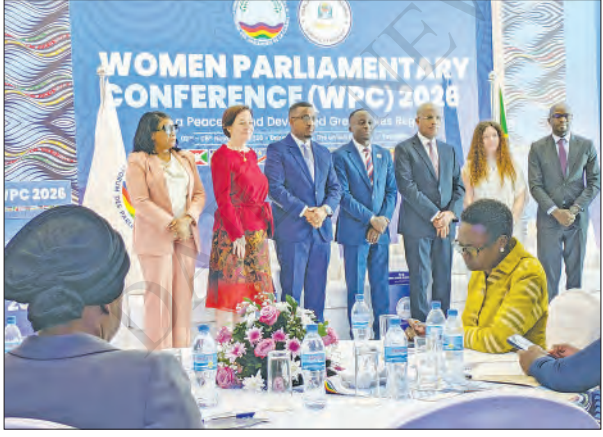
DAR ES SALAAM: THE significance of the Great Lakes parliamentary forum coming to Dar es Salaam in November extends well beyond four days of speeches and diplomatic meetings.
For Tanzania, the gathering is an opportunity to reinforce its role in regional diplomacy, for the Forum of Parliaments of the International Conference on the Great Lakes Region (FP-ICGLR), it is a test of whether parliamentary cooperation can turn regional commitments on peace, security and women’s empowerment into policies with economic consequences.
From November 2 to 5, Tanzania will host women legislators and senior leaders from the 12 member states of FP-ICGLR where President Samia Suluhu Hassan is expected to serve as guest of honour. The meeting comes at a consequential moment for the Great Lakes, where insecurity, political tensions, displacement and limited economic opportunities continue to shape the lives of millions of people.
For FP-ICGLR Secretary-General Ambassador Dr Deo Mwapinga, the gathering represents an opportunity to place parliamentary diplomacy at the centre of efforts to address those challenges.
According to Dr Mwapinga the forum was established in 2012 to strengthen cooperation among the region’s parliaments. Its work has included monitoring political developments and elections and issuing recommendations to member states, while its broader agenda has addressed peace, security, refugees, citizenship and regional stability.
Dr Mwapinga has described the November conference as an important opportunity to move beyond discussion and develop actionable policy on peace, security and development. That distinction is important for a region where the consequences of political instability frequently spill into the economy.
Conflict can interrupt trade, displace families, damage infrastructure and discourage investment. Weak access to services can deepen poverty, while limited economic opportunities can make communities more vulnerable to instability. He said the November conference seeks to examine those interconnected challenges through the experience and influence of women legislators.
Why Dar es Salaam matters
Tanzania’s role as host carries diplomatic significance. Dar es Salaam has a long association with regional peace initiatives. Tanzania has historically provided space for negotiations and political dialogue, and the city hosted the first ICGLR Summit in 2004, when leaders sought collective responses to conflicts that had destabilised the Great Lakes.
More than two decades later, the city will again become a meeting point for regional decision-makers. Deputy Speaker Daniel Sillo said the conference reflects Tanzania’s longstanding commitment to inclusive governance and regional peace. He noted that women currently account for about 40 per cent of Tanzania’s parliamentarians, placing the country among the leading member states of the Great Lakes bloc in terms of women’s parliamentary representation.
“Tanzania recognises that women’s participation in politics and decision-making institutions is a foundation of inclusive democracy,” Mr Sillo said. But he also emphasised that the value of the meeting will be measured by what delegates learn from one another. “The fundamental point is that they are meeting as women to exchange experiences, each one coming from her own country,” he said.
That exchange is central to the FP-ICGLR model
A country that has developed effective legislation on women’s political participation, peace and security or economic empowerment can share its experience with countries facing similar challenges. Other member states can offer approaches that Tanzania and its neighbours may adapt to their own circumstances.
ALSO READ: Cybersecurity takes centre stage in Tanzania’s financial sector
The result, if sustained, could be a form of regional policy transfer.
From representation to influence
Dr Dorothy Gwajima, Minister for Community Development, Gender, Women and Special Groups, said women’s participation in peace and security is essential because women and children are often most affected by insecurity and poor access to services.
She cited Tanzania’s history of women leaders, including Bibi Titi Mohamed, Gertrude Mongella, Asha-Rose Migiro and Dr Tulia Ackson, but said such achievements must translate into practical systems. Tanzania is implementing UN Security Council Resolution 1325 through its 2023– 2027 National Action Plan, with the challenge of turning commitments into legislation, budgets and programmes.
That challenge will also confront the FP-ICGLR conference, making the Dar es Salaam meeting important for the parliamentary forum itself. As Secretary-General, Dr Mwapinga must help 12 parliaments with diverse political, economic and security contexts turn shared regional priorities into national action.
The conference is expected to produce a Dar es Salaam Declaration on Women, Peace and Security and a twoyear action plan, providing a basis for follow-up.
Dr Mwapinga has stressed the need to address peace, security, development, resource management and gender-responsive legislation.
The focus on resources is especially significant
The Great Lakes possesses substantial mineral and agricultural wealth, but the benefits of those resources depend heavily on governance, security, infrastructure and access to markets. For lawmakers, this creates a direct connection between legislation and economic development.
The economic case
The conference’s economic dimension is also reflected in the involvement of the private sector.
Tanzania Commercial Bank (TCB) Chief Executive Dr Adam Mihayo has argued that financial institutions have a strategic role in expanding women’s economic participation. He said women-led businesses account for 30 per cent of TCB’s lending in Tanzania, representing approximately 540bn/-.
More strikingly, he said the non-performing loan ratio among women borrowers was below 1.5 per cent, compared with an overall rate of about 3.5 per cent. Those figures illustrate the potential economic argument behind greater access to finance for women.
Dr Mihayo cited northern Uganda, where women helped rebuild the economy after conflict and now account for a significant share of small and medium-sized businesses. He said empowering women is also an economic investment, supporting business growth, jobs, incomes and cross-border trade.
Policies on credit, taxation, procurement, property and business registration can determine whether women owned enterprises formalise and expand. Dr Tulia Ackson, President of the Inter-Parliamentary Union and former Speaker of Tanzania’s Parliament, has urged FP-ICGLR delegates to ensure that the conference produces policy change rather than simply another set of discussions.
Dr Ackson said women must move beyond numerical representation to exert meaningful influence on decisions, particularly on children, education, health and peace. She urged member states to share experiences and turn lessons from the conference into laws and policies.
“The conference should not remain merely a discussion forum. The experiences and resolutions that emerge from it should be used to bring about change in our countries,” Dr Ackson said.
Beyond the conference room
The economic value of the FP-ICGLR meeting will not be measured only by spending generated by delegates in Dar es Salaam. Dar es Salaam resident Julius Marwa said hotels, restaurants, transporters and other businesses would benefit from international delegates, while lasting partnerships could create longer-term opportunities. The regional parliamentary network can also help lawmakers compare regulations and strengthen cooperation on trade and investment. Peace and economic development are closely linked.
Predictable politics, secure trade corridors and functioning markets are essential for investment, while financial institutions need confidence in stable business environments. This gives parliamentary diplomacy a vital economic role.
A bigger role for FPICGLR The November meeting also gives FP-ICGLR an opportunity to demonstrate the value of parliamentary diplomacy, with parliaments helping translate regional agreements into laws, budgets and oversight.