The UN needs less talk, more diplomacy, more peace
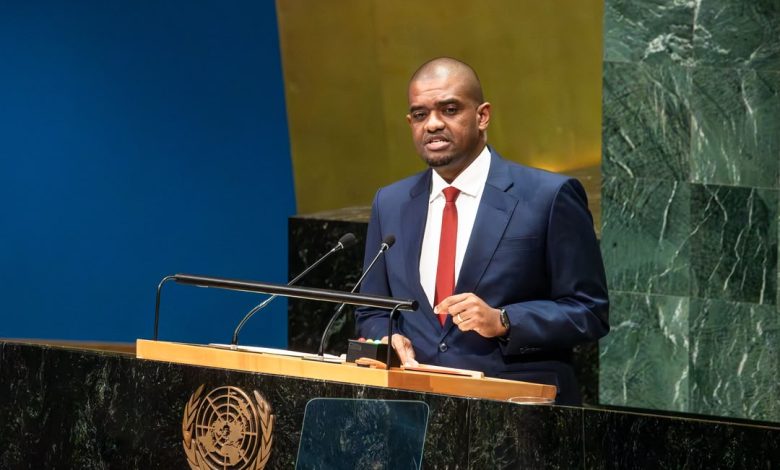
NEW YORK: THE next United Nations Secretary-General, succeeding António Guterres, is expected to be selected and appointed between October and December this year. A comprehensive review before January 1, next year, suggests that the new Secretary-General will confront an international system dealing with significant and unprecedented challenges.
Currently, tensions among major powers have increased, conflicts persist, the Security Council frequently faces disagreements, humanitarian needs are growing, and trust in multilateral institutions has decreased.
Meanwhile, the UN Secretariat has taken on responsibilities in multiple global areas such as development, climate change, health, migration, digital governance, financing, gender, and food systems.
In this context, the key question isn’t just whether the next Secretary-General should act more proactively. Instead, it’s whether the office should strengthen, become more targeted, and adopt a more politically assertive role in areas where the UN bears a clear responsibility, like conflict prevention and safeguarding international peace and security.
This is the core argument in Ferid Belhaj’s August 2026 Policy Centre paper, ‘The Secretary-General of Everything and the United Nations of Nothing.’ A critical review from the same month contends that the Secretary-General’s growing responsibilities have led to ‘mission inflation,’ where the organisation’s goals surpass its authority and resources.
The argument warrants thorough evaluation from both economic and governance viewpoints as the current selection process approaches its conclusion. For those unaware, António Guterres’ second term ends on 31 December 2026.
The UN’s selection process includes interactive dialogues with candidates, a public town hall, and a Security Council review, culminating in the General Assembly’s confirmation.
The upcoming UN Secretary-General is not necessarily more aggressive; rather, they will be more focused.
The word ‘tougher’ does not imply that the SecretaryGeneral must behave like a head of state or military leader, as they do not possess the coercive power of a national government.
Toughness should actually be seen as political courage, strategic discipline, independent judgment, perseverance in mediation, and a willingness to diplomatically challenge governments when peace and UN Charter principles are at risk.
The UN Charter grants the office an essential authority. Under Article 99, the Secretary-General has the power to direct any matter to the Security Council if they believe it poses a threat to international peace and security.
Belhaj argues that this rule should be seen not just as an exceptional constitutional measure but as part of a wider strategy for early preventive diplomacy. The next Secretary-General could show leadership by acting swiftly to stop conflicts from intensifying, rather than only reacting after violence has increased. Why?
The world has become too dangerous for a SecretaryGeneral distracted by many issues. The importance of focusing sharply is emphasised by the size of ongoing conflicts. In 2026, UN reports detail conflicts in Gaza, Ukraine, Sudan, Haiti, the Democratic Republic of the Congo, Myanmar and the Sahel. The UN’s Peace Outlook also notes that more than 25 per cent of the world’s population lives in conflict zones, with nearly 120 million people displaced from their homes.
The UN’s 2026 Sustainable Development Goal report shows that civilian deaths from conflict remain notably higher than levels after 2015, despite a decline in 2025. Furthermore, forced displacement reached 117 million people in June 2025, presenting a critical strategic challenge.
Can the Secretary-General simultaneously prioritise multiple global issues and actively engage diplomatically with governments capable of starting, extending, or resolving conflicts?
Belhaj’s insightful paper essentially argues with a ‘no’. The Secretary-General’s scarcest resource isn’t merely funding, but rather political focus. Every new initiative consumes time, diplomatic effort, and institutional resources that might be more effectively allocated to conflict prevention.
Therefore, resilience begins with recognising that while this is important, the Secretary-General’s limited political capital is better spent on other priorities.
Therefore, the next Secretary-General needs to be ready to engage with influential states. The true challenge is to work with major powers while staying impartial and not favouring any one of them.
The structure of the Security Council significantly complicates decision-making processes. Permanent members, who hold veto power, frequently disagree, hindering collective action. In 2025, achieving unanimity proved even more difficult, leading to the failure of several draft resolutions due to vetoes.
Data indicate 49 vetoes from 2016 to 2025, a notable increase from 19 vetoes during 2006 to 2015. The key implication is that, while the SecretaryGeneral may have political legitimacy, they cannot directly command the Security Council. This underscores the increased importance of diplomatic toughness.
The next Secretary-General must be prepared to warn influential governments, privately or publicly as necessary, that their actions threaten international peace, weaken humanitarian protections, or harm the credibility of the multilateral system.
This does not mean publicly criticising governments. Diplomacy requires tact. However, diplomacy that isn’t firm may become just appeasement, and neutrality without principles can result in irrelevance.
A prior need for peace must come before expanding global agendas. The Belhaj paper highlights an important point: Development is still crucial, but the Secretariat should avoid taking on the role of overseeing all development activities.
The World Bank and regional development banks provide financing options, whereas the IMF offers monetary and balance-of-payments tools. Specialised agencies have specific technical roles, and national governments are tasked with implementing policies. The Secretary-General’s distinct strength is in his political legitimacy, diplomatic access, capacity to convene gatherings, and mediation abilities.
This does not mean the UN should abandon efforts in development, climate, health, or poverty reduction. Rather, the Secretary-General should first ask a more challenging question before launching a new global initiative:
Why should the Secretariat take the lead when another institution already has the mandate, expertise, and funding tools to handle it?
A detailed review of Belhaj’s view shows a ‘subsidiarity test’ used to assess if an existing institution already has the mandate, is more efficient operationally or financially, provides unique political benefits via the UN Secretariat, and delineates tasks that the Secretariat can delegate when expanding its responsibilities. This functions as a practical gauge of institutional capacity.
Certainly, the UN cannot promise outcomes it cannot deliver. Additionally, a more assertive secretary-general is needed due to the widening gap between international commitments and actual implementation.
The Sustainable Development Goals highlight the issue. With 17 goals, 169 targets, and over 200 indicators, they establish a key political framework. Nonetheless, their successful execution depends on governments, development agencies, businesses, financial institutions, and citizens.
The Secretariat can convene, advocate, coordinate, and monitor. However, it cannot independently fund infrastructure projects, reform tax systems, create jobs, run hospitals, or overhaul national education systems. A more assertive Secretary-General would therefore avoid judging success based on the quantity of declarations, summits, frameworks, and initiatives.
Success should primarily be judged by the UN’s fundamental roles: preventing crises, facilitating ceasefires, maintaining communication, protecting civilians, and promoting negotiations. The Belhaj paper highlights this perspective, recommending that the next Secretary-General be evaluated more on their success in defusing crises and preventing conflicts with UN support rather than on initiating new programmes.
Financial limitations necessitate prioritisation, and the need for a more disciplined Secretary-General is strengthened by the UN’s financial challenges.
In June 2026, the General Assembly approved financial reforms aimed at preventing a looming financial crisis. The Assembly President emphasised that liquidity problems had already caused significant cuts in peacekeeping operations and warned that reforms alone would not solve the fundamental problem: Member states failing to provide their financial contributions on time and in full.
This highlights a core management principle: When resources are constrained, priorities need to be clearly defined. It’s difficult to justify continuously expanding responsibilities if the institution cannot sufficiently fund its existing peace and security tasks. Consequently, a more decisive Secretary-General would embed institutional prioritisation into reform initiatives instead of merely seeking additional resources.
Toughness means resisting mission inflation. The policy paper highlights that the UN could be more effective by concentrating on fewer tasks.
The Secretariat operates within a broad development coordination framework. The UN Sustainable Development Group includes 37 agencies, funds, and programmes, which work through 130 country teams.
Belhaj contends that overlapping mandates are frequently handled by establishing supplementary coordination mechanisms rather than clarifying institutional boundaries. The answer may not require adding another coordination layer.
The next Secretary-General could adopt a simple rule: Every new major initiative should clearly define the problem it addresses, identify the responsible organisation, specify the Secretariat’s contribution, outline the required resources, and set a deadline for review or termination. This approach would transform institutional restraint into an effective management instrument.
ALSO READ: Tanzania backs diplomacy, calls for end to unilateral sanctions
Africa and the Global South need a Secretary-General who actively advocates for multilateralism rather than merely managing it. For these regions, strengthening UN leadership is particularly crucial. Developing countries have historically seen the UN as a venue to voice ideas such as sovereignty, state equality, development, and international law more openly than through institutions mainly influenced by financial or military power.
However, if the UN assumes too many responsibilities without sufficient capacity for implementation, its political authority could weaken.
An improved SecretaryGeneral should emphasise the consistent application of international law, prioritise civilian protection universally, and ensure that smaller states have meaningful access to multilateral diplomacy.
The objective should not be to turn the Secretary-General into an opponent of powerful nations. Rather, the role requires acting as a reliable mediator capable of collaborating successfully with both major and smaller countries. The next secretary-general must possess political courage, beyond just administrative skills.
The current selection process recognises the significance of proven leadership, international experience, diplomatic skills, communication abilities, and compliance with the UN Charter. Nevertheless, as the global landscape continues to evolve, there is also a need for additional qualities, particularly the courage to strategically utilise the office’s limited powers.
The next Secretary-General will often face situations without perfect solutions. They will face pressure from major powers, developing countries, humanitarian organisations, civil society, and UN agencies. The SecretaryGeneral must choose how to allocate political capital.
This is where toughness plays a crucial role. It involves understanding when to speak, negotiate quietly, invoke Article 99, summon regional powers, confront obstruction, or refrain from adding another initiative to an already crowded institutional landscape.
The true challenge is whether the UN can stop the next war. The strongest case for a more assertive SecretaryGeneral is straightforward: The UN was not mainly established to host conferences, generate reports, or coordinate all development programmes.
Its fundamental aim is to uphold international peace and security. The Charter assigns the Security Council the primary responsibility for this and grants the Secretary-General a unique political role.
The primary criterion for selecting the next secretarygeneral is whether the office can become vital during times when war might still be prevented. To accomplish this, it is necessary to reduce distractions, improve diplomacy, intervene sooner, increase independence, and clarify accountability.
Considering the current state, the world now calls for a more effective UN SecretaryGeneral capable of navigating a tougher global environment. The next Secretary-General will inherit a world where diplomatic failures have greater repercussions.
Ongoing conflicts still drive displacement, destroy infrastructure, strain public resources, and set back development.
At the same time, geopolitical divisions and veto powers constrain the Security Council’s effectiveness. The answer isn’t just a more assertive Secretary-General, but one who is more strategically oriented.
On institutional coordination, diplomacy, conflict prevention, and the defence of the UN Charter’s role and status, the next SecretaryGeneral should adopt a more assertive approach. To rebuild the Secretary-General’s trust as a diplomat, mediator, and peacekeeper, it’s essential to balance firmness with moderation. During major crises, prioritise focus, authority, credibility, and effectiveness.