Police officer’s 11-kilometre journey brings hope to forgotten families
RUVUMA: THE road from Suluti Stand to Mlambichuma, a small hamlet in Luegu Ward, Namtumbo District, Ruvuma Region, stretches for approximately 11 kilometres. For Corporal Mjinya Ismail, however, the journey represented far more than a physical distance between two places. It became a journey of compassion, service and human connection.
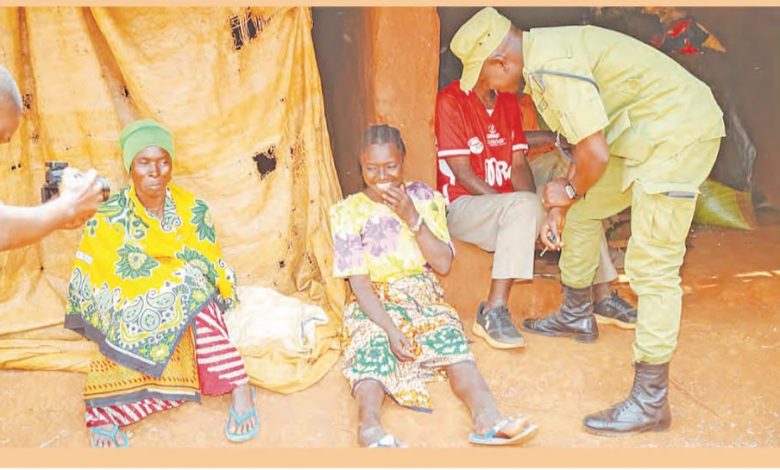
Leaving Namtumbo Police Station, the Luegu Ward Police Officer travelled to Mlambichuma carrying soap, sugar, rice, cooking oil and cash. While these items were basic necessities, the message accompanying them was much more significant: People facing difficult circumstances had not been forgotten.
CPL Mjinya was not travelling to respond to a crime scene or investigate a security incident. Instead, he was going to meet members of the community whose struggles can easily remain unnoticed, particularly those who depend on others for care and support.
Among those he visited were Ally, an elderly man in need of assistance, and Rehema Zuberi, a woman living with a mental health challenge who relies on her family for care. His visit demonstrated how police service can extend beyond conventional law-enforcement responsibilities to include meaningful engagement with the communities’ officers are entrusted to protect.
“I have come to visit and extend acts of compassion to vulnerable groups. I have started with an elderly man and also a person living with a disability. I wanted to see them face to face, understand their lives and see the conditions they are living in,” he said.
A journey that began with a conversation
The idea of reaching out to vulnerable residents of Mlambichuma began with a conversation between CPL Mjinya and Mzee Zuberi, the hamlet chairman. As a local leader familiar with the circumstances of residents, Mzee Zuberi helped identify people who were experiencing particularly difficult situations.
Rather than simply sending assistance through another person, CPL Mjinya decided to make the journey himself. He wanted to meet the beneficiaries personally, listen to them and understand their circumstances firsthand.
That decision transformed what could have been a straightforward donation into a personal human encounter. It created an opportunity for a police officer and community members to sit together, talk and recognise one another beyond the formal relationship between an authority figure and citizens.
Explaining his motivation, CPL Mjinya said his livelihood and service had given him an opportunity to share with people who were less fortunate.
“What God has blessed me with through my livelihood and my service, I decided to share with these brothers and sisters,” he said.
His explanation captures the simplicity of the gesture. He was not presenting himself as a wealthy benefactor. Rather, he was sharing a portion of what he had with people he believed needed support.
More than a Police uniform
CPL Mjinya’s visit also carried a message from the Officer Commanding Namtumbo Police Station, OCD SSP Adam Mwaisondola, to residents of Mlambichuma.
The community was encouraged to maintain cooperation with the police by reporting crimes, security concerns and other incidents requiring the attention of relevant authorities. Residents were also urged not to remain silent when confronted with challenges that could be addressed through appropriate public institutions.
However, the visit carried a message that went beyond security.
CPL Mjinya reminded residents about the importance of caring for vulnerable members of society, particularly elderly people and individuals with special needs. He encouraged families and neighbours not to abandon elderly people when they require assistance, but instead to respect them, listen to them and offer support according to their abilities.
“Love your neighbour as you love yourself. Let us love one another so that peace can prevail,” he said.
The message reflected an important dimension of community policing. Effective policing is not limited to responding to crime after it occurs. It can also involve building relationships, listening to residents, understanding local challenges and creating channels through which communities can communicate their concerns.
Such relationships can help strengthen trust between citizens and public institutions while encouraging residents to participate actively in maintaining peace and security.
A family’s long struggle
For Rehema Zuberi’s family, the arrival of the Ward Police Officer carried particular emotional significance.
Rehema’s mother, Zainab Kharid, described the long and difficult experience of caring for her daughter. She explained that the responsibility had required patience, strength and perseverance over many years.
“I have struggled with her for a very long time, and even now I am still struggling with her. I am very grateful that the Ward Police came to visit us. I thank him very much,” Zainab said.
Her experience highlights a reality that is sometimes overlooked. Families caring for people with mental health challenges, disabilities or other special needs may require more than material assistance. They can also need emotional encouragement, understanding, practical support and reassurance that they are not facing their circumstances alone.
For such families, a visit from someone willing to listen can be meaningful in its own right. Sitting with a family, asking about its circumstances and acknowledging its difficulties can provide a sense of dignity and social connection that material assistance alone cannot provide.
A community that notices its own
Mzee Zuberi expressed his appreciation to CPL Mjinya for identifying and reaching out to vulnerable residents in the hamlet. He said the visit demonstrated the importance of community leaders and ordinary citizens recognising people who are struggling and helping them whenever possible.
He also conveyed his gratitude for the message from OCD SSP Mwaisondola and wished CPL Mjinya good health, a fulfilling life and success in his responsibilities.
The assistance delivered during the visit; soap, sugar, rice, cooking oil and cash may appear modest when considered individually. Yet, for Ally and Rehema’s family, the items carried significance beyond their monetary or practical value.
They represented recognition.
Someone had noticed their circumstances. Someone had listened. Someone had taken the trouble to travel to their homes.
That human connection can be particularly important in rural communities, where vulnerable people may face limited resources and fewer opportunities to access formal support services.
When policing becomes a bridge The visit to Mlambichuma offers a broader reflection on the relationship between police officers and the communities they serve.
ALSO READ: Police in Mwanza apprehend 72 tricycle riders for violating road safety rules
Public perceptions of policing are often shaped by patrols, crime prevention, arrests, investigations and other formal duties. Yet public trust can also develop through everyday interactions in which officers demonstrate that they are willing to understand the people behind the statistics, reports and cases they encounter.
By reaching out to vulnerable residents, CPL Mjinya demonstrated another dimension of public service: The willingness to connect with citizens at a personal level while remaining mindful of the broader responsibilities of policing.
His journey also illustrates that compassion does not necessarily require substantial wealth. Sometimes, it begins with noticing another person’s hardship and sharing whatever resources are available.
For CPL Mjinya, the journey was a personal decision to give back to members of the community. For the families he visited, it became a moment of encouragement and reassurance. For the wider Luegu community, it offered a reminder that social wellbeing depends not only on formal institutions but also on the willingness of individuals and neighbours to care for one another.
As the approximately 11-kilometre journey from Suluti Stand to Mlambichuma came to an end, CPL Mjinya had accomplished more than delivering essential supplies.
He had crossed another kind of distance, the distance that can sometimes exist between public institutions and the people they serve.
In Mlambichuma, the police uniform represented not only authority and law enforcement, but also compassion, solidarity and humanity.
For an officer who chose to share part of his livelihood with people in need, the visit may have been a modest personal gesture.
For those he reached, however, it carried a powerful message: They had not been forgotten.