Tanzania instructs its universities to turn their researches into real life solutions
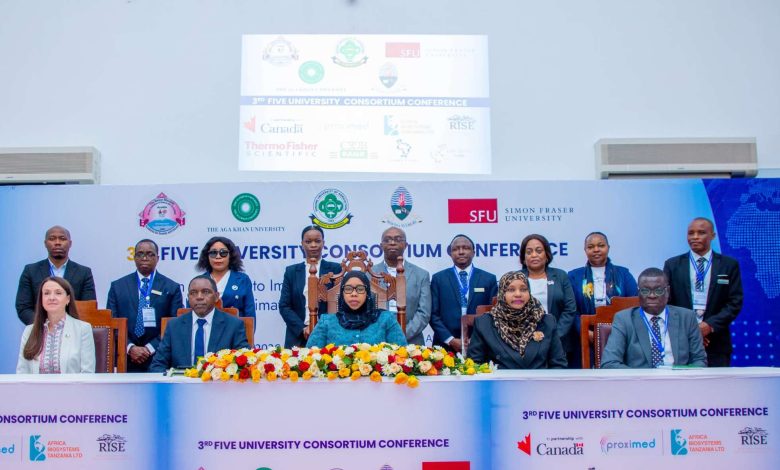
ARUSHA: THE Tanzanian government has urged its universities and research institutions to ensure that knowledge generated through research is translated into practical solutions to challenges facing communities, rather than remaining confined to laboratories and academic publications.
Deputy Minister for Education, Science and Technology, Wanu Hafidh Ameir, made the call in Arusha yesterday when she officially opened the Third Scientific Conference of the Consortium of Five Universities, being held at the Nelson Mandela African Institution of Science and Technology (NM-AIST).
She said the value of research should not be measured solely by the number of studies conducted or academic papers published, but by the extent to which research findings contribute to better decisions, policies, public services and people’s lives.
The Deputy Minister said Tanzania needs stronger collaboration among researchers, the Government, the private sector and communities to ensure that research and innovation are effectively applied in addressing development challenges.
She identified agriculture, health, water and climate change as some of the key areas where scientific knowledge and innovation could provide practical responses to challenges facing communities.
ALSO READ: African universities push joint research, AI skills
Ms Ameir stressed the need to create an enabling environment for researchers to work closely with policymakers, the private sector and communities so that research findings can be translated into solutions with visible social and economic benefits.
Speaking at the conference, Canadian High Commissioner to Tanzania, Emily Burns, said collaboration among academic and research institutions and other stakeholders was continuing to generate research and innovations aimed at addressing real challenges facing society.
She said emerging technologies, including Artificial Intelligence (AI), were increasingly being applied in areas such as crop disease detection, healthcare, education and environmental management.
According to Ms Burns, such applications demonstrate the importance of linking research and technology with the actual needs of communities in order to improve the efficiency of development interventions.
Meanwhile, NM-AIST Vice Chancellor, Prof Maulilio Kipanyula, said the collaboration among the five universities was aimed at bringing together expertise and resources available within the institutions to strengthen their capacity to generate knowledge and technological solutions.
He said the partnership would also provide an opportunity for the institutions to combine their expertise in addressing complex challenges that require multidisciplinary scientific approaches.