Mozambique’s economic transformation, opens strategic opportunities for Tanzania
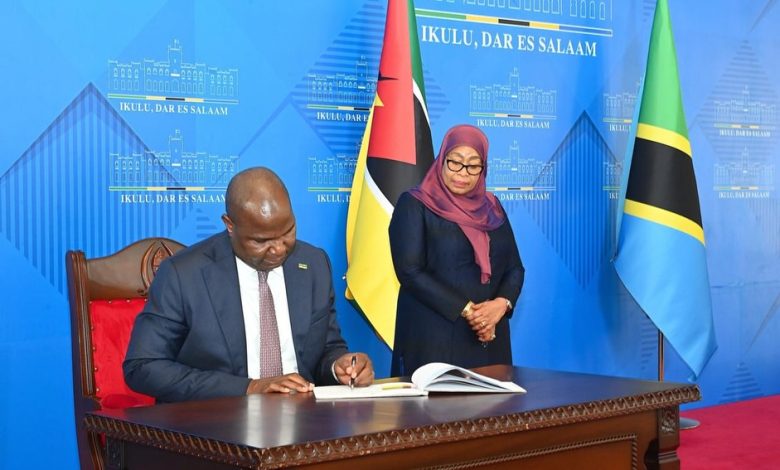
MOZAMBIQUE: MOZAMBIQUE is often discussed through the lens of its security challenges, particularly in Cabo Delgado. But beyond those challenges lies a country with significant economic assets: Strategic geography, abundant natural resources, an expanding private sector and considerable opportunities for investment, trade and regional economic integration.
The question is, therefore, not whether Mozambique has economic potential. It does.
The more important question is how that potential can be translated into productivity, competitiveness, productive investment, quality employment, value addition and inclusive economic transformation.
That question was at the heart of discussions at the second edition of the FUNDEC Economic Outlook, held in Maputo on September 18, this year, under the theme “Business Competitiveness for Mozambique’s Economic Transformation.”
For Tanzania, however, the discussions offered more than an assessment of Mozambique’s economy. They provided an opportunity to consider how the two neighbouring countries can transform their longstanding political, historical and people-to-people relationship into a deeper and more commercially meaningful economic partnership.
One of the strongest messages from the Outlook was that economic resources do not automatically produce economic transformation.
A country can possess land, minerals, energy resources, strategic ports, a young population, technology and access to regional markets. But these assets generate broad economic benefits only when institutions and businesses can convert them efficiently into production, productivity and value.
The economic chain is straightforward: Resources must become productivity; productivity must become competitiveness; competitiveness must attract investment; and investment must create value, productive employment and sustainable economic growth.
This is where Mozambique’s competitiveness challenge becomes important.
The employment discussions at the Outlook highlighted a fundamental distinction between simply creating jobs and creating productive, better-quality and sustainable employment.
Employment matters but productivity determines how much economic value each worker and each hour of work generates.
That is not simply a Mozambique issue. It is a development lesson for the entire region.
The same principle applies to investment. The question should not only be how much capital enters an economy, but what that capital produces.
Does it increase productivity? Does it create competitive enterprises? Does it generate exports? Does it develop local suppliers? Does it transfer technology and skills? Does it create productive employment? Does it strengthen domestic value chains?
These questions are particularly important in economies where major investments coexist with small and medium-sized enterprises that may struggle to access finance, technology, markets and skills. The challenge is, therefore, to strengthen the link between investment and productivity, and between productivity and broader economic participation.
Investment should not be viewed simply as capital formation. Its wider value lies in the economic activity it generates, the businesses it supports, the skills it develops and the value chains it creates.
Finance is another critical part of the equation, in which, there must be an improved access to credit. This is very important because credit by itself is not an economic transformation strategy.
Finance becomes transformative when it enables businesses to purchase equipment, expand production, adopt technology, process agricultural products, improve logistics, enter new markets and participate in supply chains.
For Mozambique’s small and medium-sized enterprises, this requires financing mechanisms that reflect the realities of smaller businesses, including guarantees, equipment finance, supply-chain finance, factoring and appropriate medium- and long-term financing.
This is also an area where Tanzania and Mozambique can explore practical cooperation among financial institutions, businesses and investment partners.
Perhaps one of the most interesting discussions at the Outlook concerned Artificial Intelligence.
The important question is not simply whether businesses should use AI. The deeper question is how technology can change the way work is done and produce measurable productivity gains.
Technology does not automatically create competitiveness. If inefficient processes remain unchanged, technology may simply make an inefficient system operate faster.
AI, therefore, needs to be applied to concrete economic problems.
In agriculture, it can support production decisions and forecasting. In logistics, it can improve routing, fleet management and inventory management. In finance, it can support risk assessment and fraud detection. In manufacturing, it can contribute to predictive maintenance and operational efficiency.
For SMEs, digital tools can reduce administrative costs, improve customer management and open access to new markets.
The opportunity, therefore, is not “AI for AI’s sake,” but technology that solves real economic problems.
Economic transformation is not only about increasing GDP. It is also about ownership, participation, transparency and the ability of citizens and domestic enterprises to benefit from economic activity.
This was another important dimension of the Outlook, particularly in discussions on capital markets and national participation.
The development of capital markets and mechanisms for broader national participation can help connect investment with domestic ownership and wealth creation.
This is a significant issue for African economies seeking to attract large-scale foreign investment while simultaneously strengthening domestic enterprises and citizen participation. The central question is not simply how much investment a country attracts, but how effectively that investment becomes part of a broader domestic economic ecosystem.
For Tanzania, these discussions should not be viewed merely as an assessment of the Mozambican economy. They should be treated as economic intelligence relevant to Tanzania’s economic diplomacy.
The strategic question is not simply what can Tanzania sell to Mozambique? Instead, it should instead be; which competitiveness gaps in Mozambique can Tanzanian companies and institutions help address, and what mutually beneficial economic value can be created in the process?
That changes the nature of the relationship. Tanzania can engage Mozambique not only as a market, but also as a production partner, investment destination, regional valuechain partner, services market and gateway to wider regional opportunities.
This perspective creates a broader agenda for economic diplomacy, one based not only on trade promotion, but also on investment, production, services, skills, technology and regional value chains.
One of the most strategic areas is the economic space linking southern Tanzania with northern Mozambique. The Mtwara–Ruvuma–Cabo Delgado–Niassa corridor has the potential to become much more than a route for traditional cross-border trade.
It can support agriculture, agro-processing, logistics, transport, fisheries, tourism, services and industrial activity.
But economic corridors do not develop simply because two regions share a border.
They require coordinated infrastructure, efficient border management, predictable regulations, secure movement, reliable logistics services, appropriate financial mechanisms and sustained private-sector participation.
This is where the connection between security diplomacy and economic diplomacy becomes particularly important. A secure border facilitates movement, efficient movement facilitates trade, trade creates markets and markets attract investment.
Investment creates jobs and strengthens local economic resilience. Security and economic development can therefore reinforce one another.
Agriculture provides another major opportunity. Mozambique’s agricultural potential, combined with Tanzania’s growing experience in agricultural production, processing, storage, logistics and regional trade, creates possibilities for cross-border value chains.
The objective should not simply be to increase trade in raw commodities. The greater opportunity lies in processing, packaging, storage, transportation, financing and market development.
This could allow Tanzanian companies to participate in Mozambican value chains while simultaneously strengthening regional food security and industrial development.
The real opportunity is to move from trading commodities to building value chains in various sectors such as energy, mining and industrial services.
Mozambique’s energy and extractive sectors are generating and are likely to continue generating demand for a wide range of services. For Tanzania, the opportunity extends beyond the resources themselves.
Tanzanian businesses can potentially participate in engineering, logistics, transport, equipment supply, construction, maintenance, professional services, training and other segments of emerging supply chains.
The strategic question for Tanzania’s economic diplomacy is, therefore, not simply whether Tanzania can attract investment from Mozambique. It is also how can Tanzanian businesses become part of Mozambique’s emerging economic value chains.
That shift from viewing Mozambique primarily as a market to viewing it as a potential partner in production and value creation could have important implications for Tanzania’s private sector.
Tourism offers another area in which Tanzania and Mozambique can complement rather than simply compete with each other. Tanzania’s established tourism destinations can potentially be connected with Mozambique’s coastal, marine and cultural attractions to develop complementary tourism circuits.
Improved air connectivity would support this objective. Aviation is not merely a transport issue. It is an economic multiplier. Better connectivity facilitates tourism, business travel, investment, professional services and people-topeople relations.
Medical tourism presents another practical opportunity through hospital referrals, accommodation, transport, tourism services and patient facilitation. These are areas where economic diplomacy can help connect institutions and businesses on both sides.
Perhaps the most important lesson from the FUNDEC Outlook is the distinction between competitiveness measurement and competitiveness action. Measurement tells us where the problems are, while action determines what we do about them.
The same principle should guide economic diplomacy. Economic diplomacy should not be measured only by the number of meetings held, delegations received, memoranda signed or exhibitions attended. It should increasingly be measured by outcomes.
Tanzania and Mozambique share a relationship built on history, solidarity, geography and people-to-people ties. That foundation remains important. But the next chapter can be built on something equally powerful: Shared economic opportunity.
Mozambique should not be viewed only through the lens of its challenges, just as Tanzania should not view Mozambique merely as a destination for exports.
The two countries can increasingly see each other as partners in building regional value chains, connecting markets, developing human capital, strengthening investment and improving economic resilience.
The FUNDEC Economic Outlook provides an important reminder that economic transformation does not happen automatically.
It requires institutions that convert potential into productivity; businesses that convert investment into value; technology that solves real problems; finance that reaches productive sectors; and economic diplomacy that connects opportunities with capable partners.
For Tanzania, this presents an opportunity to move from economic diplomacy based primarily on engagement to economic diplomacy based on measurable economic outcomes.
For Tanzania and Mozambique, the broader opportunity is to move from being neighbours with a shared history to becoming strategic economic partners with a shared future.