Tanzania’s new investment pitch to Germany, build here, export to Africa
DAR ES SALAAM: TANZANIA should no longer be viewed simply as a destination for selling products, but as a platform for producing them, adding value to resources, building regional supply chains and reaching one of Africa’s largest emerging markets.
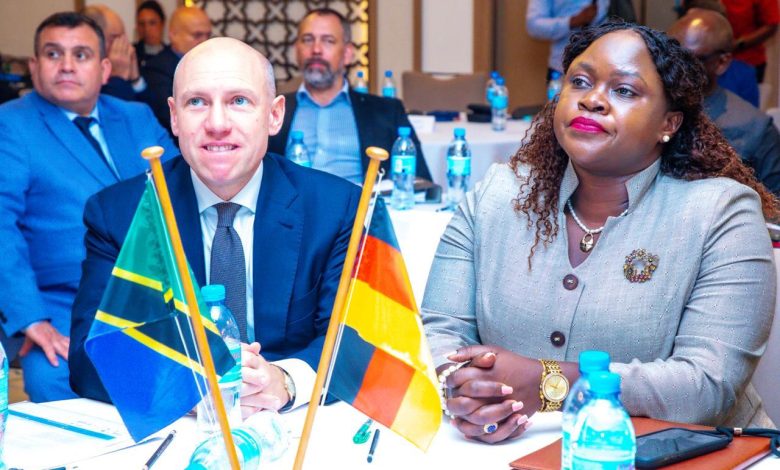
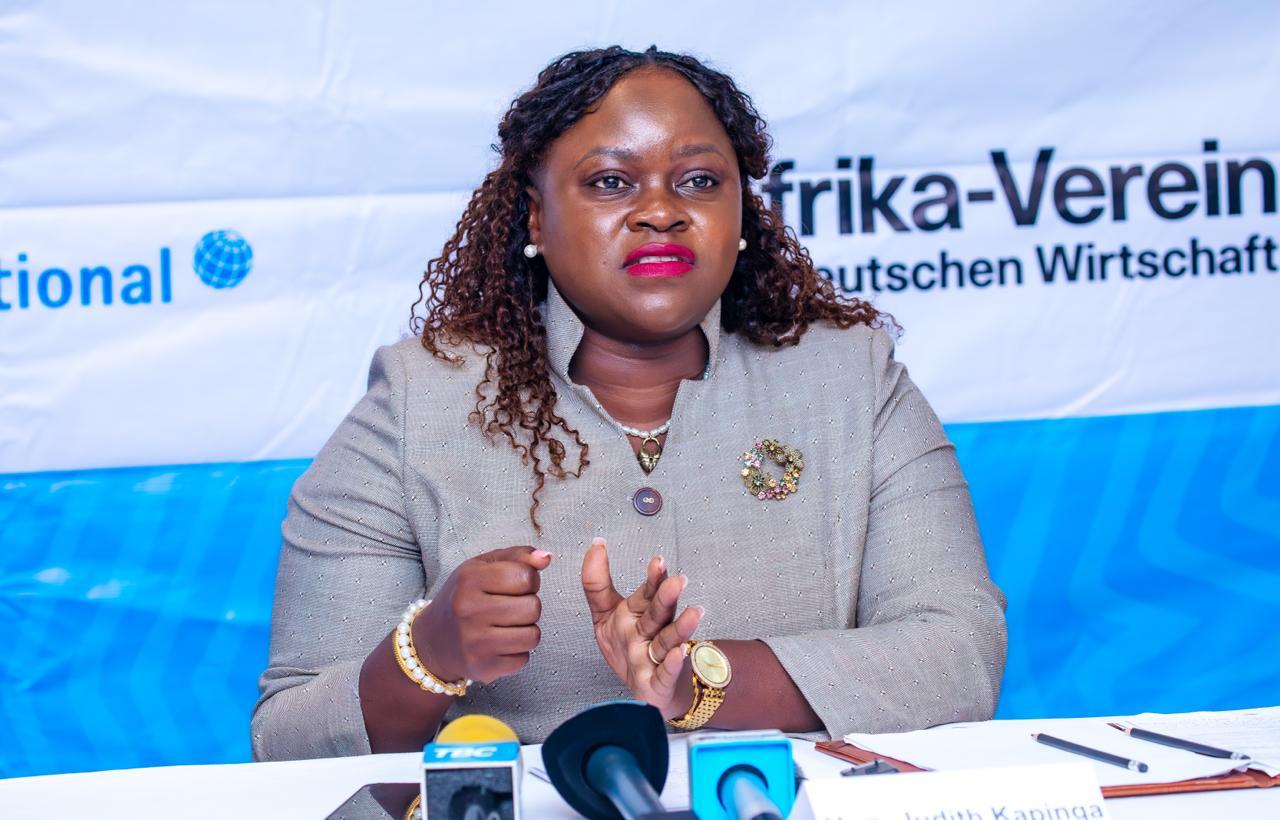
That message was at the centre of Industry and Trade Minister Judith Salvio Kapinga’s address on September 16 at the Invest.EastAfrica! German Business and Investment Forum in Dar es Salaam, where about 30 German companies and institutions engaged with Tanzanian government and business representatives.
For Tanzania, the proposition is straightforward: combine German capital, technology and industrial expertise with Tanzania’s natural resources, workforce, infrastructure and access to regional markets.
“Today, therefore, we are not starting a new relationship,” Kapinga said. “We are opening a new chapter in an established partnership—one that should increasingly be characterised by investment, value addition, technology transfer, innovation and mutually beneficial commercial engagement.”
For his part, Deputy Minister for Foreign Affairs and East African Cooperation James Ole Millya welcomed German investors to explore partnerships and joint ventures with Tanzanian counterparts and the EAC at large, emphasising the potential for mutually beneficial economic cooperation.
The opportunity comes against a backdrop of deepening economic ties. Tanzania-Germany merchandise trade increased from approximately US$223.7 million in 2018 to about US$358.7 million in 2025. Tanzania’s exports to Germany also rose, from approximately US$34.7 million to US$56.7 million over the same period.
Yet those numbers point to considerable headroom.
Tanzania wants German companies to invest further upstream—in manufacturing, agro-processing, industrial equipment, pharmaceuticals, medical technology, chemicals, construction materials, logistics, renewable energy, digitalisation, skills development and mineral processing.
The underlying proposition is value addition. Rather than exporting commodities and importing finished products, Tanzania wants integrated industrial value chains in which processing, manufacturing, technology, skills and supply-chain development increasingly happen within the country.
For German companies, that creates a potential dual-market opportunity: serve Tanzania’s domestic economy while positioning production for East Africa and the wider African market.
ALSO READ: Stakeholders join forces to strengthen Dar food system
Tanzania is a member of the East African Community and SADC and participates in the African Continental Free Trade Area. Its strategic position provides a platform for accessing expanding regional and continental markets. The country also benefits from preferential access to the European Union under the Everything But Arms framework, subject to applicable rules and requirements.
That combination gives Tanzania an investment proposition extending beyond its borders.
For German manufacturers, it can mean establishing production closer to African consumers. For technology companies, it can mean deploying solutions into rapidly developing industrial and logistics ecosystems. For engineering firms, it can mean participating in infrastructure and resource-development projects. For investors, it can mean gaining exposure to sectors linked to Tanzania’s long-term industrialisation ambitions.
Logistics is one of the clearest opportunities. Tanzania’s Indian Ocean coastline and connections into the East and Central African hinterland create demand for modern warehousing, cold-chain infrastructure, freight forwarding, logistics technology, sustainable transport and integrated supply-chain management.
Tourism offers another investment frontier. Tanzania’s wildlife, national parks, mountains, coastline and cultural heritage create opportunities beyond traditional hotels and safari operations, including eco-tourism, conference tourism, cultural tourism, medical tourism, hospitality technology and the manufacturing and services supply chains supporting the visitor economy.
The investment conversation is also moving into strategic minerals and the green economy. Tanzania wants mineral development to progress beyond extraction towards beneficiation, processing and industrial capabilities, creating potential opportunities for German technology providers, equipment manufacturers, engineering companies and environmental-services firms.
Carbon markets and climate finance represent another emerging area, with Tanzania seeking investment models that combine environmental integrity, community participation and measurable local economic benefits.
Perhaps the most important part of the German proposition, however, is not capital. It is know-how.
Germany’s strength in technical education, vocational training, applied research, engineering and industrial innovation provides an opportunity to build investment partnerships around skills as well as physical assets.
Kapinga specifically highlighted dual vocational training, apprenticeships, industrial research, technology transfer, entrepreneurship and innovation as areas where deeper cooperation could produce lasting economic value.
This is where the Tanzania-Germany relationship could evolve from conventional investment into industrial partnership.
Germany and Tanzania have maintained diplomatic relations since 1961, with cooperation expanding over decades from development and political engagement into trade, investment, education, technology, skills development and private-sector cooperation.
The commercial question now is how much of that longstanding relationship can be translated into private-sector investment.
Tanzania’s message to German business is increasingly specific: bring technology, build production, develop local suppliers, train people and use Tanzania as a gateway into Africa.
In his speech, Hon. Manfred Pentz, Hessen State Minister for Federal, European and International Affairs and Bureaucracy Reduction, said the partnership between East Africa and Hessen presents an opportunity to combine East Africa’s markets, talent and growth with Germany’s industrial expertise, research and capital.
“East Africa brings scale, talent, technology and strong growth, while Hessen brings industrial excellence, research, capital and access to the European market. This is a powerful combination. Together, we can turn innovation made in Africa and technology made in Germany into new opportunities for trade, investment and jobs.”
He added: “We want to reduce barriers between East Africa and Europe and bring our economies closer together. Economic cooperation becomes stronger when businesses can connect, invest, innovate and trade more easily.”
Pentz also welcomed the renewed discussion on the European Union–East African Community Economic Partnership Agreement (EU-EAC EPA), saying deeper economic and trade engagement between the two regions could help strengthen market access and commercial ties.
Hon. Andrea Ariik Malueth, Deputy Secretary General in charge of Infrastructure, Productive, Social and Political Sectors at the East African Community, said the EAC is regarded as one of Africa’s fastest-growing regional economic blocs, an achievement the region seeks to maintain and strengthen.
ALSO READ: Rwanda’s RURA visits TCRA to learn how it regulates and manages the communications sector
He highlighted the progress made in regional integration. Under the Single Customs Territory, truck turnaround time has fallen from around 21 days to under four days, while the cost of doing business across the customs territory has fallen by approximately 70 percent. The EAC operates 15 One Stop Border Posts, cutting crossing times by up to 70 percent and saving the region an estimated US$63 million annually.
The region has also harmonised more than 1,900 East African standards, introduced a common East African e-Passport, and established institutions including the East African Court of Justice and East Africa Legislative Assembly.
These milestones have contributed to an increase in intra-EAC trade from US$9.173 billion in 2019 to US$19.541 billion in 2025, a 113 percent increase. Total EAC trade rose from US$79.572 billion to US$156.572 billion over the same period.
Germany remains an important trading partner. In 2025, EAC exports to Germany were valued at US$629.8 million, a 1.4 percent decline from US$639 million in 2024, representing 17.1 percent of EAC exports to the EU. Imports from Germany stood at US$1.2 billion in 2025, compared with US$1.26 billion in 2024, accounting for 21.3 percent of total EU-EAC imports.
For investors, Malueth argued, these figures demonstrate that regional integration is increasingly translating into practical commercial infrastructure.
“I recite these figures because they are the answer to the only question that matters to an investor in this room: is this region’s stated commitment a matter of declarations, or of demonstrated administration?” he said. “Twenty-one days to four days is an answer. Fifteen operating border posts is an answer.”
For Tanzania, the invitation from Dar es Salaam is therefore clear: Germany has the industrial expertise; Tanzania has the platform.
The opportunity is to build the future together, not simply by trading with Africa, but by producing for it.