Hudaina: Defying the Odds to fight FGM
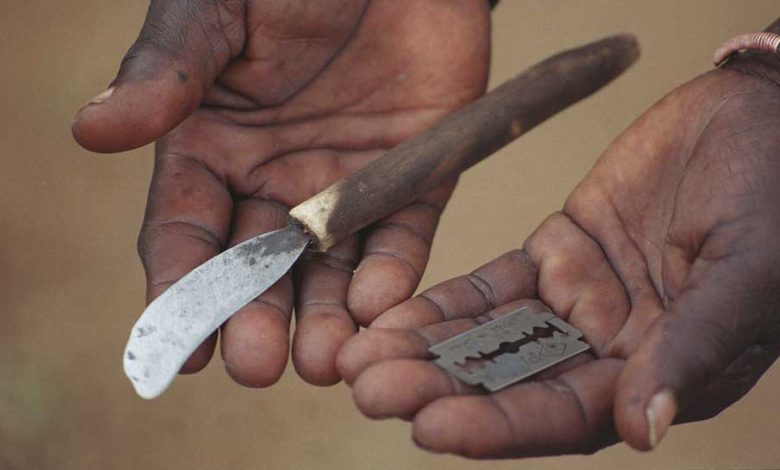
DAR ES SALAAM: HUDAINA Morindath grew up watching Female Genital Mutilation (FGM) mark a girl’s passage into womanhood in her Maasai community.
Now a second-year nursing student at Aga Khan University, she plans to help end it. “Although it may be viewed by some people as part of culture, from my perspective, it is a harmful practice,” she says.
Hudaina is the firstborn of five children in a community where, she says, “education is not always prioritized for girls.”
Her family’s decision to value schooling for every child changed the course of her life, carrying her through secondary school and into Aga Khan University’s School of Nursing and Midwifery.
Looking back, she says education became more than attending classes. It became proof that a different future was possible.
Growing up, Hudaina watched traditions shape expectations for girls around her. Older girls prepared for milestones that had been passed from one generation to the next, while conversations about education did not always place girls’ ambitions at the centre.
As the eldest child, she came to appreciate just how unusual her parents’ support was. Their encouragement gave her confidence to dream beyond the boundaries many girls were expected to accept.
That early foundation would later shape the way she thinks about change not as rejecting where she comes from, but as expanding what is possible for the next generation. Hudaina did not choose nursing by chance.
“What inspired me to pursue nursing was seeing the challenges people in my community face in accessing healthcare,” she says.
Maternal and child health stayed with her most. She watched families struggle to reach health facilities and saw how distance and limited services affected mothers and children.
For her, nursing became more than a career. It became a way of returning home with skills that could make a difference.
Her first clinical placement transformed that ambition into something more personal. Walking into a hospital ward as a student nurse was unlike anything she had experienced before.
She found herself caring for patients in pain, listening to worried families and learning that recovery often depended as much on reassurance as treatment.
“It taught me to have more compassion for others and to understand that patients need not only medical care, but also emotional support and kindness,” she says.
That lesson now shapes how she approaches one of the most sensitive issues affecting girls in the community where she was raised.
“It is true that FGM has historically been practiced in some communities,” Hudaina says carefully. As a nursing student, she now understands the practice through a different lens.
“As a nursing student, I understand that FGM can affect women and girls both physically and emotionally.” She explains that it can cause severe pain, excessive bleeding, infections and complications during childbirth, while leaving emotional scars that include fear, trauma and anxiety.
For Hudaina, those are not simply lessons from a nursing textbook. They are realities that affect women whose lives resemble the one she grew up knowing.
Yet her story is not about rejecting her culture. “I believe preserving culture is not a bad thing. Culture gives people identity, values and a sense of belonging,” she says.
Instead, she believes communities can preserve what strengthens them while letting go of practices that put girls’ health at risk. “We do not reject the whole culture. We encourage communities to protect their identity while choosing practices that promote health and well-being.”
That distinction matters deeply to her. Rather than positioning herself against her community, she sees herself working alongside it. Hudaina says she has already begun to see attitudes shift.
“The practice is declining as more people become aware of its harmful effects,” she says, pointing to educated community members who are increasingly speaking openly about the health risks.
The national figures suggest she is witnessing a broader trend. The 2022 Tanzania Demographic and Health Survey and Malaria Indicator Survey found that 8.2 per cent of women aged 15 to 49 had undergone FGM, down from 10 per cent in 2015-16 and 18 per cent in 1996, before the practice was criminalised in 1998.
Yet the progress has not been shared equally across the country. While the national average has fallen steadily, Manyara and Arusha regions home to many Maasai communities have consistently recorded some of the country’s highest prevalence rates.
Earlier national surveys found rates of 58 per cent in Manyara and 41 per cent in Arusha, while the 2022 survey still recorded 43 per cent in both regions, highlighting why community-led change remains essential.
For Hudaina, those figures are more than statistics. They explain why conversations about protecting girls’ health cannot stop at national progress, they have to reach the communities where change is still unfolding.
ALSO READ: Ending FGM begins with communities
Instead of relying on condemnation alone, Hudaina believes lasting change comes through conversation. “I plan to collaborate with community leaders, healthcare professionals and also people who are involved in performing FGM,” she says. “By involving them in awareness programmes, we can help them understand the risks.”
Her approach is practical rather than confrontational. She believes people who have long held influence within communities can also become powerful voices for change when they are included rather than pushed aside.
That belief reflects the same balance she has tried to live herself: respecting where she comes from while embracing knowledge that can save lives.
Asked what it means to be both a Maasai woman and a nursing student, Hudaina does not describe two identities pulling in opposite directions.
“I see myself as a bridge between my culture and modern healthcare,” she says. “I want to show that a Maasai girl can pursue higher education, become a professional, respect her culture and still contribute to positive change.”
Her message to girls growing up in pastoralist communities is equally direct. “Education is possible, regardless of where you come from or the challenges you face.”
She hopes they will see that pursuing education does not require abandoning their identity. When Hudaina returns home wearing a nurse’s uniform instead of the expectations many once placed on girls her age, she hopes younger girls will see more than a profession.
She hopes they will see possibility. For her, defying the odds is not about turning away from her roots. It is about proving that a Maasai girl can honour her identity, pursue higher education and help write a healthier future for the next generation.