Tanzania earns five AFI recognition as financial inclusion surge
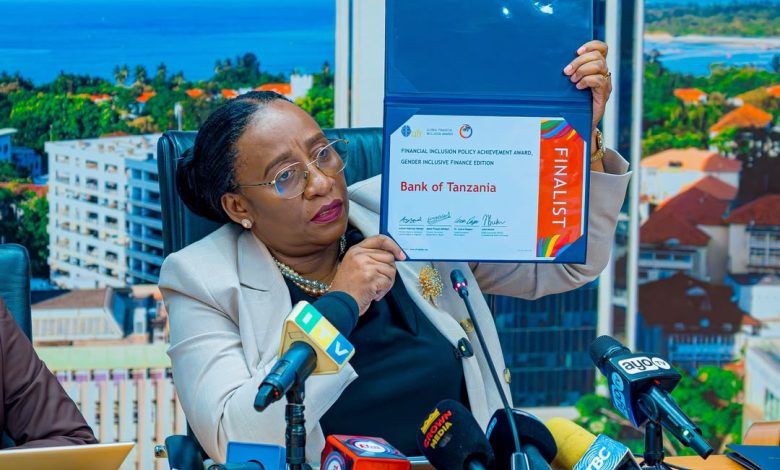
DAR ES SALAAM: TANZANIA’s efforts to expand access to formal financial services have received international recognition after the country secured five awards and certificates from the Alliance for Financial Inclusion (AFI), amid a rise in financial inclusion to 76 per cent.
The recognition, presented during the AFI Global Policy Forum held in Papua New Guinea from September 1 to 4, highlighted the country’s progress in implementing financial inclusion commitments and policies, particularly those aimed at increasing women’s access to financial services.
Speaking at a media briefing in Dar es Salaam yesterday, Bank of Tanzania (BoT) Manager for Financial Inclusion Services, Ms Nangi Massawe, said Tanzania was recognised among the top three AFI member countries for its leadership in financial inclusion policies and efforts to reduce the gender gap in access to financial services.
She said one of the major recognitions was the Maya Declaration Award, which acknowledges countries that demonstrate progress in setting, measuring and implementing commitments to advance financial inclusion.
“Of the 13 commitments that Tanzania made, we have so far fulfilled six, while work on the remaining commitments is still ongoing,” Ms Massawe said.
The forum organised by AFI comprises member institutions from 84 countries, and was attended by more than 700 participants from 79 countries.
The Maya Declaration allows AFI member countries to establish measurable financial inclusion targets and monitor progress towards achieving them.
ALSO READ: RC directs councils to support traders
Tanzania was also recognised for its role in implementing the Denarau Action Plan, which places emphasis on advancing financial inclusion for women and taking concrete measures to address gender gaps in access to financial services.
Ms Massawe said the recognitions reflected progress made through the country’s financial inclusion strategies, noting that Tanzania was currently implementing its third National Financial Inclusion Strategy covering 2023–2028.
The first strategy was introduced in 2013, followed by the second in 2017, before the current five-year strategy was launched in 2023.
According to the FinScope survey, she said, formal financial inclusion increased from 65 per cent in 2017 to 76 per cent in 2023.
The number of adults without access to formal financial services also declined from 7.8 million in 2017 to 6.4 million in 2022/23.
Physical access to financial services improved during the period, with the proportion of the population able to access a financial service within a five-kilometre radius increasing from 86 per cent to 89 per cent.
Ms Massawe said the use of mobile money services also increased from 60 per cent to 72 per cent, underscoring the growing contribution of digital financial services to expanding access.
Beyond general access, Tanzania has also introduced measures targeting groups that face greater barriers to financial services, including people with disabilities and internally displaced persons, particularly those affected by climate-related events.
“These efforts are aimed at connecting vulnerable groups with the formal financial system so that they can access and benefit from financial services,” she said.
The second major recognition, the Financial Inclusion Policy Achievement Award, focused on Tanzania’s efforts to promote gender-inclusive finance.
Ms Massawe said gender considerations had been incorporated into the 2023–2028 National Financial Inclusion Strategy, with emphasis on addressing barriers that limit women’s access to and use of financial services.
She said Tanzania had also developed a Gender Inclusive Finance Framework to guide financial institutions in designing products and services that respond to women’s specific financial needs.
The framework seeks to encourage financial service providers to go beyond simply branding products as being designed for women and instead ensure that they address their actual financial needs.
The AFI, established in 2009 and headquartered in Kuala Lumpur, Malaysia, is a global network of central banks and financial regulators from developing countries.