BRICS pushes for new financing options for Africa
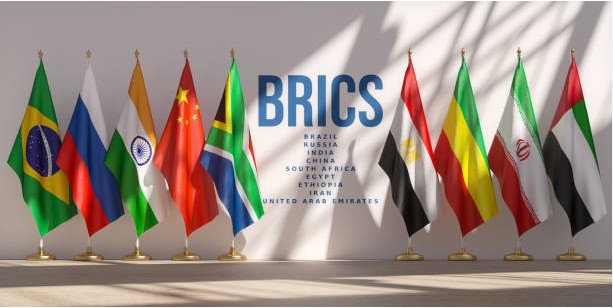
AFRICA: AFRICA needs more capital to finance power, transport, industry and digital infrastructure. Yet many governments continue to face high borrowing costs, currency risks and limited access to long-term investment.
That financing gap sits at the centre of BRICS’ latest push to reshape global finance. At a September 10 meeting in Mumbai, BRICS finance ministers and central bank governors backed reforms to the IMF and World Bank, greater use of local currencies, connected payment systems, an expanded New Development Bank and guarantees designed to attract private capital.
The agenda goes beyond gaining greater voting power. BRICS is seeking more influence over how capital is raised, moved and invested.
The stakes for Africa are significant. The 11-member bloc represents about 49.5 per cent of the world’s population, 40 per cent of global GDP and 26 per cent of global trade, according to India’s government.
Yet its growing economic weight still carries less influence within the institutions that govern global finance. Those figures give BRICS a strong economic argument.
But economic size and financial power are not the same thing. At the IMF, the United States holds 16.49 per cent of voting power, compared with 6.08 per cent for China.
Tanzania has just 0.11 per cent. The comparison illustrates the imbalance BRICS is challenging: An economy can become increasingly important to global growth without gaining equivalent influence over the institutions that make global financial decisions.
For Africa, however, changing IMF and World Bank voting arrangements is only part of the story. A more immediate issue is the push for local-currency financing.
In simple terms, BRICS wants more borrowing and trade to be conducted in national currencies rather than relying on the US dollar for every transaction.
The attraction is straightforward. A country that earns most of its revenue in its own currency but borrows in dollars takes on an additional risk.
If its currency weakens, debtservicing costs rise even though the original amount borrowed has not changed. That makes local-currency financing attractive to African economies.
But it is not a simple substitute for dollar financing. Investors still need liquid markets, credible monetary policy and effective mechanisms for hedging currency risk.
A Tanzanian company, for example, may welcome the ability to settle a transaction with a Chinese supplier without first converting through dollars.
But both sides still need confidence that the currencies involved can be traded and converted efficiently. Local-currency finance can reduce some foreign-exchange exposure, but it cannot eliminate the underlying currency risk.
The payment issue follows naturally. BRICS is backing efforts to make national payment systems work more easily with one another, with the aim of making international transactions faster, cheaper and more secure.
The idea is less dramatic than the frequently discussed prospect of a common BRICS currency, and that may be precisely why it is more realistic.
The objective is essentially to improve the financial plumbing between countries. A Tanzanian importer buying machinery from China could eventually face fewer intermediaries, fewer currency conversions and lower transaction costs if national payment systems become easier to connect.
The potential market is substantial. BRICS countries account for more than a quarter of global trade. But there remains a significant gap between an agreed direction and a functioning system.
BRICS has not created a single currency or replaced the dollar in international finance. What is emerging instead is an attempt to build alternative channels alongside the existing system.
The New Development Bank, or NDB, is perhaps the clearest institutional expression of this strategy.
Created by BRICS countries, the bank finances infrastructure and sustainable-development projects, giving emerging economies another source of development finance rather than relying entirely on established institutions such as the World Bank.
Its scale is growing, although the comparison with the existing system remains important. The NDB says that by the end of 2025 it had approved 35.6 billion US dollars in financing across 115 projects, including 19 new projects approved during 2025 worth another 3.17 billion US dollars.
Its latest published figures put cumulative approved financing at about 42.9 billion US dollars across 139 projects. That is significant, but still relatively small beside the World Bank Group, which reported 161.9 billion US dollars in commitments in 2025 alone.
The comparison is not perfect because the institutions measure their activities differently. Even so, it highlights the central point: the NDB is an additional source of financing, not yet a replacement for the established multilateral system.
For Africa, its future scale matters more than its current size. The NDB’s portfolio has so far been concentrated heavily in its largest member economies.
In its June 2025 active portfolio, China and India each accounted for 26 per cent, while South Africa represented 19 per cent.
That raises a practical question for African countries outside South Africa: will NDB expansion translate into a meaningful increase in African projects, or will most additional lending continue flowing into larger existing markets? The fifth part of the agenda may have the biggest direct effect on business: Guarantees designed to mobilise private capital.
The problem they are trying to solve is simple. Africa does not necessarily lack projects. It often lacks projects that private investors consider safe enough.
A 1 billion US dollar power project may make economic sense, but a commercial investor could still reject it because of concerns about political risk, foreign-exchange exposure, government payment risk or the broader business environment.
A multilateral guarantee can change that calculation by absorbing part of the risk. A development institution does not necessarily have to finance the entire project itself.
ALSO READ: BRICS expansion draws interest from Over 30 nations amid shifting global dynamics
It can provide a guarantee or another form of risk-sharing that makes banks, pension funds and institutional investors more willing to participate.
This distinction matters because public development banks alone cannot finance the scale of infrastructure required across emerging markets.
The bigger objective is to use a relatively limited amount of public or multilateral capital to attract a much larger pool of private money.
For Africa, that could be particularly important in power, transport, ports, water, housing and digital infrastructure.
Among the five areas discussed in Mumbai, this may ultimately have the strongest commercial significance. But the test is execution.
A guarantee matters only if it is credible, sufficiently large and structured in a way that institutional investors are willing to use.
Taken together, the initiatives point to a clear strategy: BRICS is not trying to replace the IMF and World Bank overnight.
It is seeking to build enough financial capacity around them to give emerging economies greater room to manoeuvre.
For Africa, that deserves close attention. The continent needs enormous investment in power, transport, industry, water and digital infrastructure, yet many projects remain constrained by high borrowing costs, currency risk and weak investor confidence.
The significance of BRICS for Africa, therefore, is not about replacing one financial system with another. It is about expanding the choices available to African governments and businesses and ultimately, strengthening Africa’s financial agency.