Tanzania must see the whole of Mozambique, far beyond Cabo Delgado
MOZAMBIQUE: FOR many Tanzanians, the word Mozambique immediately brings to mind Cabo Delgado, terrorism, insurgency and insecurity. That perception is understandable.
Cabo Delgado has attracted considerable international attention because of the security challenges in the province and their implications for energy, investment, humanitarian conditions and regional stability.
But there is a danger when one part of a country becomes the image of the whole country.
Mozambique is a vast and diverse country, stretching from the Rovuma River in the north to Maputo in the south. It has a long Indian Ocean coastline, strategic ports, agricultural regions, mineral resources, energy assets, tourism potential and growing connections to both Eastern and Southern Africa.
For Tanzania, changing the way we see Mozambique is, therefore, not merely a matter of correcting an image. It is a matter of strategic national interest. Geopolitics teaches us to look beyond headlines.
It requires us to examine geography, resources, markets, infrastructure, security, demographics, political relationships and national interests and, most importantly, how these factors interact. Viewed through this lens, Mozambique occupies an exceptionally important position in Africa.
It borders Tanzania, Malawi, Zambia, Zimbabwe, South Africa and Eswatini, linking it geographically to both Eastern and Southern Africa.
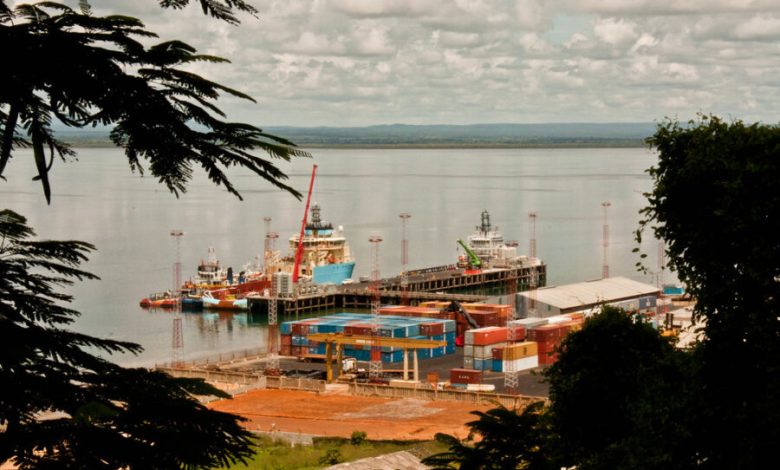
Its Indian Ocean coastline and ports provide access to international markets, while its transport corridors connect the interior of the continent to the sea.
Maputo, Beira and Nacala each serve different economic and regional networks. Beyond these gateways lie agricultural areas, mineral deposits, energy projects, fisheries, tourism destinations and emerging industrial opportunities.
This is the Mozambique that Tanzania needs to understand more fully. Cabo Delgado is important but not the whole story. None of this diminishes the importance of Cabo Delgado.
The province is strategically significant. It is home to major naturalgas developments in the Rovuma Basin and has become central to Mozambique’s ambition to establish itself as a major liquefied natural gas producer.
Mozambique’s National Petroleum Institute estimates the country’s natural-gas resources at approximately 179 trillion cubic feet in Situ Island, including about 172 trillion cubic feet in the Rovuma Basin.
International investment continues to underline the strategic importance of these resources.
In August 2026, ExxonMobil announced that the Area 4 consortium had awarded approximately 1.1 billion US dollars in pre-investment contracts for long-lead equipment and early construction activities associated with Phase 1 of the Rovuma LNG project. These developments matter.
But the lesson for Tanzania should not be that Mozambique is simply a gas story. Nor should it be that Mozambique is primarily a security story.
ALSO READ: Tanzania targets Cabo Delgado health partnership
The larger lesson is that Cabo Delgado is one part of a much bigger Mozambican economic and geopolitical landscape. Mozambique does not have a single economic geography.
It has several. Maputo is closely connected to South Africa, Eswatini and the wider Southern African economy. It is an important commercial, financial and diplomatic centre.
Beira occupies a strategic position in central Mozambique, providing a gateway towards the country’s interior and neighbouring landlocked economies.
Nacala offers another important northern gateway, linking northern Mozambique to regional markets and transport networks.
Then there are the regions beyond the ports: Agricultural zones, mineralproducing areas, energy projects, fisheries, tourism destinations and emerging industrial centres.
Mozambique’s economic potential, therefore, extends well beyond hydrocarbons. For a Tanzanian businessperson who sees Mozambique only through the lens of Cabo Delgado, a much larger potential market may remain invisible.
This is where Tanzania needs to begin thinking differently. Tanzania and Mozambique are not simply two neighbouring countries. We share a border. We share the Indian Ocean.
We share historical and people-to-people connections. We share security concerns and regional responsibilities.
Increasingly, we also share economic interests. What happens in Mozambique can affect Tanzania. Our shared border makes security cooperation essential.
Our shared maritime environment creates common interests in maritime security, fisheries, environmental protection, trafficking prevention and the safety of sea lanes. Yet, geography creates more than security responsibilities. It creates economic opportunity.
Tanzania can look at Mozambique not only as a neighbour with whom it must cooperate on security, but also as a market, an investment destination, a logistics partner, an energy partner, a tourism partner and a gateway into the wider Southern African market.
That requires a shift from a predominantly security-oriented perception to a broader security-and-economic diplomacy approach.
What does this mean for Tanzanian businesses? The private sector has perhaps the most immediate opportunity to benefit from this change in perspective.
Mozambique’s opportunities are not limited to billion-dollar multinational projects. Large investments generate ecosystems of smaller businesses and specialised service providers.
These include logistics and transport, construction and engineering, agriculture and food supply, hospitality, ICT, professional services, healthcare, training, equipment supply, maintenance and repair and marine and offshore services. The Mozambique LNG project provides a useful illustration.
Its supplier engagement has identified opportunities in areas such as construction and engineering, health, safety and environmental services, emergency services, logistics and transport, ICT, general supplies, facilities management, catering, and marine and offshore services.
The principle is simple: Large investment projects create ecosystems of smaller economic opportunities. Tanzanian companies should therefore not wait for opportunities to come to Tanzania.
Some opportunities require Tanzanian businesses to look outward, to understand neighbouring markets, build partnerships and compete for regional value chains.
There is sometimes a tendency to view neighbouring countries primarily as competitors.
A geopolitical perspective encourages us to ask a different question: Where can our interests complement one another? Tanzania has capabilities in agriculture, manufacturing, mining, tourism, logistics, construction and professional services.
Mozambique has its own strengths in energy, minerals, agriculture, tourism, ports, logistics and access to the Southern African Development Community market.
The objective should not necessarily be to compete in every sector. It should be to identify where Tanzanian capabilities can complement Mozambican opportunities.
This could mean joint ventures, regional supply chains, investment partnerships, professional services, tourism circuits, cross-border trade, skills development and institutional cooperation.
It could also mean Tanzanian companies partnering with Mozambican firms rather than approaching Mozambique simply as an export market.
That is a more sophisticated form of regional economic diplomacy. There is another reason Tanzania should look at Mozambique differently.
Both countries are Indian Ocean states. The Indian Ocean is becoming increasingly important in global geopolitics because it connects Africa with the Middle East and Asia and carries major flows of trade, energy and maritime commerce.
Tanzania’s position on the western Indian Ocean, combined with Mozambique’s extensive coastline, creates opportunities for cooperation in maritime security, shipping, ports and logistics, fisheries, the blue economy, tourism, energy and environmental protection. This goes beyond bilateral relations.
It is about how two neighbouring countries can use their geography to increase their collective strategic relevance.
The Indian Ocean should not be viewed simply as a body of water separating Tanzania and Mozambique.
It can also be understood as a shared strategic space connecting their economic futures. Changing the Tanzanian narrative.
The time has come to challenge one simple perception: Cabo Delgado is part of Mozambique, and its security challenges deserve serious attention. Tanzania has every reason to remain vigilant and to support appropriate regional security cooperation.
But Mozambique is also Maputo, Gaza, Inhambane, Sofala, Manica, Tete, Zambézia, Nampula and Niassa, it is agriculture, it is tourism, it is ports, it is energy, it is minerals, it is fisheries, it is manufacturing, it is infrastructure and it is services.
And, it is a country strategically positioned between the Indian Ocean and the wider Southern African region.
To see only Cabo Delgado is therefore to see only one dimension of Mozambique. Recognising Mozambique’s economic potential does not mean ignoring its security challenges.
On the contrary, a more comprehensive understanding of Mozambique can make Tanzania’s security thinking more sophisticated. Security and development are interconnected.
Stable borders support trade. Secure transport corridors support investment. Maritime security supports fisheries, tourism and shipping.
Political stability supports long-term investment. Economic opportunity can create incentives for cooperation.
Tanzania should, therefore, avoid a false choice between security and economic engagement.
A country can take security threats seriously while simultaneously recognising the opportunities presented by a neighbouring country’s wider economy.
The question for Tanzania should not simply be: “Is Mozambique safe enough for us to engage with?” That question is important but it is incomplete.
ALSO READ: A new chapter in TZ–Mozambique strategic economic partnership
We should also ask: “How can Tanzania engage intelligently, responsibly and strategically with the opportunities that Mozambique offers?” That requires a broader national conversation.
It requires government institutions to strengthen cross-border cooperation. It requires diplomats to connect economic opportunities with Tanzanian capabilities.
It also requires businesses to invest in serious market intelligence rather than relying on perceptions and headlines. Geopolitics teaches us that countries do not become strategically important simply because they possess natural resources.
Their importance emerges from the interaction of geography, resources, infrastructure, human capital, institutions, markets and strategy.
Mozambique possesses many of these ingredients. Its challenge is to translate them into inclusive economic development, stability and regional prosperity. For Tanzania, the message is equally clear. Let us continue to take security seriously.
But let us not allow security challenges in one part of Mozambique to blind us to the opportunities of the country as a whole. If we see only Cabo Delgado, we see one province.
If we see Mozambique through a geopolitical lens, we see a strategic neighbour, an important market, a potential economic partner, an Indian Ocean partner and a gateway to a wider region. And perhaps the most important lesson is this: We should not define a country only by the problems it faces.
We should also understand it by the opportunities it presents. That is how Tanzania should begin to see Mozambique. Not by ignoring Cabo Delgado but by seeing beyond it.