Govt tightens borrowing discipline
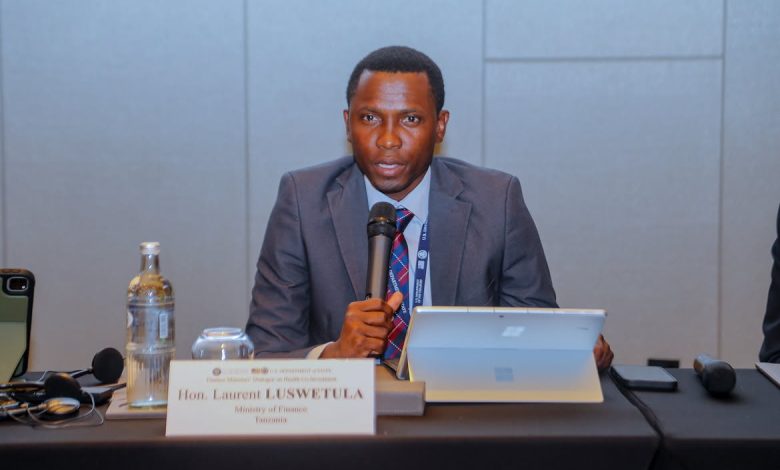
NAIROBI: THE government has tied future borrowing to projects with long term economic and social returns, as it pushes to finance development through domestic revenue and private-sector investment.
Deputy Minister for Finance, Mr Laurent Luswetula said the approach is aimed at building a more sustainable financing base for development, while reducing reliance on donor funding to support priority sectors, including health.
“We do not want to borrow simply because we want to get money. We borrow when the investment has long-term benefits and we are sure of how the debt will be repaid,” Mr Luswetula said.
He made the remarks while representing Finance Minister, Ambassador Khamis Mussa Omar, during a High-Level Dialogue Forum for Finance Ministers in Nairobi, Kenya, during a panel discussion on financing options for advancing the health sector led by US Treasury Department specialist Eric Meyer.
During the discussions, he outlined the country’s financing strategy for advancing development priorities.
Mr Luswetula said the government is strengthening domestic revenue mobilisation while expanding the use of Public-Private Partnerships (PPPs), giving the private sector a greater role in financing strategic projects and driving economic growth.
“Tanzania is ready to work with the private sector through long-term agreements in implementing various projects. We welcome companies and investors to partner with the government in productive investments,” he said.
He said the policy is intended to promote investment, expand economic activity and create greater space for the private sector to contribute to national development through long term financing arrangements.
ALSO READ: Credit growth signals stronger private-sector
According to Mr Luswetula, PPPs have become an increasingly important avenue for mobilising resources as countries seek to strengthen domestic financing capacity and diversify sources of funding.
He said the approach would enable the government to combine public resources with private capital and technical expertise in implementing projects capable of delivering lasting economic and social benefits.
On domestic financing, Mr Luswetula said the government is also using taxation to strengthen its capacity to finance essential public services, particularly in the health sector.
He said excise duty serves a dual purpose by discouraging the consumption of products that pose health risks while generating revenue that helps finance health services and infrastructure.
“Revenue collection through these taxes is part of the government efforts to increase domestic capacity to finance social services and broaden the national revenue base,” he said.
Mr Luswetula said strengthening domestic revenue sources is critical to ensuring that essential services can be financed more sustainably, particularly as countries work to reduce dependence on external funding.