

TNLF turns youth potential into leadership for Vision 2050
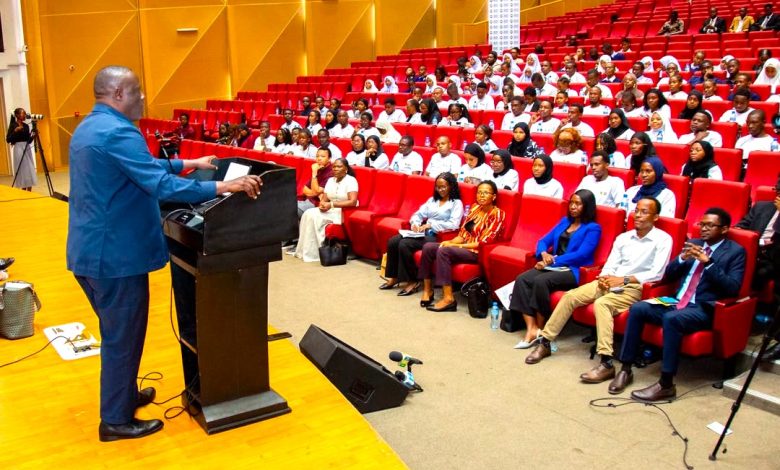
DAR ES SALAAM: Leadership is not something that should begin when a young person finally reaches a position of authority. It is a skill that can be nurtured much earlier through education, mentorship, participation and opportunities to make decisions. For Tanzania, investing in youth leadership is particularly important because the country has a remarkably young population.
According to the United Nations Population Fund (UNFPA), people aged between 15 and 35 accounted for more than 20.6 million people, or 34.4 per cent of Tanzania’s population, according to the 2022 Population and Housing Census.
UNFPA describes this youthful population as an opportunity for Tanzania to achieve a demographic dividend, provided the right investments are made in education, employment, health and the overall development of young people. The question, therefore, is no longer whether young people should be involved in leadership.
The more important question is whether they are being given enough opportunities and skills to lead effectively. Across Africa, the stakes are equally high. The World Bank projects that the population of young people aged 15 to 24 in Africa could reach 500 million by 2080.
The institution describes the continent's growing working-age population as a major opportunity for economic growth, but warns that this potential depends on young people being healthy, educated and skilled. Yet young people remain significantly underrepresented in decision-making spaces.
Globally, at least half of the population is under the age of 30, while only 2.6 per cent of parliamentarians are below 30, according to figures cited by the World Bank. The gap illustrates a broader challenge: societies have a large young population, but young voices are still often missing from the rooms where important decisions are made.
Empowering young people with leadership skills can help them become more confident decision-makers, effective communicators and responsible citizens. It can also give them the ability to understand community challenges, develop solutions, advocate for change and participate meaningfully in public affairs.
The World Bank's research on youth empowerment similarly points to the importance of giving young people not only education and employment opportunities, but also a voice and agency in shaping their communities. Its evidence indicates that developing youth leadership skills can facilitate meaningful participation in decision-making while enabling young people to contribute to social and economic change.
ALSO READ: German diplomat backs Zanzibar’s push to attract global investors
For Tanzania, this conversation takes on greater significance as the country looks towards the ambitions of Vision 2050. The leaders who will be responsible for implementing that vision in the coming decades are already in classrooms, universities, workplaces and communities today.
It requires deliberate investment in leadership development from an early-stage teaching young people about integrity, accountability, patriotism, communication, critical thinking, teamwork and responsible decision-making. It is against this wider conversation that the need to strengthen youth leadership in Tanzania has come into sharper focus.
The issue was highlighted during the launch of the second cohort of the Tanzania NextGen Leaders Fellowship (TNLF Cohort 2), held at the University of Dar es Salaam under the theme “Empowering Tanzania’s Next Generation of Multisectoral Leaders towards Vision 2050.” The programme is being implemented by African Leadership Initiatives for Impact (ALII) in collaboration with HakiElimu, with support from the Embassy of Ireland in Tanzania, Norwegian Church Aid and UTT AMIS.
The launch brought together approximately 100 young people selected to participate in the second cohort, alongside government leaders, development practitioners, experts and representatives of different institutions.
The programme seeks to prepare young Tanzanians to become visionary, ethical and capable leaders who can contribute to national development across different sectors. Speaking during the launch, Deputy Permanent Secretary in the President’s Office responsible for Youth Development, Dr Redmond Mapana, stressed the importance of investing in young people's leadership capacity from an early stage.
Dr Mapana said that, “Empowering young people with leadership skills is one of the most important investments a country can make in its future. Young people are not only the leaders of tomorrow; they are already active members of society who influence families, communities, workplaces and institutions,” He highlighted that, giving them the knowledge, confidence and opportunities to lead can therefore help build a generation that is prepared to take responsibility for the development of the country.
“One of the greatest benefits of youth leadership development is the ability to prepare young people to make responsible decisions. Leadership requires more than holding a position of authority,” he said.
He indicated that, “It involves integrity, accountability, critical thinking, communication and the ability to understand the needs of others. When these qualities are developed at an early age, young people are better positioned to become responsible professionals, entrepreneurs, public servants and community leaders,” To her part HakiElimu Executive Director Mary Ndaro, explained that the programme provides more than a platform for young people to acquire leadership knowledge.
She said, the fellowship brings together more than 100 young people with the aim of strengthening their capacity and exposing them to knowledge and experiences across different areas, particularly leadership.
“The programme also creates an environment where participants can exchange experiences, learn from experts and develop the capacity to respond to challenges facing their communities,” she elaborated.
She addressed that, “Young people need opportunities to practice communication, teamwork, problem-solving, negotiation and decision-making. They also need mentors who can guide them, networks that can expose them to new ideas and platforms where their voices can be heard,”
The Executive Director of ALII Joseph Malekela indicated that, For Tanzania, the importance of youth leadership becomes even greater when considered in relation to the country’s long-term development ambitions under Vision 2050.
He said that, the young people being empowered today will increasingly become the professionals, policymakers, business leaders, educators, innovators and public servants responsible for implementing the country’s future development agenda.
“Preparing them early can therefore help create a strong leadership pipeline capable of sustaining national development over the long term,” he said.
He added that, “Ultimately, empowering young people to become effective leaders is not simply about preparing individuals for positions of authority. It is about giving an entire generation the ability to participate, take responsibility, solve problems and contribute to the society they want to see,”
“When young people are equipped with the right skills, values and opportunities, they can become powerful drivers of positive change,” he concluded.
For Tanzania, investing in youth leadership is therefore an investment in the country's human capital and in the successful realization of its long-term development ambitions.
The leaders who will shape the Tanzania of 2050 are being developed today, making the decision to empower them now not only important, but essential. As Tanzania looks towards Vision 2050, empowering young people with leadership skills must remain a national priority.
Preparing them with the right values, knowledge and opportunities can create a generation capable of making responsible decisions and driving positive change across different sectors. Ultimately, the Tanzania envisioned for 2050 will be shaped by the young people being empowered today. Investing in their leadership is therefore not just an investment in the future, but an investment in the country’s development today.




Infos / A La Une / Moyen-Orient / L’INFO EN CONTINU
Les forces armées yéménites promettent des représailles sévères aux dernières attaques de l’aviation saoudienne
Wednesday, 09 September 2026 6:47 PM [ Last Update: Wednesday, 09 September 2026 6:47 PM ]
Meurtres en réunion de Gilbert Sourbier chambre 118 gériatrie court séjour.chu valence .
15h Chabeuil.
5 chemin du lac étoiles sur Rhône , grand kibboutz spécial Florence Graillon.
Vallon.