PM backs primary healthcare
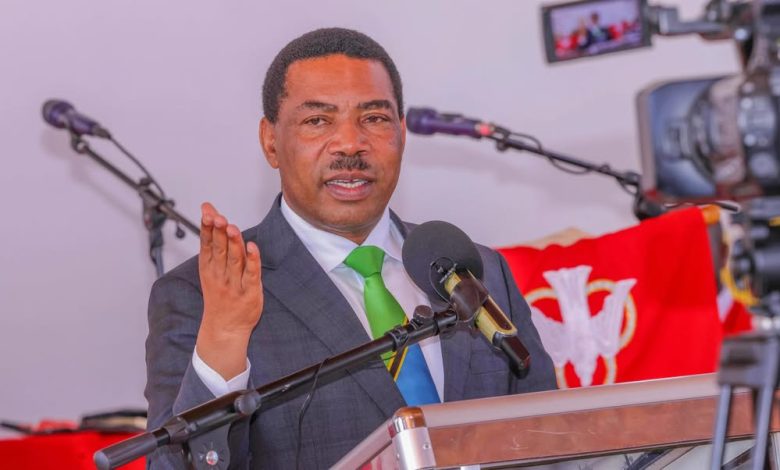
ARUSHA: PRIME Minister Dr Mwigulu Nchemba has called for increased investment in primary healthcare, urging greater use of scientific evidence, innovation and partnerships to improve the quality and efficiency of services and accelerate progress towards universal health coverage.
Dr Nchemba said sustainable health financing must go hand in hand with better service delivery, stressing that Tanzania’s progress in expanding access to healthcare should now be matched by efforts to improve the quality of services provided at community level.
He made the call yesterday in Arusha while representing President Dr Samia Suluhu Hassan at the official opening of the three-day International Primary Health Care Conference (IPHCC), held under the theme: “Towards Universal Health Coverage, Strengthening Sustainable Health Financing, Efficiency and Quality Improvement of Services at the Primary Level.”
The Prime Minister said there was no shortcut to improving health outcomes other than increasing investment in the sector, noting that the government had increased resources for healthcare while taking measures to reduce dependence on external donations for essential medicines.
He said strengthening the health workforce was also critical to meeting growing demand for healthcare services.
“From December 2025 to 2026, the government has created more than 16,000 new jobs for healthsector workers. During the past four years, the government has constructed more than 430 houses for health workers, while about 2,000 additional houses are expected to be constructed between 2026 and 2030,” he said.
Dr Nchemba said Tanzania had made significant progress in expanding access to healthcare services, but the priority should now be ensuring that services available at community level, dispensaries, health centres and council hospitals are of good quality and delivered efficiently.
“We started by ensuring access to services, where we have made significant progress. Even studies conducted among Tanzanians showed that people wanted the government to focus its efforts on improving the quality of services because access has already been extended to many citizens,” he said.
He said the progress made in expanding access demonstrated that Tanzania could achieve its health targets if it maintained investment and strengthened the systems supporting primary healthcare.
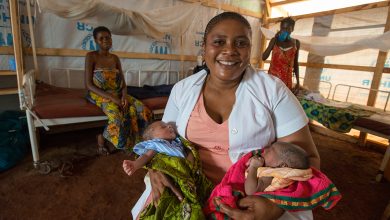
The Prime Minister cited the decline in maternal mortality as one of the achievements recorded in the health sector, saying maternal deaths had fallen from about 328 to 197 per 100,000 live births between 2000 and 2023.
He described the reduction as an important achievement and evidence that sustained investment, coordinated interventions and stronger health systems could deliver measurable results.
Dr Nchemba also called for development partnerships that respect national priorities while contributing to wider regional and global development objectives.
He said scientific evidence, innovation and collaboration were essential to accelerating progress towards the 2030 Sustainable Development Goals (SDGs), particularly in strengthening health systems and improving primary healthcare.
The Prime Minister commended President Samia for her leadership in advancing health interventions, noting that she received the Goalkeepers Award in February 2025 and was appointed an African Union champion for maternal and child health in February 2026.
For his part, Africa Centres for Disease Control and Prevention (Africa CDC) Director General Dr Jean Kasseya commended President Samia for Tanzania’s progress in reducing maternal, child and neonatal mortality.
Dr Kasseya said Tanzania’s health achievements made President Samia a strong candidate to champion maternal and child health across Africa, based on measurable outcomes rather than political considerations.
ALSO READ: WHO urges African nations to increase investment in primary healthcare
“I am connecting to all 55 Heads of State in Africa. I know the situation of all 55 countries in Africa. There is no one who can be champion if it is not you,” he said. He said Tanzania had been selected because of its progress in reducing maternal, child and neonatal mortality between 2015 and 2022.
“Africa doesn’t need one imported model. Africa needs nationally owned reforms supported by serious learning from each other,” he said.
Dr Kasseya said African countries faced different health challenges and should therefore develop reforms suited to their individual circumstances while learning from successful experiences across the continent.
Meanwhile, Minister of State in the Prime Minister’s Office, Regional Administration and Local Government (PMO-RALG), Prof Riziki Shemdoe, said statistics showed that primary healthcare services serve the majority of Tanzanians, making investment at this level a direct investment in the lives of most citizens.
“Out of the 2.09 million pregnant women who gave birth at all levels of healthcare facilities across the country, 95.6 per cent delivered at primary healthcare facilities, while 86 per cent of the 32.3 million outpatient visits recorded at public healthcare facilities were treated at primary healthcare facilities,” Prof Shemdoe said.
He added that 7,946 of the country’s 8,288 healthcare facilities, equivalent to 95.8 per cent, were primary healthcare facilities managed by local government authorities.
Prof Shemdoe said the figures demonstrated the importance of continued investment in primary healthcare because it is the level at which the majority of citizens interact with the health system.