Zanzibar parents open up about sexual health with their children
ZANZIBAR: FOR many parents in Zanzibar, talking to a child about puberty, relationships, sexuality or reproductive health can feel like crossing an uncomfortable line. Questions may be met with silence.
Others may be dismissed with a warning to “focus on school” or “stay away from bad company”.
In many families, subjects considered too sensitive to discuss at home are left for children to discover on their own.
But in an age when a child can find thousands of answers on a mobile phone within seconds, Zanzibar is warning that silence may no longer be a form of protection.
Instead, it could leave children vulnerable to misinformation, abuse and decisions that can affect the rest of their lives.
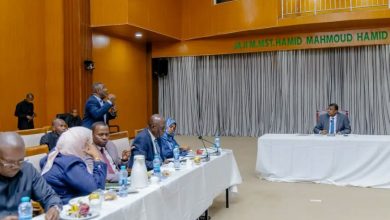
This is the thinking behind a new ParentChild Communication Toolkit on Reproductive Health Rights, launched by the Revolutionary Government of Zanzibar in partnership with UNESCO at Verde Hotel.
The toolkit, known as the PCC Toolkit, seeks to help parents and caregivers overcome the discomfort surrounding reproductive health conversations and build relationships in which children can ask questions without fear of embarrassment or punishment.
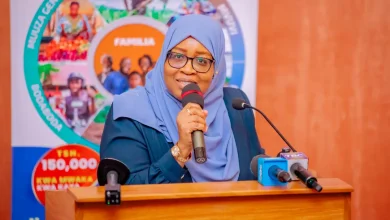
Launching the toolkit on behalf of Minister for Social Development, Elderly, Gender and Children Anna Athanas Paul, Deputy Minister Zawadi Amour Nassor said parents needed to understand that reproductive health was much broader than biological changes.
“When we talk about reproductive health, we are not talking only about biological issues, but also parenting, values, respectful relationships, child safety and the ability to say ‘no’ when necessary,” she said.
For children between 10 and 19, these conversations can be particularly important.
Adolescence brings rapid physical, emotional and social changes, yet many young people have few trusted adults with whom they can discuss what is happening to them.
The toolkit aims to change that by giving parents practical guidance on how to communicate in language appropriate to a child’s age and level of understanding.
It covers reproductive health, HIV and AIDS, gender and life skills, while placing communication and children’s rights at the centre of the relationship between parents and their children.
At the heart of the initiative is a simple idea: Information is safer when it comes from a trusted adult.
Zawadi said many parents were uncomfortable starting conversations about reproductive health, while some children avoided asking questions because they feared being reprimanded or embarrassed.
The result, she warned, is that young people may turn to friends, social media or other sources that are not necessarily accurate.
“Silence does not eliminate challenges; instead, it creates room for misinformation,” she said.
For Bahati Issa, a parent from Kikungwi in Unguja who attended the toolkit’s launch, the initiative offers an opportunity to take the conversation beyond conferences and workshops and into ordinary homes.
She called on the Ministry to expand awareness of the toolkit to all Shehias so that parents and communities across Zanzibar can benefit from its guidance.
Her appeal points to one of the biggest tests facing the initiative: Ensuring that the toolkit does not remain a document on government shelves, but becomes a practical resource used around kitchen tables, in living rooms and in conversations between parents and children.
According to Abeda Rashid Abdallah, the ministry’s Secretary General, the toolkit was developed specifically to improve communication between parents and children about reproductive health rights and responsibilities, while promoting the wellbeing of adolescents and young people.
ALSO READ: Young Africans, sexual health and social media: Which messages work, which don’t
She said misconceptions surrounding parent-child communication on reproductive health remained a major challenge and had made the issue an important component of the guide. The problem, however, is not unique to Zanzibar.
Across East and Southern Africa, many families face similar cultural barriers. Adolescents and their parents or caregivers may feel uncomfortable discussing sexuality and reproductive health, meaning such conversations happen only occasionally, if at all.
The consequences can extend beyond the family. Parents’ attitudes can influence what happens at school, where teachers themselves may feel embarrassed about providing comprehensive sexuality education.
Without cooperation between parents, teachers and communities, efforts to influence adolescent behaviour may struggle to achieve their full potential.
The new approach therefore seeks to build a circle of support around the child. Government institutions, UNESCO, civil society organisations, parents, teachers, religious leaders and young people are all expected to play a role.
Deputy Secretary and UN Coordinator in Zanzibar Dorothy Temu Usiri said the toolkit had been developed with consideration for social and cultural values, expressing confidence that it would strengthen parenting skills and help children understand themselves and the changes they experience at an early age.
Representing UNESCO Resident Representative Mathias Luhanya, he said UNESCO would continue working with the Zanzibar government to strengthen education and promote positive change, describing the toolkit as practical support for parents seeking better ways to communicate with their children.
Ultimately, the initiative is not asking parents to abandon cultural or family values. It is asking them to become part of the conversation before someone else does.
A child who cannot ask a parent about a confusing change in their body may ask a friend. A teenager afraid to discuss an unhealthy relationship at home may search online.
And a young person who does not know how to recognise abuse may not know when or how to seek help. A trusted parent can change that trajectory.
The real measure of Zanzibar’s new toolkit, therefore, may not be how many copies are distributed, but how many difficult conversations begin because of it. For families, the first conversation may be awkward.
The second may be easier. And somewhere between the two, silence may finally give way to trust.