DSE finds stronger footing as investors return to market
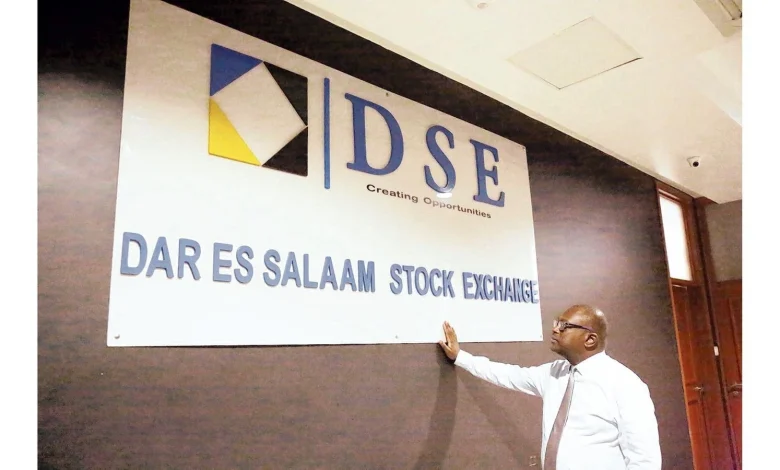
DAR ES SALAAM: THE Dar es Salaam Stock Exchange (DSE) appears to be gaining stronger footing as the final quarter of the year approaches, with trading activity picking up noticeably during the week ended September 4.
What stands out from the latest market performance is not simply the increase in shares traded, but the broader momentum across the market, with equities attracting stronger attention, the bond market becoming significantly busier and several listed companies recording meaningful price movements.
After periods when trading activity appeared concentrated in a handful of counters, the latest week offered a reminder that Tanzania’s capital market remains capable of generating considerable momentum when investors identify opportunities.
Equity turnover rose substantially during the week, reaching about 86.4bn/-, while more than 35 million shares changed hands.
The increase was driven principally by some of the country’s largest and most actively followed companies, particularly banking stocks. CRDB Bank was once again at the centre of the action. Its shares generated the largest turnover on the exchange, with transactions worth more than 42bn/-.
NMB Bank followed closely, recording more than 33bn/- in turnover. A significant portion of trading on the two counters involved prearranged block trades by institutional investors. The prominence of the two banks is hardly surprising.
Both have become important bellwethers of investor sentiment on the DSE, while their shares provide relatively liquid avenues for investors to express views about Tanzania’s financial sector and the wider economy.
But the week’s trading also revealed an important distinction between market activity and market performance.
While NMB attracted heavy trading, its share price moved lower during the week. CRDB, on the other hand, combined substantial trading activity with a rise in its share price.
This divergence is a useful reminder that a busy market is not necessarily a uniformly bullish market.
Investors can be highly active because they are reassessing valuations, taking profits, reallocating portfolios or positioning themselves for expected changes in the economic and business environment.
Beyond banking, Tanzania Breweries Limited continued to attract meaningful investor attention, generating more than Sh6 billion in turnover and ending the week slightly higher. Several other counters also recorded notable gains.
National Media Group was the week’s strongest performer, while Kenya Commercial Bank, East African Breweries, National Investment Company, all cross-listed from the Nairobi Securities Exchange (NSE) and DCB Commercial Bank also registered sizeable increases.
At the other end of the market, Precision Air experienced the sharpest decline, while Maendeleo Bank and NMB were among the other significant losers.
Taken together, these movements paint a picture of a market in which investors are becoming increasingly selective. Some companies are being rewarded with higher valuations, while others face selling pressure.
Such differentiation is an important feature of a maturing market, suggesting investors are looking beyond the general direction of the exchange and paying greater attention to individual companies.
Overall market capitalisation increased during the week to about 39.4tri/- while the All-Share Index also moved higher.
ALSO READ: DSE milestone signals new capital market era
However, the Tanzania Share Index declined, illustrating that different segments of the market can tell different stories at the same time. Perhaps the more significant development, however, was taking place away from equities.
The fixed-income market experienced a particularly strong week. Bond trading increased dramatically, with turnover reaching almost 143bn/-. Government securities across a range of maturities changed hands, reflecting continued investor interest in fixed-income instruments.
This is significant because Tanzania’s investment landscape is increasingly giving investors a choice between the potential capital gains and dividends associated with equities and the relatively predictable income characteristics of bonds.
The strong bond activity may also reflect a broader search for attractive risk-adjusted returns.
As investors become more sophisticated, portfolio allocation is likely to become increasingly important, with investors moving between asset classes depending on expectations about interest rates, economic growth, liquidity and company performance. The economic environment provides a relatively supportive backdrop.
Tanzania’s economy grew by six per cent in the first quarter of 2026, according to the National Bureau of Statistics (NBS), while the latest inflation report put annual inflation at 4.2 per cent in July.
At the same time, privatesector credit continued to expand strongly, with annual growth reported at 24.1 per cent. For the capital market, this combination matters.
Economic growth creates conditions for businesses to expand revenues and profits. Increased private-sector credit can support investment and working capital, while relatively contained inflation can help preserve household and investor purchasing power.
The banking sector’s strong presence on the stock exchange therefore assumes greater significance.
When banks are actively lending and the economy is expanding, investors naturally pay close attention to the ability of financial institutions to translate economic activity into sustainable earnings.
Yet there is another side to the week’s story that deserves attention: Foreign investor participation.
The market recorded a net foreign outflow of about 20.4bn/- during the week. Domestic investors overwhelmingly dominated purchases, accounting for almost all buying activity reported, while foreign investors remained more prominent on the selling side.
The market has also yet to witness the foreign inflows expected from the recent opening up of investment in domestic sovereign debt. Strong domestic participation is encouraging.
It demonstrates that Tanzanians are increasingly capable of providing liquidity and supporting the local market, helping shield it from some external shocks.
Nevertheless, a capital market aspiring to become a major financing platform for the economy cannot afford to become predominantly inward-looking. Foreign portfolio investors bring more than capital.
They can contribute liquidity, research coverage, international visibility and greater integration with global investment flows.
Attracting them sustainably will require continued improvements in market depth, corporate governance, regulation, disclosure, product diversity and the ease with which investors can enter and exit the market. There is, therefore, an interesting tension in the current market.
On one hand, the DSE is becoming increasingly active, with substantial domestic participation and strong interest in both equities and bonds.
On the other, foreign investors appear to have been net sellers during the latest week. The challenge is to turn the current increase in activity into a broader and more durable expansion of the investor base.