COSTECH @40 turns research into business opportunity
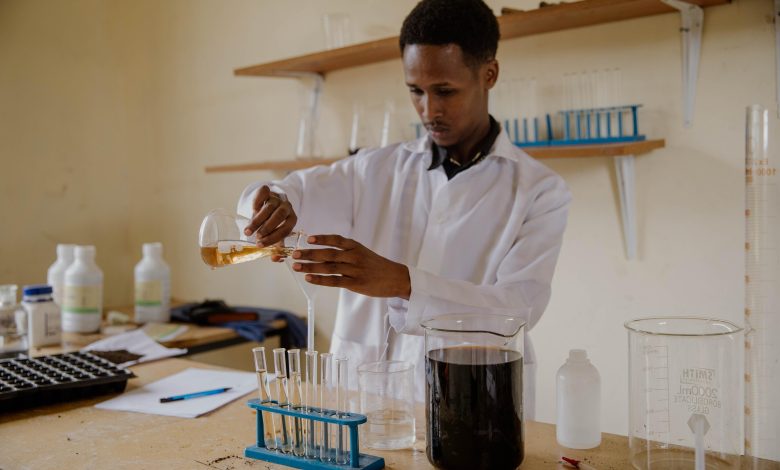
DAR ES SALAAM: FOUR decades after Tanzania established an institution dedicated to advancing science and technology, the focus is shifting from how much research the country produces to how much economic value that knowledge can create.
As the Tanzania Commission for Science and Technology (COSTECH) marks 40 years, more than 100bn/- in research and innovation funding is supporting homegrown technologies aimed at improving productivity, strengthening local manufacturing, creating businesses and reducing dependence on imported solutions.
The investment reflects a growing push to close one of the most difficult gaps in innovation: Moving promising ideas from laboratories and universities into products that can compete in the market.
According to COSTECH, 103.63bn/- has been mobilised for research and innovation, comprising 70.61bn/- from the government’s Consolidated Fund and 33.02bn/- from development partners. Of the total, 94.13bn/- was allocated to research activities and 9.5bn/- to innovation.
COSTECH Research Officer Ntufye Mwakigonja said access to funding was no longer the obstacle it once was for young innovators seeking to develop solutions.
The bigger challenge, he said, was increasingly turning technologies and prototypes into commercially sustainable businesses.
That transition is particularly visible in agriculture, where locally developed technologies are targeting some of the sector’s most persistent challenges, including productivity, input costs and farmers’ incomes.
Dr Erasto Mlyuka of COSTECH said the Commission had incubated and supported innovators whose ideas had developed into companies and practical solutions in agriculture, health, education and technology.
Among them are MazaoHub, Plant Biodefenders Limited, Sahara Venture, MiTz Science Learning Tools and Ng’wala Inventions Ltd.
One example is a rapid soil-testing kit developed to determine soil conditions and fertiliser requirements.
The technology has been tested in various agricultural settings and enables farmers to identify the appropriate type and amount of fertiliser required for their crops.
Its commercial significance goes beyond the technology itself. Better soil information can reduce unnecessary fertiliser use, improve productivity and potentially increase farmers’ returns.
Given the importance of agriculture to the economy, wider adoption of such technologies could create benefits extending across farms, input markets and agricultural value chains.
Turning a pest problem into business
Another innovation began with a pest-control problem identified during postgraduate research.
Dr Never Mwambela developed a pest-control product and gradually moved from exhibitions and science activities to securing funding and technical support.
His initiative has since grown into a company producing agricultural products and working with the government.
Dr Mlyuka said the development demonstrated how research could support local manufacturing, reducing reliance on imported pesticides while creating potential opportunities for exports and foreign-exchange earnings.
Organic fertiliser provides another example of research moving towards commercial application.
A University of Dar es Salaam graduate developed an organic fertiliser that meets required standards and has gained acceptance, particularly among farmers in the Southern Highlands.
Farmers using the product have produced crops that have gained acceptance in international markets, demonstrating how locally developed technologies can support domestic agricultural productivity while creating export opportunities.
From ideas to viable businesses
Yet commercialisation requires much more than a promising idea or technical expertise.Innovators need financing, mentorship, product testing, regulatory support, intellectual-property protection, standards certification and access to markets, investors and large buyers.
COSTECH’s model provides funding during early development, in some cases for up to three years, before businesses are expected to become commercially sustainable.
The approach creates a pathway in which public and development funding helps innovators overcome early-stage barriers, while successful products are expected to generate revenue and provide a foundation for further growth.
The innovation pipeline is also expanding beyond agriculture.
A locally developed child-tracking system uses a digital application to allow parents or designated contacts to receive alerts and location information when children travel to and from school.
The platform can send notifications to more than one phone number and provide location information when a safety concern arises.
The technology illustrates how smartphones and digital connectivity are increasingly being used to address everyday social challenges while creating potential markets for locally developed digital solutions.
For COSTECH, such projects form part of an innovation ecosystem covering developers at different stages, from early research and prototypes to products already reaching the market.
A 40-year foundation
The current push has its roots in a much longer effort to build Tanzania’s scientific and technological capacity.
Dr Mlyuka said the foundations were laid soon after independence under President Julius Nyerere, when the government expanded access to education and established state-owned industries to create an industrial base and opportunities for technological development.
In 1968, Tanzania established a research council to ensure government decisions were increasingly informed by scientific evidence.
That framework later evolved. In 1986, the government established COSTECH, placing greater emphasis on research, science and technology and on converting research findings into technologies capable of addressing national challenges.
The transformation coincided with an expansion of higher education and technical capacity.
Tanzania, which once relied heavily on the University of Dar es Salaam and a relatively small number of higher-learning institutions, now has more than 41 public universities and over 24 research institutions.
The next test is scale
After four decades, COSTECH’s challenge is no longer simply generating research.
The bigger test is ensuring that research becomes technology, technology becomes products and products become sustainable businesses.
That means moving innovations beyond universities, exhibitions and pilot projects into wider markets.
Funding remains important, but so are intellectual-property protection, product testing, standards certification, incubation, market access and stronger links between innovators, investors and large buyers.
Minister for Education, Science and Technology Prof Adolf Mkenda has called on COSTECH@40 to be a period of reflection rather than celebration alone, urging the commission to assess how science, technology and innovation have improved Tanzanians’ lives, reduced poverty and addressed national challenges.
He singled out agriculture, saying research and technology should increase productivity and lower production costs, while aligning science and technology policies with Vision 2050.
Permanent Secretary Prof Caroline Nombo similarly called for stronger investment and coordination in research and innovation, stressing that knowledge generated by universities, research institutions and innovation hubs must reach key economic sectors.
For Tanzania, the economic opportunity is increasingly clear.
ALSO READ: COSTECH working to ensure research findings reach end-users
If locally developed technologies can move consistently from research institutions into commercial markets, the returns could extend beyond individual products to more productive farms, stronger businesses, skilled jobs, lower import dependence and technologies capable of competing internationally.
The measure of the next 40 years, therefore, may not simply be how much research Tanzania produces, but how effectively that knowledge creates businesses, solves economic problems and generates lasting economic value.