Two wheels, One dream: A day in the life of a Tanzanian boda boda rider
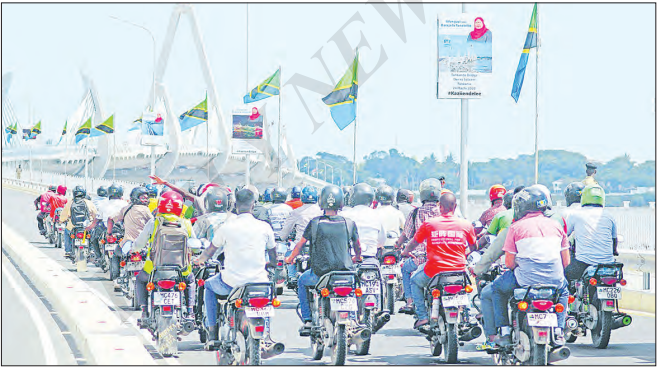
DAR ES SALAAM: BEFORE most people step out of their homes, Tanzania’s streets are already beginning to come alive. In the early hours of the morning, when the air is still cool and the roads are relatively quiet, boda boda riders begin preparing for another day.
At a small parking area on the edge of a busy neighbourhood, a rider wipes dust from his motorcycle, checks the tyres, tests the brakes and makes sure there is enough fuel in the tank. His helmet hangs from the handlebar as he waits for the first passenger of the day.
For many Tanzanians, a motorcycle taxi is simply a quick and affordable way to get from one place to another. It is the transport people choose when they are late for work, trying to catch a bus, taking a child to school or avoiding heavy traffic. But behind every ride is a person with a family to support, bills to pay and dreams to pursue. For a boda boda rider, the motorcycle is more than a means of transport. It is a workplace, a source of income and, for many, a symbol of hope.
By around six in the morning, some riders are already at their usual parking areas, waiting for passengers heading to work, school, markets or bus stations. The first customers of the day are often in a hurry. Some have missed their buses.
Others are trying to beat the morning traffic before the roads become crowded. This brings me to meet one of the riders, Victor Raymond, who shared his experience of working as a boda boda rider, explaining how the business operates, the routes he covers and how income is generated from the daily trips he makes.
“Sometimes the first customer determines how the morning will go. If I get several passengers early, I feel encouraged to continue. But if I stay for a long time without a customer, the day becomes difficult,” he said. He added that, “A short journey may bring only a small amount of money, but several trips throughout the morning can make a significant difference.
Unlike workers who receive a fixed salary at the end of the month, boda boda riders depend on daily income.” He highlighted that, if business is good, a rider may earn enough to cover food, fuel, rent and other household expenses. If customers are few, the day can end with very little. This uncertainty is one of the realities of life on two wheels.
“As the morning progresses, the streets become busier. Cars, buses, trucks, pedestrians and motorcycles compete for space. For boda boda riders, navigating this environment requires experience, patience and constant concentration,” he noted.
He added that, “Their ability to move through congested roads is one of the main reasons passengers choose them. A journey that might take an hour by car during heavy traffic can sometimes be completed much faster on a motorcycle.”
However, the same roads that provide riders with opportunities also expose them to danger. Road accidents remain one of the major concerns associated with motorcycle transport. Riders face the risks of reckless driving, poor road conditions, unpredictable pedestrians and other road users who may not always respect motorcycles.
Rain can make the situation even more difficult. Roads become slippery, visibility decreases and potholes may be hidden beneath pools of water. Yet many riders continue working because staying at home means losing a day’s income.
He mentioned that, “Some riders entered the business after struggling to find formal employment. Others turned to motorcycle transport after completing school but failing to secure jobs. For young people in particular, boda boda riding can provide an opportunity to earn an income while searching for something better.”
He said that, the money earned from daily trips may pay rent, buy food, support children’s education or help a rider build another business.
“One rider may dream of owning several motorcycles and employing other riders. Another may hope to save enough money to open a shop. Someone else may simply want to provide a better life for his children,” he stressed.
These dreams may appear small from the outside, but for the people carrying them, they are powerful motivations. Every trip, no matter how short, becomes part of a larger effort to improve their lives. For some riders, the motorcycle is not even their own.
They may rent it from an owner and agree to pay a fixed amount at the end of the day. Whatever remains after fuel, food and other expenses becomes their income. This arrangement can be difficult, especially on days when customers are few. Even when business is poor, the rider may still be expected to pay the agreed amount.
ALSO READ: Do social security members really understand their rights, benefits?
He continued saying that, “Around motorcycle parking areas, several other businesses depend indirectly on riders. Mechanics repair motorcycles. Fuel stations serve them. Spareparts dealers sell tyres, chains, brake pads and engine oil. Food vendors provide breakfast and lunch to riders who spend most of their day on the road.”
“A single motorcycle therefore supports more than just the person riding it. It contributes to the livelihoods of mechanics, traders, restaurant owners and other small business operators,” he stressed that. For some riders, however, the cost of maintaining a motorcycle can be challenging. Fuel prices, repairs and the replacement of spare parts can quickly reduce daily earnings.
A punctured tyre or mechanical problem can turn a profitable day into a loss. A serious breakdown may keep a rider off the road for several days, leaving him without income. The motorcycle must therefore remain in good condition if the rider wants to keep earning. Regular maintenance is not simply a matter of convenience; it is essential for survival in the business. By midday, the pace may slow slightly.
Some riders gather at small restaurants or food stalls near their parking areas. A plate of rice, beans, ugali or chips can provide the energy needed for the rest of the day. There is usually little time for relaxation, however. A rider may receive a phone call from a customer while eating and immediately leave to pick them up. “Technology has also changed the way some riders work.
Mobile phones allow customers to call riders directly or request transportation through digital platforms. This has made it possible for some riders to build regular customer networks and receive more predictable requests,” he indicated. Yet many still depend heavily on street-level customers people who approach them at bus stops, markets, shopping centres and roadside areas.
Their daily income is often determined by the number of passengers they find, the distance they travel and the amount each customer is willing to pay. They know the neighbourhoods they work in. They know which roads become flooded during heavy rains, which streets are usually congested and where passengers are likely to be found. They also become familiar faces in their communities.
Some riders regularly transport the same customers to work every morning. Others help elderly passengers carry luggage or assist people who are unfamiliar with the area.
“In emergencies, motorcycles can become an important means of reaching places that larger vehicles may struggle to access quickly. A boda boda may transport a sick person to a health centre, deliver medicine or help a family reach a hospital during a difficult moment,” he indicated.
For many Tanzanian boda boda riders, the road is more than a workplace it is a path toward a better future. Every journey, every passenger and every shilling earned represents another step toward supporting their families and achieving their dreams. Despite the risks, long working hours and uncertain income, they continue to ride because stopping is not always an option. Behind every motorcycle is a story of resilience, responsibility and hope.
And as Tanzania’s cities continue to grow, the boda boda rider remains an important part of the everyday journey moving people, supporting livelihoods and, above all, moving forward.