Ubongo puts early years at heart of Vision 2050 debate
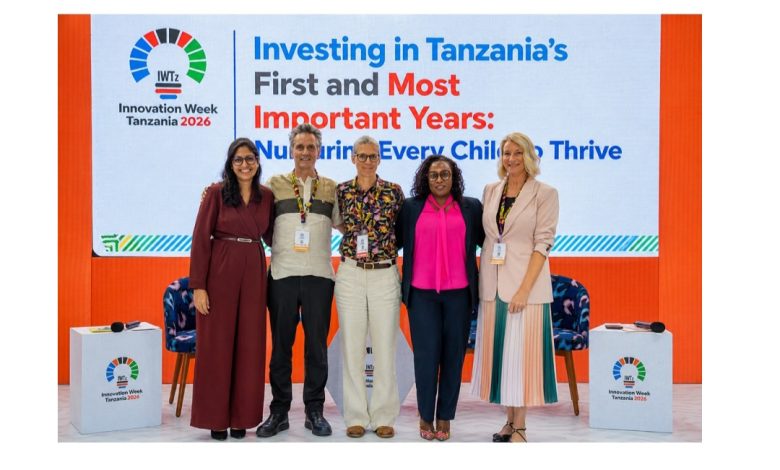
DAR ES SALAAM: Tanzania’s drive towards a skilled, productive and innovative society by 2050 must begin with children who are still years away from entering a formal classroom. Ubongo is calling for early childhood development to be treated as part of the country’s long-term human-capital strategy rather than primarily as a social issue.
The argument comes against a significant demographic backdrop. About 27 per cent of Tanzania’s population is below eight years of age, equivalent to roughly 17 million children, while evidence presented during an early-childhood discussion involving Ubongo and UNICEF Tanzania showed that only 47 per cent of young children are developmentally on track.
A workforce already growing
About 30 per cent of children under five are also affected by stunting, which can undermine physical growth and cognitive development. During the earliest years, the brain develops rapidly, with more than one million neural connections forming every second and the first 1,000 days providing an especially important window for development.
Those numbers give early childhood an economic significance extending beyond health or parenting. The children affected today include the technicians, entrepreneurs, teachers, health workers and innovators Tanzania expects to depend on in the 2040s and 2050s.
Ubongo Chief Executive Officer Mwasi Wilmore said the evidence should move the country beyond repeatedly acknowledging the importance of the issue. “What are we actually doing?” she asked, reflecting on the number of panels, meetings and conversations already devoted to development challenges.
Her question aligns with Tanzania Development Vision 2050, which places human capabilities and social development among the foundations of national transformation. The Vision recognises appropriate early childhood care and development for children aged zero to eight as an important foundation for future skills.
UNICEF Tanzania’s Mary-Ann G. Schreiner placed the same issue in demographic terms when she said, “Tanzania’s workforce for 2050 is already born.” Her observation underlines why investment cannot wait until children enter secondary school, university or employment programmes.
Learning is more than literacy
Ubongo’s approach also challenges narrow definitions of early education. Children need literacy and numeracy, but their development is also influenced by nutrition, health, play, responsive caregiving, social-emotional development and the safety of the environment around them.
The organisation uses television, radio, mobile and digital platforms to extend educational opportunities into environments where children already spend their time. This gives educational media a role in reinforcing learning well before formal schooling begins.
A child experiencing malnutrition does not experience it separately from learning. Likewise, limited stimulation or weak interaction with caregivers can affect some of the same capabilities the education system will later be expected to strengthen.
The economic implications also extend to parents and caregivers. Women continue to carry a disproportionate share of unpaid care work, while limited childcare can reduce opportunities for education, employment and income-generating activity.
The question is execution
Tanzania already has a policy foundation, government programmes and organisations working across nutrition, health, childcare and education. Wilmore’s concern is increasingly about how that knowledge and infrastructure are converted into action that reaches families consistently.
“The matter is urgent,” she said, adding that it cannot simply be placed to one side. “We need to do something now,” she said, calling for practical engagement with people who understand what happens inside families and communities.
That call gives Vision 2050 an immediate dimension. Tanzania may have more than two decades to reach its national ambitions, but the developmental window facing a baby born today is measured in months and years.
Universities, vocational institutions and skills programmes will remain essential to the country’s future. Their results, however, will partly depend on the foundations already being built in the lives of Tanzania’s youngest children.