ILO educates employers of domestic workers on employees’ rights, benefits
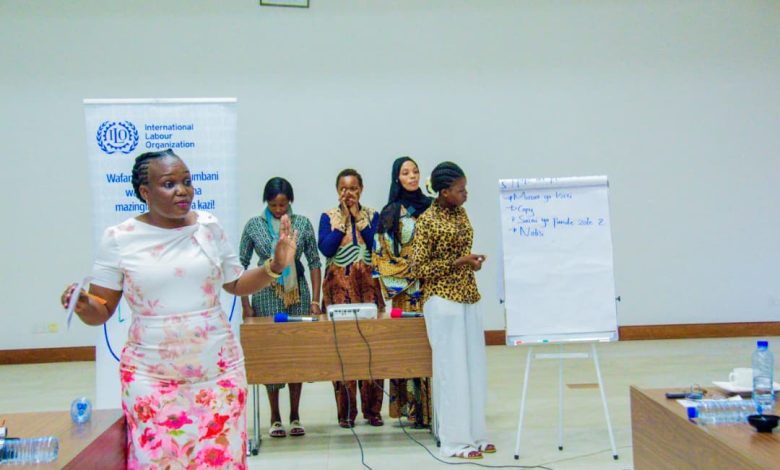
TANGA: EMPLOYERS of domestic workers in Tanga Region have been educated on workers’ rights and responsibilities, the minimum wage payable to domestic workers and the legal age for employment.
The education programme aims to help both domestic workers, particularly girls working in private households, and their employers understand and enjoy their rights in accordance with labour laws.
Speaking in Tanga yesterday during a one-day training organised by the International Labour Organisation (ILO) in collaboration with the Conservation, Hotels, Domestic and Allied Workers Union (CHODAWU) and the Commission for Mediation and Arbitration (CMA), lawyer and trainer Joseph Mkoji said a pre-training assessment showed that more than 90 per cent of participants had inadequate knowledge of their rights and responsibilities as employers.
He said the participants also had limited understanding of the minimum wage for domestic workers and the appropriate procedures for handling employment disputes.
Mr Mkoji said educating employers was important because when an employer understands the requirements of the law, they are better placed to ensure that domestic workers receive their rightful entitlements.
“After the training, they have been able to understand where employment disputes should be referred, the minimum wage for domestic workers, as well as their rights and responsibilities as employers,” he said.
For his part, Jackson Liwewa, a mediator and arbitrator with the CMA in Tanga, said employment contracts were among the key measures that could help protect the rights of both employers and domestic workers.
He said some disputes that had come before him showed that many employers did not have written contracts with their domestic workers, a situation which could make it more difficult to resolve employment-related disputes.
“A contract helps to clearly define the employment relationship, the rights and responsibilities of both the employer and the employee, as well as the scope of their duties,” he said.
Meanwhile, Arafah Hassani, one of the employers who attended the training, said she had gained new knowledge on employment matters, including the importance of written contracts and minimum wage requirements.
She said she previously employed domestic workers without written contracts and paid relatively low wages, but after receiving the training, she was determined to comply with labour laws and share the knowledge with other employers.
The training also reminded employers of the importance of observing the legal age for domestic workers, with participants being urged not to employ children below the age of 18 in domestic work, which is recognised as one of the forms of work that can expose children to risks.
Another participant, Shabbir Dalal, said the training had equipped him with important knowledge, particularly on employment contracts, NSSF and NHIF matters, as well as compliance with the minimum wage.
“I have realised that an employer has a responsibility to comply with the law and ensure that a worker receives their rights. After this training, I will begin by preparing an employment contract for my worker and explore ways of enabling them to access NSSF and NHIF services according to my capacity,” he said.
The Director of Best Sisters, a company that connects domestic workers with employers, Hawa Karoli, said one of the major lessons from the training was the importance of educating employers about employment contracts, wage levels, leave, rest periods and the appropriate age for employment.
She said continued education was necessary to ensure that employers understand their obligations and that domestic workers, many of whom are young women and girls, are protected from exploitation and unfair employment practices.