

When teaching becomes a song: TZ teachers turning classrooms into places children love
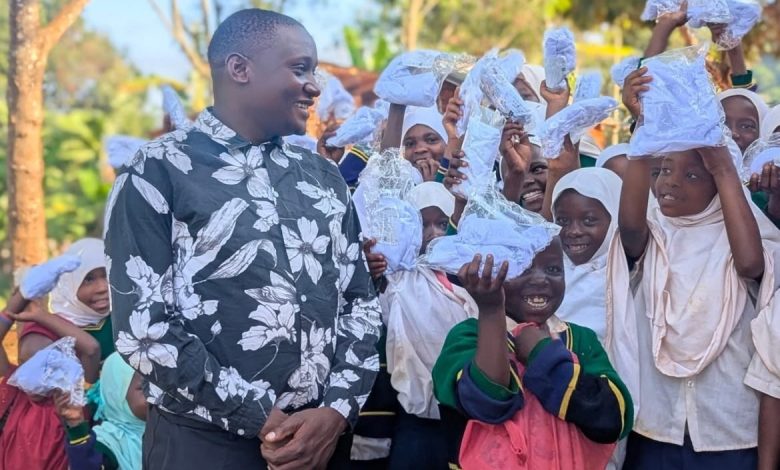
KIGOMA: FOR some children, school is no longer simply a place they are required to attend. It is a place where they can sing, perform, laugh, express themselves and discover talents they never knew they had.
Across Tanzania, a new generation of creative teachers is demonstrating that learning does not always have to happen through textbooks and chalkboards alone.
Through music, entertainment, performance, storytelling and innovative classroom activities, teachers are finding new ways to make lessons enjoyable while helping pupils understand what they are being taught.
Among them are Jao Kalesi, Wilson Kishai, Hamdani Hussein and John Magoda, educators whose work has attracted attention beyond their classrooms and onto social media.
Their approaches may differ, but they share a common belief, when children enjoy learning, they are more likely to participate, understand and develop confidence in their abilities.
For Mr Jao Kalesi, a teacher based in Muheza District, Tanga Region, teaching is not simply about standing in front of a classroom and delivering a lesson.
His social-media identity, @mr.kalesi, describes him as a teacher, talented entertainer and educator.
His online presence has attracted a large audience, with his Instagram account having tens of thousands of followers.
His videos show a teacher who understands that children learn differently and that enthusiasm can be an important part of the learning process.
Through music, humour, movement and playful interaction, Mr Kalesi creates an environment where pupils are encouraged to participate rather than remain passive observers.
His approach has also attracted attention outside Tanzania, with social-media features describing how his pupils are excited to see him as much as they are excited to learn and have fun.
For the children, the result can be a classroom that feels less intimidating and more welcoming.
And when pupils look forward to meeting their teacher, they may also begin to look forward to coming to school. In Simanjiro, Manyara, Mr Wilson Kishai, known on social media as @sir_kishai, has taken the connection between education and creativity even further.
Mr Kishai is described as a Tanzanian primary-school teacher involved in developing children’s talents.
His public profile identifies him as a teacher and children’s talent innovator and developer. His musical abilities have become part of his educational work.
Instead of seeing a child’s ability to sing, dance or perform as something separate from education, Mr Kishai treats such abilities as opportunities for development.
Music can help children remember information through repetition and rhythm, while performing in front of others can gradually build confidence.
For a child who may be quiet during an ordinary lesson, standing with classmates to sing or perform can become the first step towards discovering a talent.
This is particularly important because schools are not only expected to produce children who can pass examinations.
They are also expected to help young people discover their abilities, develop confidence and learn how to work with others.
Mr Kishai’s work therefore presents a broader understanding of what happens in a classroom, education can be academic while also being creative.
In Lushoto, Tanga Region, Mr Hamdani Hussein, known online as @hamdani__hussein, is another teacher using creativity to make a difference.
Hussein describes himself as a teacher and education-content creator at Shangazi Primary School in Lushoto, and his profile also notes recognition through an Excellence and Innovation award in 2025.
His social-media content includes what he calls “Teaching vibes,” reflecting an energetic approach to classroom engagement.
His work also includes activities designed to help pupils develop confidence in communication and public speaking.
That matters because a child’s success at school is not determined only by whether they can answer questions correctly. Confidence matters. The ability to communicate matters.
The courage to stand before others and express an idea matter. By creating opportunities for pupils to participate, perform and speak, teachers like Hussein are helping children develop skills that can remain valuable long after they leave primary school.
His work has also attracted appreciation from members of the public who have described his commitment to working hard in the service of children.
Mr John Magoda, who uses the name @mwl.magodajr online, brings another dimension to the growing movement of teachers using social media for education.
Known as an educator and education speaker, Mr Magoda uses his platforms to discuss education and parenting and to engage parents and schools. His public profile identifies him as an educator and education speaker focusing on education and parenting.
His example shows that a teacher’s influence does not necessarily end when pupils leave school. In the digital age, teachers can also educate parents, share ideas with other educators and encourage communities to pay greater attention to children’s development.
This creates an extended classroom, one that exists both physically and online. More than entertainment.
The popularity of these teachers raises an important question: What happens when entertainment becomes part of learning?
Used properly, music and creative activities can make learning memorable. A song can help a child remember a concept. A rhythm can make repetition less boring.
A performance can turn a shy child into a confident speaker. A classroom game can make pupils participate in a lesson they might otherwise find difficult. And humour can reduce the fear that sometimes prevents children from asking questions.
The teachers are therefore doing more than making children laugh. They are creating opportunities for participation, understanding and talent development.
This is particularly important for young children, whose learning can benefit from activities that involve movement, repetition and active participation.
Changing the image of the rural classroom. Perhaps one of the most powerful aspects of their work is where some of it is happening.
These are not stories of innovation confined to expensive private schools or major urban centres.
They are stories emerging from ordinary Tanzanian classrooms, including communities outside the country’s biggest cities. Jao Kalesi works in Muheza District. Hamdani Hussein teaches at Shangazi Primary School in Lushoto, Tanga.
Wilson Kishai’s work is associated with primary education and children’s talent development in Manyara.
Their experiences challenge the assumption that innovation requires sophisticated technology or expensive equipment.
Sometimes innovation begins with something much simpler a teacher who is willing to try a different approach.
A song. A guitar. A dance. A story. A joke. A performance. Or simply the decision to make a child feel seen and valued.
Helping children love school for parents and education stakeholders, the most important question is not how many views a teacher’s video receives.
The bigger question is what happens to the children. Do they become more interested in attending school? Do they participate more actively? Do they understand lessons better? Do they become confident enough to speak? Do they discover talents in music, acting, public speaking or other creative fields?
These are the outcomes that matter. Social-media popularity may bring attention to the teachers, but the real achievement is potentially taking place away from the cameras, inside classrooms where children are developing a more positive relationship with learning.
A child who once considered school boring may begin looking forward to the next lesson. A child who was afraid to speak may volunteer to perform.
A child who never considered singing or acting as a talent may discover a passion that could shape their future. That is the deeper contribution of creative teachers.
They are not replacing education with entertainment. They are using creativity as a doorway into education.
And as Tanzania continues to seek ways of improving learning outcomes, the experiences of teachers such as Jao Kalesi, Wilson Kishai, Hamdani Hussein and John Magoda offer a powerful reminder.
Sometimes, helping a child love school begins with making the classroom a place where that child feels happy, confident, understood and free to discover what they can do.


SINA AJIRA KOPO GANI TUNAWEZA PATA HELA NYINGI TUKIOKOKA
KOPO LA MAJI – $56,000,000,000
https://www.bbc.com/swahili/articles/cz97v6yrpd6o
AU
KOPO LA AZAM – $56,000,000,000
https://www.instagram.com/reel/DYsXngXCKyf/
SINA AJIRA KOPO GANI TUNAWEZA PATA HELA NYINGI TUKIOKOKA
KOPO LA MAJI – $56,000,000,000
https://www.bbc.com/swahili/articles/cz97v6yrpd6o
AU.
KOPO LA AZAM – $56,000,000,000
https://www.instagram.com/reel/DYsXngXCKyf/
SINA AJIRA KOPO GANI TUNAWEZA PATA HELA NYINGI TUKIOKOKA
KOPO LA MAJI – $56,000,000,000
https://www.bbc.com/swahili/articles/cz97v6yrpd6o
AU..
KOPO LA AZAM – $56,000,000,000
https://www.instagram.com/reel/DYsXngXCKyf/
SINA AJIRA KOPO GANI TUNAWEZA PATA HELA NYINGI TUKIOKOKA
KOPO LA MAJI – $56,000,000,000
https://www.bbc.com/swahili/articles/cz97v6yrpd6o
AU
KOPO LA AZAM – $56,000,000,000.
https://www.instagram.com/reel/DYsXngXCKyf/
SINA AJIRA KOPO GANI TUNAWEZA PATA HELA NYINGI TUKIOKOKA
KOPO LA MAJI – $56,000,000,000.
https://www.bbc.com/swahili/articles/cz97v6yrpd6o
AU
KOPO LA AZAM – $56,000,000,000
https://www.instagram.com/reel/DYsXngXCKyf/
SINA AJIRA KOPO GANI TUNAWEZA PATA HELA NYINGI TUKIOKOKA
KOPO LA MAJI – $56,000,000,000
https://www.bbc.com/swahili/articles/cz97v6yrpd6o
AU…
KOPO LA AZAM – $56,000,000,000
https://www.instagram.com/reel/DYsXngXCKyf/