Why succession planning matters for public entities
TANZANIA: FOR a public institution, the departure of a chief executive should not automatically become an institutional crisis.
The same should be true when a director, engineer, financial specialist or other employee occupying a critical position retires, is transferred or leaves for another assignment.
Yet, in many organisations, the loss of a senior employee can mean the loss of years of experience, relationships, technical knowledge and an understanding of how the institution actually works.
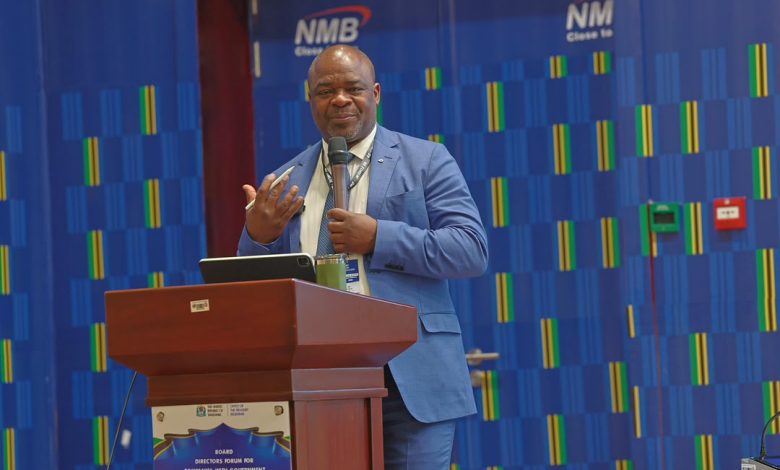
That is the problem succession planning is designed to solve. The issue has increasingly featured in discussions around the management of public entities, with the Treasury Registrar, Mr Nehemiah Mchechu, urging boards and managements of public and statutory corporations (PSCs) to make succession planning part of their organisational strategies.
The Office of the Treasury Registrar (OTR) is now putting the finishing touches to Succession Planning Guidelines for PSCs, signalling an attempt to move the conversation from individual institutions and individual executives towards a more systematic approach across the public sector.
At the centre of the proposed framework, is a simple but important idea: public institutions should not wait for a key position to become vacant before asking who can take over.
The draft guidelines define succession planning as a structured process for identifying and preparing employees to fill key leadership and critical roles when they become vacant.
More importantly, they position it as both a talentmanagement and staff-development tool aimed at ensuring business continuity and sustaining stakeholder value.
That distinction matters. Succession planning is sometimes understood narrowly as identifying the person who will replace a chief executive.
In a large public institution, however, the risk may exist much deeper in the organisation. A utility, development bank, transport corporation, regulatory institution or other strategic public entity can depend heavily on people with specialised knowledge that is not easily replaced.
The departure of one experienced engineer, project manager, accountant, lawyer or procurement specialist may not attract the same attention as the departure of a CEO, but it can still create a significant capability gap.
This is why, the OTR framework proposes that PSCs identify both leadership positions and other critical roles, assess the qualifications required for those positions, identify potential successors, determine their competency gaps and prepare development plans for them.
International experience points in the same direction.
The US Office of Personnel Management (OPM), which supports succession planning across federal agencies, makes a distinction that is particularly relevant to public entities: succession planning is not simply about filling vacancies.
It is about maintaining mission continuity by identifying, assessing and developing people before critical personnel leave.
OPM also emphasises the need to reduce the loss of institutional knowledge when experienced employees retire or leave.
The Organisation for Economic Co-operation and Development (OECD) reaches a similar conclusion from a broader public-sector perspective.
It identifies succession planning as one of the tools governments can use to anticipate staff transfers, transfer knowledge and reorganise work in ways that minimise disruption.
For Tanzania’s PSCs, this has implications beyond human resources. Public institutions hold assets, infrastructure, systems, contracts, technical records and institutional relationships that may take years to build.
Their responsibilities also do not disappear when a CEO leaves office. A change at the top therefore needs to be a change in leadership, not a disruption to institutional capability.
This is where corporate memory becomes important. Mr Mchechu has previously pointed to the need for senior decision-makers to groom people who can facilitate viable leadership transitions.
“Where knowledge remains concentrated in a few individuals, an organisation becomes vulnerable whenever those individuals leave,” he asserted.
The OTR draft proposes a centralised talent pool to strengthen this process. Under the proposed arrangement, PSCs would identify potential leaders and submit them to OTR, which would maintain and update a central database while institutions report annually on their succession readiness.
The approach also recognises that readiness does not come simply from holding a particular academic qualification.
Potential successors may need mentoring, job rotations, acting appointments, management training and exposure to increasingly complex responsibilities.
The proposed guidelines specifically identify training, mentorship, job rotations and acting appointments as mechanisms for strengthening leadership development.
For large public institutions, the case is even stronger. Mr Mchechu has previously cited Tanzania Electric Supply Company (Tanesco), with its large workforce, as an example of the scale and complexity involved in preparing future leaders.
In an organisation of that size, succession cannot realistically be reduced to identifying one person to replace the chief executive.
It has to operate at several levels, with people being prepared for senior management, technical and professional positions while a wider pool of employees acquires the experience required to take on greater responsibility.
Minister of State in the President’s Office (Planning and Investment), Professor Kitila Mkumbo has consistently emphasised, on different occasions, the importance of building institutional capacity as Tanzania pursues its broader planning and development agenda.
He has also stressed the importance of strengthening talent management, establishing clear schemes of service and promoting merit-based recruitment to ensure that public institutions build leadership capacity from within rather than becoming overly dependent on individual office holders.
“A CEO may leave, but the institution must continue delivering its mandate,” Prof Mkumbo said.
That requires identifying future leaders, developing technical and managerial talent, preserving institutional knowledge and keeping merit and competence at the centre of recruitment and advancement.
This also explains why the proposed framework places responsibility on several actors. Boards are expected to provide oversight, align succession plans with institutional strategy and manage leadership risks.
Management is responsible for implementing the plans and developing talent. OTR is expected to issue and review guidelines, assess implementation and maintain the talent pool, while parent ministries and other government institutions have supporting roles.
That distribution of responsibility is important because succession planning can easily become a document that exists without changing how an institution actually develops its people.
The real test will, therefore, not be whether every PSC has a succession plan on paper. It will be whether those plans are actively used to identify critical positions, assess potential successors objectively, address competency gaps through targeted development and ensure that boards regularly review succession risks.
Ultimately, the measure of success will be whether institutions have sufficient leadership depth to remain effective when key people leave.
The OTR framework attempts to address this through monitoring and evaluation. It proposes that PSCs track implementation, assess the effectiveness of successor development and measure the impact on leadership continuity and institutional performance.
OTR would evaluate compliance and the impact of the guidelines, with PSCs subject to annual evaluation. This places succession planning firmly within governance and risk management.
The OTR guidelines explicitly link it with risk management and business continuity planning. If the sudden departure of a person with critical knowledge can interrupt an institution’s operations, the absence of a ready successor is itself an organisational risk.
There is also a wider public-interest dimension. Public entities are entrusted with delivering services, managing strategic assets and supporting national development.
Their performance should therefore not depend excessively on the tenure of individual office holders.
The OTR draft identifies clearer career pathways, workforce motivation and retention, diversity and inclusion, resilience and organisational sustainability among the objectives of the proposed framework.
ALSO READ: Treasury bond attracts investor appetite
There is, however, one important caveat. A succession plan should not become a mechanism for predetermining who will occupy a particular office.
Its value lies in creating a pool of capable people and ensuring that decisions about future leadership are based on competence, performance, potential and institutional needs.
Ultimately, succession planning is about ensuring that leadership changes do not undermine an institution’s ability to perform its mandate.
For Tanzania’s public entities, the focus should therefore be on building systems that continuously develop talent, transfer institutional knowledge and prepare people for greater responsibility.
For Tanzania’s public entities, the question should therefore not simply be who will replace today’s leaders. It should be whether institutions are systematically developing the people, systems and leadership capacity required to carry their mandates forward.
If the emerging OTR framework is implemented effectively, succession planning could become a permanent part of public-sector governance rather than something considered only when a vacancy occurs.
That would make leadership transitions more orderly, strengthen institutional resilience and help ensure that Tanzania’s public entities continue delivering on their mandates as people, positions and responsibilities change.