Harnessing soft power for economic transformation
DAR ES SALAAM: FROM creative industries and cultural tourism to sports and digital media, Tanzania is increasingly harnessing its soft power as a catalyst for socioeconomic growth and accelerate the transformation envisioned under Dira 2050.
Tanzania’s new development blueprint, Dira 2050, envisions a prosperous, inclusive, knowledge-based and globally competitive nation by mid-century, driven by innovation, skilled human capital and sustainable economic transformation.
Achieving that ambition will require contributions from across the economy and society, including media, culture, arts and sports, which are gaining recognition as important drivers of employment creation, social cohesion, innovation and economic development.
The growing importance of these sectors reflects a broader understanding of development. Beyond their social and cultural value, they are increasingly viewed as industries capable of generating income, attracting investment, supporting tourism and expanding Tanzania’s presence on the global stage.
The government’s commitment to unlocking the potential of these sectors is reflected in the Ministry of Information, Culture, Arts and Sports’ 2026/27 budget, the first to be implemented under Dira 2050 and the Fourth FiveYear Development Plan.
The two frameworks provide a clear roadmap for harnessing information, creativity, culture and talent to drive innovation, productivity and long-term national development. Dira 2050 seeks to build a prosperous, inclusive and selfreliant Tanzania, anchored by a one trillion-dollar economy, a per capita income of 7,000 US dollars and a population expected to surpass 118 million by 2050.
The vision seeks to build a knowledge-based, industrialised and globally competitive economy while preserving national values, cultural identity and social cohesion.
The government says achieving these goals will depend not only on physical infrastructure and economic reforms, but also on the country’s capacity to harness its creative and cultural assets, strengthen national identity, promote innovation and ensure that all citizens are equipped to contribute to and benefit from the development process.
“The sectors of information, culture, arts and sports are transformative sectors. If properly managed, they will generate employment opportunities for young people,” Minister for Information, Culture, Arts and Sports Paul Makonda told the National Assembly while presenting the ministry’s 2026/2027 budget.
This reflects a broader shift in how the East African nation views development. For many years, economic transformation was associated mainly with sectors such as manufacturing, agriculture, mining, transport and energy.
While those sectors remain central to national growth, there is increasing recognition that sustainable development also depends on institutions and industries that nurture innovation, creativity and human potential.
Dira 2050 has identified sports and creative industries among the transformative sectors expected to drive future growth alongside tourism, agriculture, industry, mining, financial services, construction and the blue economy.
Their inclusion acknowledges that economic value is generated not only through natural resources and physical infrastructure, but also through knowledge, creativity and culture. Under this vision, artists, athletes, filmmakers, musicians, designers and digital creators are increasingly seen as contributors to economic growth, employment and national competitiveness.
Strengthening these sectors is expected to create new opportunities, particularly for young people, while enhancing Tanzania’s visibility and influence on the global stage. Recent economic gains offer a glimpse of the opportunities that lie ahead.
According to the ministry’s budget estimates, arts and entertainment activities expanded by 17.1 per cent in 2024, making them among the fastest-growing sectors of the economy. Information and communication activities grew by 14.3 per cent, almost double the previous year’s growth rate, while their contribution to Gross Domestic Product increased to 1.6 per cent.
Although these figures remain modest compared with traditional sectors such as agriculture or mining, they point to industries with considerable room for growth.
The opportunities extend far beyond direct employment. Media, culture, arts and sports have strong connections with tourism, hospitality, transport, education, financial services and digital technology.
Growth in one sector often creates opportunities in another, generating economic activity that reaches far beyond the immediate industry.
Tourism provides perhaps the clearest example. Tanzania’s natural attractions have long been recognised internationally, from Serengeti National Park and Mount Kilimanjaro to Zanzibar’s beaches and the archaeological significance of Olduvai Gorge. Yet, tourism is increasingly about more than landscapes and wildlife.
Travellers are seeking authentic cultural experiences, local stories, music, festivals, cuisine and heritage. That places culture at the centre of the visitor economy. Traditional dances, cultural festivals, museums, historical sites, fashion, music and film all contribute to a richer tourism offering while generating income for local communities.
They also help preserve traditions and knowledge that form part of Tanzania’s national identity. Dira 2050 places considerable emphasis on safeguarding that identity.
The document recognises culture and national ethos as important foundations for future development, arguing that economic progress must go hand in hand with preserving the values and traditions that bind society together. Few examples illustrate this better than Kiswahili.
As one of Africa’s most widely spoken languages and an official language of the African Union, Kiswahili has become one of Tanzania’s most influential cultural assets.
The language has helped unite more than 120 ethnic groups under a shared national identity and increasingly serves as a bridge between Tanzania and the wider world.
The government’s efforts to expand Kiswahili teaching programmes, strengthen international partnerships and promote the language globally are therefore about more than cultural pride.
They are also about creating opportunities in education, publishing, media production, tourism and the wider creative economy. In many respects, Kiswahili has become an instrument of soft power. Countries around the world invest heavily in promoting their languages because language shapes cultural influence, educational exchange and economic opportunity.
Tanzania’s growing role in advancing Kiswahili internationally reflects an understanding that cultural assets can also generate tangible development benefits. The role of media within Dira 2050 is equally significant. A modern economy depends on informed citizens, transparent institutions and effective communication.
The vision repeatedly highlights accountability, citizen participation and access to information as essential ingredients of national development. Media, therefore, occupies a strategic position. Beyond reporting events, it helps explain policies, scrutinise institutions, facilitate public dialogue and ensure citizens remain informed about decisions that affect their lives.
As implementation of Dira 2050 gathers momentum, effective communication is likely to become increasingly important. Large-scale investments in transport, energy, health, education and digital infrastructure require public understanding and support.
Citizens who understand national priorities are more likely to participate in development initiatives and embrace long-term reforms. The rapid evolution of the digital environment adds another dimension.
The spread of social media and emerging technologies has transformed how information is produced, distributed and consumed. While these changes create new opportunities, they also present challenges related to misinformation, cyber security and public trust.
Dira 2050 acknowledges these realities and calls for adaptive approaches capable of protecting national interests while embracing technological innovation. The ministry’s efforts to verify official social media accounts and strengthen public information platforms reflect that objective.
Access to information remains a central concern. Through Tanzania Broadcasting Corporation (TBC) and other initiatives, the government has continued expanding radio and television coverage to underserved areas, helping ensure that development information reaches communities across the country.
Such investments align with the broader aspiration of building an inclusive society where all citizens can participate in national progress regardless of location. Digital transformation sits at the centre of these ambitions.
Dira 2050 envisages a society in which the majority of citizens possess digital literacy skills and government services are increasingly delivered through digital platforms.
For media organisations, this means adapting to new technologies, embracing innovation and responding to changing audience habits. The transition is already underway. Investments in broadcasting infrastructure, studio modernisation and digital content distribution are helping position Tanzania’s media industry for a future in which digital platforms play an increasingly dominant role.
If culture and media provide the intellectual and social foundations for development, sports represents another area where economic and social objectives intersect.
Traditionally viewed as recreation, sport is increasingly recognised as a business sector capable of generating employment, attracting investment and stimulating tourism. The upcoming Africa Cup of Nations in 2027 offers a glimpse of that potential.
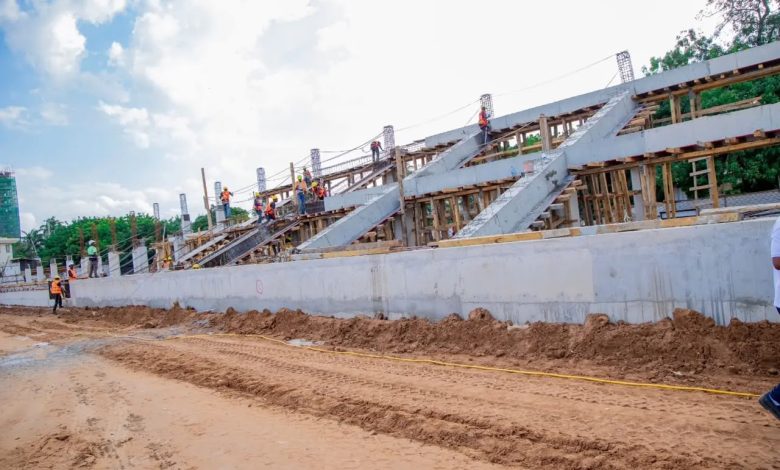
Cohosted by Tanzania, Kenya and Uganda, the tournament is expected to attract thousands of visitors, generate extensive international media coverage and create opportunities for businesses across multiple sectors. The government’s investment of more than 1.2tri/- in sports infrastructure reflects confidence that the benefits will extend beyond the tournament itself.
ALSO READ: Transport integration to spur Dira 2050
New stadiums, training facilities, sports academies and recreational infrastructure are expected to support talent development while creating lasting assets for communities. For policymakers, AFCON is not simply a football event.
It is an opportunity to showcase Tanzania to the world, strengthen tourism, develop professional skills and stimulate economic activity. The challenge will be ensuring that these gains continue long after the tournament concludes.
That is why efforts to strengthen sports governance, expand sports education and support talent development feature prominently in the ministry’s plans. Underlying all these initiatives is a common theme: youth.
Dira 2050 repeatedly identifies Tanzania’s youthful population as one of its greatest assets. Over the coming decades, millions of young Tanzanians will enter the labour market, bringing energy, creativity and ambition.
Creating opportunities for them will be one of the country’s most important development challenges. Media, arts and sports are particularly well placed to contribute to the solution.
They offer pathways into entrepreneurship, content creation, technology, performance, design, coaching, digital services and numerous other professions that did not exist at the same scale a generation ago.
The arts sector is already undergoing important reforms aimed at strengthening professionalism, improving intellectual property protection and creating a more supportive environment for creators.
For musicians, filmmakers, designers, writers and digital innovators, these changes could open new opportunities to participate in the economy while contributing to Tanzania’s cultural and creative landscape.
Taken together, these initiatives reveal an important evolution in development thinking. Economic transformation is no longer viewed solely through the lens of infrastructure, industry and investment.
It is also about ideas, creativity, identity, innovation and human potential. Media informs citizens and strengthens accountability. Culture preserves identity