

Tanzanian scientist turns cashew waste into leather innovation, creates new opportunities for industry
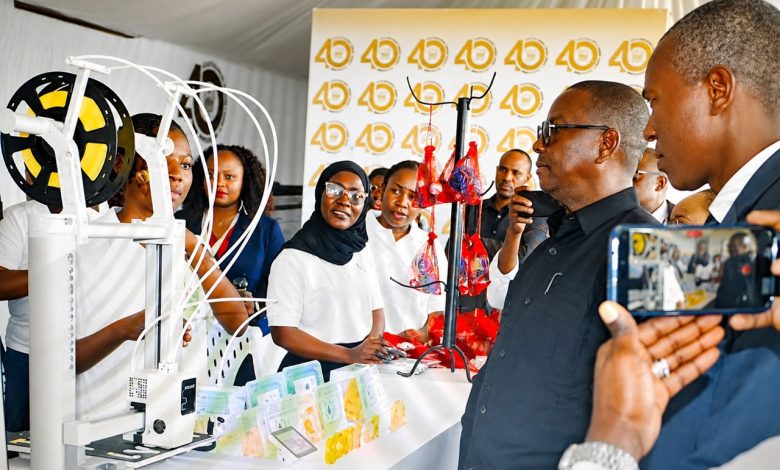
ARUSHA: FOR Dr Cecilia China, a lecturer at the Nelson Mandela African Institution of Science and Technology (NM-AIST) in Arusha, what began as academic research has developed into a promising industrial innovation with the potential to transform Tanzania’s cashew and leather industries.
A mother of two, Dr China is the brains behind an innovative leather-tanning and softening product made from cashew husks and tree bark, materials traditionally regarded as waste.
Today, she is not only the inventor. She is also running a small processing plant at NM-AIST, where the innovation is moving from laboratory research towards commercial production. Her journey, however, did not begin with a factory.
It began with a question: What if Tanzania could turn the huge quantities of cashew-processing waste generated every year into something valuable?
That question became the foundation of her PhD thesis, in which, she explored ways of using cashew residues to produce a natural tanning and softening agent for leather.
“I am a mother and I was touched by the challenges faced by women involved in cashew processing, as well as the loss of income caused by the huge quantities of waste generated,” Dr China says.
Her interest deepened after she consulted cashewprocessing factories. “They told me that they generate a lot of residues and had nowhere to dispose of them,” she recalls.
For Dr China, the problem revealed an opportunity: waste could become a raw material, while scientific research could create a product with commercial value.
From waste to wealth
Tanzania is one of Africa’s major cashew-producing countries and processing generates substantial quantities of husks and other residues. Dr China says available data indicate that industrial processors alone generate thousands of tonnes of cashew waste annually.
The actual volume could be considerably higher when residues from small-scale processors are included.
Rather than treating this material only as an environmental burden, she began examining it as a resource for industrial innovation.
Her PhD research focused on extracting useful compounds from cashew residues and developing a product suitable for leather processing.
The significance of the innovation extends beyond cashew farming. Tanzania has an estimated 36.6 million cattle, 27.6 million goats and 9.4 million sheep, giving the country a substantial supply of hides and skins.
National production of raw hides and skins is estimated at between 13.6 million and 15.7 million pieces annually.
Yet, less than 10 per cent of this capacity is processed locally, leaving much of the remainder exported in raw form or under-utilised.
For Dr China, these figures represent another missed opportunity. Developing locally produced tanning technologies and expanding leather manufacturing could enable Tanzania to retain more value domestically while creating jobs and businesses.
Her cashew-based innovation offers a possible connection between two sectors: cashew waste on one side and leather value addition on the other.
The turning point
A major breakthrough came in 2020, when Dr China’s innovation was selected among outstanding innovations and received an award.
The recognition became an important turning point because it brought the innovation into contact with the Tanzania Commission for Science and Technology, or COSTECH, which supported her transition from research towards production.
“I was supported by the Government through COSTECH,” she says. With that backing, Dr China intensified research, product development and commercialisation efforts.
The result is a small production facility at NM-AIST, where the cashew-derived tanning and softening product is produced and used to manufacture leather goods.
Bags, purses and other leather products are among the items being made using leather treated with the locally developed product.
Thus, material once considered waste is being given a new purpose, first as an industrial input and ultimately as part of finished consumer products.
A new opportunity for women
The innovation could also create an additional income stream for women involved in cashew processing. Instead of discarding cashew husks after processing, women and small-scale processors could collect and sell the residues as raw materials for further processing.
In cashew-growing communities, this could create income from material that previously had little or no commercial value.
Dr China believes the opportunity is particularly significant because of the enormous volume of cashew residues generated across producing areas.
The innovation could establish stronger links among farmers, processors, researchers and manufacturers while reducing waste and encouraging a circular economy in cashew-producing regions.
Such a system would give waste a productive role in the value chain and create opportunities for communities to participate in a wider industrial process.
Keeping value in Tanzania
The broader ambition is to change how Tanzania views both agricultural and livestock resources.
For decades, the country has exported significant quantities of agricultural and livestock products in raw or semi-processed form, missing opportunities to capture greater value through processing and manufacturing.
Dr China’s innovation demonstrates how scientific research can help change that equation.
A cashew husk previously regarded as waste can become an ingredient in a leather-processing product.
That product can help transform raw hides and skins into higher-value leather.
The leather can then become a handbag, purse or another finished product.
At every stage, value is added, creating potential for jobs, businesses, tax revenues and a greater contribution to the national economy.
Dr China says her products are already being sold in Tanzania to entrepreneurs, institutions and tourists.
However, she is looking beyond the current smallscale operation.
“We are now looking for investors to establish a factory in the southern regions, where cashews are produced in large quantities,” she says.
Such investment would locate production closer to the source of raw materials while potentially creating an industrial hub focused on cashew waste utilisation and leather value addition.
COSTECH’s role
For Tanzania Commission for Science and Technology (COSTECH) Director General Amon Nungu, Dr China’s journey demonstrates why researchers need support beyond the laboratory.
COSTECH, which is marking 40 years of coordinating research and innovation activities, he says, will continue creating an enabling environment for researchers and innovators to develop solutions to social and economic challenges.
He says some Tanzanian innovators have already reached the stage of selling their products in international markets.
But research alone cannot guarantee successful innovation. Nungu calls on Tanzanians to support local innovators by buying locally developed products.
Such support, he says, helps innovators grow while strengthening value addition and addressing production challenges within the country.
The message is that innovation requires not only researchers and funding, but also consumers, investors, institutions and industries willing to adopt locally developed solutions.
ALSO READ: Innovation, skills training redefine DIT Mwanza’s future direction
A small factory, a bigger dream
Inside the modest production facility at NM-AIST, Dr China’s operation may still be small. The idea behind it, however, is much larger.
It sits at the intersection of agriculture, science, manufacturing, women’s economic empowerment, environmental protection and livestock value addition.
Most importantly, it presents a different way of understanding waste. For years, cashew husks have largely been viewed as a disposal problem.
Dr China sees them as a resource waiting to be unlocked. Her journey also demonstrates what can happen when academic research is allowed to move beyond a thesis and into the marketplace. A PhD research project has become a product.
The product has become a small factory. With investment and continued support, the factory could become the foundation of a much larger industry in Tanzania’s cashew-growing south.
Dr China has also established AriTech Organic Leather Company, which transforms cashew waste oil into premium, eco-friendly leather.
The company aims to create timeless leather products while empowering communities and protecting the environment.
For Dr China, the journey is a reminder that some of Tanzania’s biggest economic opportunities may not necessarily depend on discovering new resources, but on discovering new value in resources the country already possesses.
The cashew husk, once discarded as waste, may only be the beginning of a broader industrial transformation.



This is incredible 👏😍 so proud of you 🖐️👏 all the way from Nairobi Kenya