A new chapter in TZ–Mozambique strategic economic partnership
DAR ES SALAAM: THE announcement that Tanzania’s Mohammed Enterprises Tanzania Limited (MeTL) plans to invest 250 million US dollars (about 661.93bn/-) in Mozambique, potentially creating 20,000 jobs, is more than a significant corporate investment story.
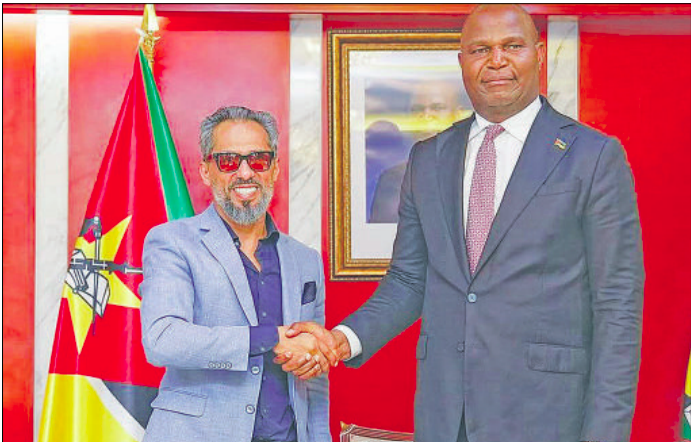
It is an important signal of what a deeper Tanzania-Mozambique economic relationship could look like. The announcement followed a meeting between MeTL Group President and Chief Executive Officer Mohammed Dewji and Mozambique’s President Daniel Chapo on August 18, this year.
According to reports, the discussions identified concrete investment opportunities in Mozambique, while the Mozambican Presidency welcomed the commitment in the context of efforts to mobilise private investment, promote industrialisation and create employment. The scale of the proposed investment is significant.
More importantly, however, is what it represents: the possibility of Tanzanian private capital becoming a stronger component of Mozambique’s economic transformation while simultaneously creating new opportunities for Tanzanian businesses, professionals and institutions. This development comes at a particularly important moment for Mozambique.
The country is entering a new phase of economic development, with major investments in natural gas, infrastructure, manufacturing, agriculture, logistics and other productive sectors.
The resumption of the Mozambique Liquefied Natural Gas (LNG) project in Cabo Delgado, for example, is expected to generate substantial construction activity and create opportunities for local businesses and employment.
The Coral Norte FLNG project, which reached Final Investment Decision in 2025, represents another major development in the Rovuma Basin, with production expected from 2028. These developments should not be viewed only from the perspective of Mozambique’s economic growth. They also have important implications for Tanzania.
Tanzania and Mozambique have historically enjoyed strong political relations, rooted in shared history, solidarity and geographical proximity. Cooperation in peace and security has also acquired renewed importance because developments in northern Mozambique have direct implications for Tanzania’s security environment.
Yet, when bilateral relations are examined from an economic perspective, there is considerable room for improvement. The question, therefore, is no longer whether Tanzania and Mozambique are friends.
They clearly are. The more important question is: How can this longstanding friendship be converted into greater trade, investment, industrial cooperation, employment and shared prosperity? The MeTL announcement provides one possible answer. It demonstrates that Tanzanian companies can look beyond Tanzania’s borders and participate in the economic transformation taking place in neighbouring countries.
It also demonstrates that Mozambique can offer opportunities for Tanzanian capital, expertise and entrepreneurship. But one investment should not be viewed in isolation. The strategic objective should be to create an environment in which MeTL is not an exception, but one of many Tanzanian companies investing, trading and forming partnerships in Mozambique.
The opportunity extends beyond investment. Mozambique’s emerging economic opportunities extend across several sectors in which Tanzania has significant capabilities. Agriculture and agro-processing can connect producers and markets across the border. Manufacturing can create regional value chains.
Logistics can benefit from closer integration between southern Tanzania and northern Mozambique. Tourism can develop complementary products along the Indian Ocean. Financial and professional services can support expanding commercial activity.
Energy is another particularly important area. As Mozambique develops its natural gas resources, the opportunity is not limited to the extraction and export of gas. The larger opportunity lies in the value chains surrounding energy: Engineering, construction, transport, logistics, manufacturing, professional services, skills development and local supply chains.
Tanzanian companies should therefore be encouraged to ask not simply: “What can we export to Mozambique?” but also: “What can we produce, invest in and supply within Mozambique and the wider regional market?” That represents a fundamental shift from conventional trade promotion towards strategic economic diplomacy.
Mtwara can become part of the equation. One of the most promising areas for closer Tanzania-Mozambique economic integration is the development of connectivity between Mtwara, Ruvuma and northern Mozambique. Geography provides both countries with an advantage.
Mtwara has the potential to serve as an important gateway for trade, logistics and investment into southern Tanzania and neighbouring areas of Mozambique.
At the same time, northern Mozambique can provide markets, resources and investment opportunities that complement Tanzania’s productive capacity. A stronger economic corridor could facilitate the movement of goods, agricultural products, manufactured products, mining inputs, energy-related services and people engaged in legitimate economic activity.
The objective should not be to create another institutional concept without implementation. It should be to identify specific infrastructure, customs, logistics, investment and private-sector interventions that can make the corridor commercially viable.
The MeTL expansion provides an interesting example of why such connectivity matters. A major investor does not operate in isolation. It requires suppliers, transporters, financial institutions, professional services, skilled workers, distributors and other businesses.
One major investment can therefore create an ecosystem of additional opportunities. The government has an important role, but it should not substitute itself for the private sector. Its responsibility is to create the conditions in which businesses can invest and operate effectively.
This includes predictable regulations, efficient border procedures, investment facilitation, infrastructure, access to information and effective resolution of commercial and administrative obstacles. For Tanzania and Mozambique, this also means addressing practical issues affecting legitimate crossborder movement and trade.
A secure border is essential. But a secure border should also facilitate legitimate commerce and movement. This is particularly important for communities living along the Tanzania-Mozambique border, whose economic and social relationships often predate modern administrative boundaries.
The MeTL announcement also offers an opportunity for Tanzania to rethink how it conducts economic diplomacy. Embassies should increasingly operate not only as platforms for political representation, but also as centres of economic intelligence, investment facilitation and opportunity identification.
The process should move from: Information → Promotion → Investment → Facilitation → Implementation → Aftercare. Diplomatic missions should know where investment opportunities are emerging, which sectors are expanding, what regulatory barriers exist and where Tanzanian companies can compete effectively.
This does not mean promoting individual companies at the expense of others. Rather, it means creating a broader platform through which Tanzanian private-sector capabilities can connect with opportunities in partner countries.
From one investment to a strategic partnership. The 250 million US dollars MeTL announcement should, therefore, be welcomed as more than a corporate commitment. It can become a catalyst for a broader conversation about the future of Tanzania-Mozambique economic relations.
The two countries already have the foundations of a strong strategic relationship: Political trust, geographical proximity, common security interests, shared maritime space and extensive peopleto-people connections. The next step is to add a stronger economic dimension.
This could involve a more structured Tanzania-Mozambique strategic dialogue covering security, trade, investment, energy, infrastructure, agriculture, maritime cooperation and human mobility.
The objective should be to move from a relationship that is politically strong but economically underdeveloped towards one that is both politically strong and economically integrated. The opportunity is particularly compelling because the benefits can be mutual.
Mozambique needs investment, industrialisation, employment, infrastructure and stronger domestic value chains. Tanzania needs new markets, investment opportunities, regional connectivity and opportunities for its growing private sector.
These are complementary interests. The MeTL announcement may, therefore, be seen as the beginning of a new chapter. The strategic question before Tanzania and Mozambique is how to ensure that this chapter produces not one major investment, but a wider network of investments, businesses, value chains and opportunities linking the two economies.
Ultimately, the future of Tanzania-Mozambique relations should not be measured only by the number of agreements signed or meetings held.
It should increasingly be measured by jobs created, businesses established, trade generated, investments realised, borders made more efficient, security strengthened and opportunities delivered to citizens of both countries. That is how historical friendship can be transformed into strategic economic partnership.
Source note: The MeTL investment commitment and the August 18 meeting are based on the reported announcement. The US$250 million should therefore be described as a proposed or committed investment, rather than an investment already disbursed or implemented.