Why TZ, Mozambique must invest in knowledge to drive industrial growth
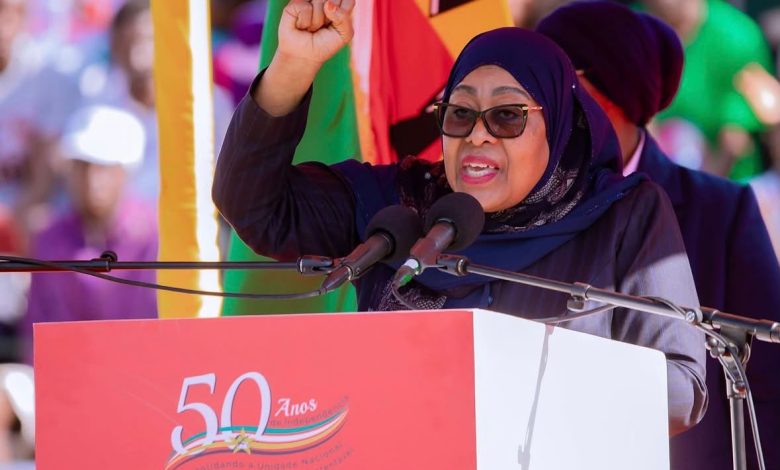
TANZANIA: AS Tanzania and Mozambique accelerate their industrialisation and economic transformation agendas, education, research, innovation and technology are emerging as strategic pillars for building more competitive, resilient and knowledge-based economies.
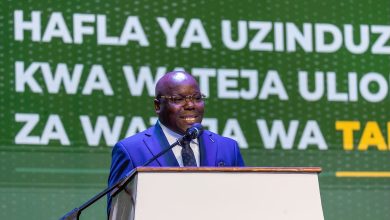
In the eighth part of this Daily News Diplomatic Bench Interview series, Tanzania’s High Commissioner to Mozambique, CP Hamad Khamis, explains why education, research, innovation and technology are critical to Tanzania and Mozambique’s industrialisation ambitions, and how stronger cooperation in knowledge and skills development can help drive value addition, competitiveness and sustainable economic transformation.
According to CP Khamis, the next phase of bilateral cooperation should focus not only on harnessing the two countries’ abundant natural resources, but also on investing in the knowledge, skills and innovation needed to unlock their full economic potential.
He notes that while Tanzania and Mozambique are richly endowed with minerals, natural gas and vast agricultural resources, their long-term economic competitiveness will increasingly depend on how effectively they invest in people, knowledge and innovation.
Developing a highly skilled workforce, commercialising research and embracing emerging technologies, he says, will be essential if the two countries are to diversify their economies, increase value addition and develop globally competitive industries.
“Education, research and innovation are indispensable pillars of industrialisation and sustainable economic transformation,” High Commissioner CP Khamis says.
“As Tanzania and Mozambique seek to diversify their economies, increase value addition and enhance productivity, it is important that we invest in knowledge, skills and technology as strategic drivers of competitiveness.”
While both countries are richly endowed with natural resources, he observes that long-term economic success will also depend on developing the expertise required to process those resources locally, adopt modern technologies and establish high-value industries.
“Universities and research institutions should therefore become engines of innovation, supporting industrial policy, productivity and enterprise development,” he says.
Industrialisation cannot be sustained without a workforce equipped with the right skills, according to CP Khamis, who notes that Tanzania and Mozambique face growing demand for professionals in sectors including energy, mining, agriculture, manufacturing, information and communication technology (ICT), logistics and healthcare.
Closing these skills gaps, he says, will require closer collaboration among governments, universities, technical institutions and industry.
“The two countries can establish joint scholarship programmes, student and faculty exchanges, technical and vocational training initiatives, and industry attachment schemes in priority sectors such as natural gas, mining, agriculture, manufacturing, ICT, logistics and healthcare,” he says.
He also identifies several emerging industries that warrant particular attention, including liquefied natural gas (LNG), battery minerals, renewable energy, agribusiness, pharmaceutical manufacturing and maritime industries.
According to the High Commissioner, aligning education and training with labour market needs will enable both countries to produce graduates with practical skills capable of supporting industrial expansion and strengthening regional competitiveness.
Higher learning institutions, CP Khamis argues, must move beyond their traditional teaching role and become active partners in national development.
“Universities should move beyond their traditional teaching role and become active partners in economic development,” he says.
He explains that universities in Tanzania and Mozambique can deepen cooperation through applied research addressing shared development challenges, including agriculture, mining, climate resilience, public health, renewable energy, the blue economy and industrial manufacturing.
Importantly, such research should not remain confined to academic journals. “Collaborative research should be conducted in partnership with industry to ensure that innovations respond directly to market needs,” he says.
Joint postgraduate programmes, shared research facilities and regular academic exchanges, he adds, could strengthen scientific cooperation while promoting the commercial application of research findings.
High Commissioner CP Khamis says stronger cooperation among universities, research institutions, governments and the private sector could help create innovation ecosystems capable of transforming scientific discoveries into commercial products and enterprises.
“There is significant scope to establish joint innovation ecosystems linking academia, government and industry,” he explains.
Among the initiatives he proposes are bilateral innovation hubs, technology incubators, industrial research centres, start-up accelerators and commercialisation funds to help move promising innovations from laboratories to the marketplace.
He also sees considerable opportunities for public-private partnerships in areas such as mining technologies, agricultural mechanisation, renewable energy, pharmaceutical production, digital financial services and logistics.
“By encouraging researchers, entrepreneurs and investors to work together, both countries can transform scientific discoveries into commercially viable products and enterprises,” he says.
Harnessing the Fourth Industrial Revolution
The rapid advancement of digital technologies is reshaping economies worldwide, and CP Khamis says Tanzania and Mozambique need to position themselves to benefit from these developments.
Among the technologies offering significant opportunities for bilateral cooperation, he identifies artificial intelligence, digital transformation, biotechnology, renewable energy technologies, geospatial science and advanced manufacturing.
“Artificial intelligence can improve agricultural productivity, healthcare delivery, logistics and public service efficiency,” he notes.
He adds that digital transformation can enhance e-government services, customs management, trade facilitation and financial inclusion, while biotechnology presents important opportunities in agriculture, pharmaceuticals and food security.
Renewable energy technologies, including solar, wind, green hydrogen and battery technologies, could also support sustainable industrialisation.
Meanwhile, geospatial science can strengthen mineral exploration, environmental management, urban planning and disaster preparedness.
“Advanced manufacturing technologies, automation and industrial digitalisation will also play a critical role in increasing productivity and strengthening regional value chains,” he says.
By investing in these emerging technologies, he argues, Tanzania and Mozambique can strengthen their competitiveness within the rapidly expanding global knowledge economy.
Young people, he observes, will ultimately play a decisive role in determining the success of industrial transformation in both countries.
“Young people represent one of the greatest assets for both Tanzania and Mozambique, and their skills, creativity and entrepreneurial capacity will determine the competitiveness of both economies in the future,” he says.
He outlines several areas where closer cooperation could help unlock this potential, including technical and vocational education, digital literacy, coding, entrepreneurship training, innovation programmes and industry-linked skills development.
Such initiatives, he says, should prepare young people for careers in ICT, artificial intelligence, renewable energy, advanced manufacturing, mining technologies and the creative economy.
CP Khamis also notes that Tanzania has placed youth empowerment at the centre of its national development agenda through strengthened institutional support for youth affairs.
“This institutional focus provides an important opportunity to deepen cooperation with Mozambique in areas such as youth entrepreneurship, innovation ecosystems, start-up development, digital skills and employment creation,” he says.
He further proposes joint youth innovation challenges, entrepreneurship exchanges, business incubation programmes and stronger partnerships between training institutions and the private sector.
For research to deliver tangible economic benefits, the High Commissioner says governments, universities and businesses need to work more closely together.
“Research should be closely aligned with national development priorities and private sector needs,” he stresses.
Governments, he explains, should strengthen innovation policies, increase research funding and establish incentives that encourage commercialisation.
Universities, meanwhile, should establish technology transfer offices, intellectual property support systems and entrepreneurship centres capable of helping researchers transform ideas into successful businesses.
The private sector should be involved from the earliest stages of research by identifying market opportunities, co-financing research projects and supporting product development.
He also advocates innovation financing mechanisms, venture capital funds and business incubators capable of helping promising technologies reach commercial scale.
Science, technology and innovation, the High Commissioner says, have the potential to raise productivity across virtually every strategic sector of the economy.
In agriculture, improved seed technologies, precision farming and digital advisory services can strengthen food security.
Mining can benefit from modern exploration techniques, advanced mineral processing technologies and increased value addition.
Energy cooperation can accelerate renewable energy deployment, natural gas utilisation and the development of clean energy technologies.
Innovation also offers opportunities to strengthen fisheries, healthcare and environmental management through improved pharmaceutical production, medical technologies, disease surveillance and sustainable resource management.
“Environmental technologies will also help both countries manage natural resources sustainably while supporting climate resilience and green economic growth,” he says.
High Commissioner CP Khamis outlines an ambitious vision for longterm institutional cooperation between Tanzania and Mozambique.
ALSO READ: How citizen-centred diplomacy is strengthening Tanzania–Mozambique ties
Among the flagship initiatives he proposes are a Tanzania–Mozambique Centre of Excellence for Applied Research and Innovation; joint research programmes on natural gas, critical minerals, agriculture, renewable energy and the blue economy; a Regional Battery Minerals and Clean Energy Innovation Hub; bilateral centres for technical and vocational excellence; cross-border innovation networks for young entrepreneurs; and annual science, technology and innovation forums bringing together governments, universities and the private sector.
“Such initiatives would ensure that young people are not only beneficiaries of economic transformation but also active contributors to innovation, industrialisation and regional competitiveness,” he says.
As Tanzania advances the implementation of Development Vision 2050, CP Khamis stresses that cooperation in education, research and technology should be viewed as a long-term strategic investment.
“Development Dira 2050 recognises that future economic competitiveness will increasingly depend on knowledge, innovation, technology and human capital development,” he says.
He adds that stronger partnerships between Tanzania and Mozambique can accelerate industrial transformation, expand value-added production, strengthen regional competitiveness and help both countries build resilient, knowledge-based economies.
“Ultimately, cooperation in education, research and technology should be viewed as a strategic investment in economic diplomacy, industrialisation and sustainable development,” he says.
“Through stronger partnerships, Tanzania and Mozambique can build a knowledge-based regional economy that supports the aspirations of Dira 2050, Southern African Development Community (SADC), African Continental Free Trade Area (AfCFTA) and Africa’s broader development agenda.”