

Solar power: A reliable clean energy source Tanzania can rely on, benefit from
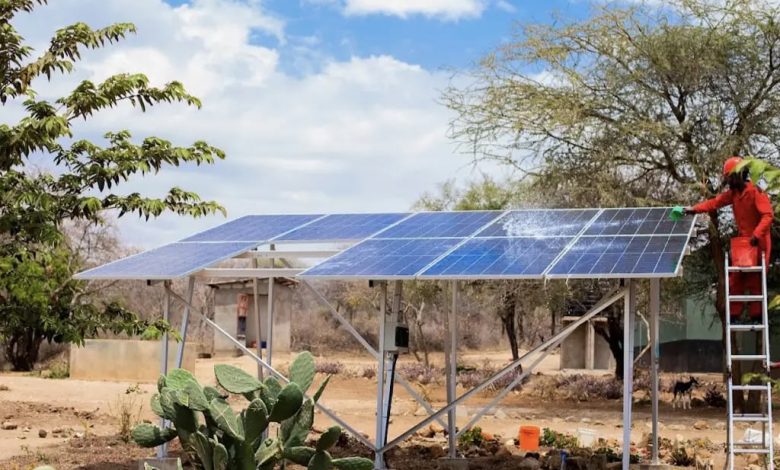
TANZANIA: ACCESS to reliable electricity is steadily becoming a stronger pillar of Tanzania’s development as the government continues to invest in expanding the national grid, strengthening power infrastructure and improving the stability of electricity supply.
Over the years, significant progress has been made in reducing power interruptions, with outages becoming less frequent and electricity reaching more households, businesses and communities across both urban and rural areas.
The progress reflects ongoing efforts to build a more resilient and dependable electricity system capable of supporting Tanzania’s growing economy and improving the quality of life of its people. While challenges remain in some areas, continued investment in generation, transmission and distribution infrastructure is creating renewed confidence in the country’s power sector.
With these efforts gathering momentum, Tanzania is steadily moving towards a future in which reliable and accessible electricity is no longer a constraint, but a powerful engine for household welfare, business productivity, industrial growth and inclusive economic development.
In urban centres such as Dar es Salaam, Mwanza, Arusha and Dodoma, Tanzania’s expanding electricity network continues to support growing businesses and improve everyday life. At the same time, occasional power interruptions remain a challenge, particularly for small and medium enterprises whose operations depend heavily on a steady supply of electricity. Salons, shops, restaurants, workshops and other businesses can experience temporary disruptions that may reduce working hours, affect productivity and, in some cases, expose equipment to damage. For households, interruptions can similarly affect lighting, refrigeration, communication and the use of digital technologies. Nevertheless, continued investment in the electricity sector is helping to strengthen supply reliability and reduce the frequency and duration of outages compared with previous years.
In rural areas, the government’s efforts to extend electricity access have brought encouraging changes, with more communities being connected to the national grid and benefiting from improved access to modern energy. The work of the Rural Energy Agency (REA) has played an important role in advancing rural electrification and bringing power closer to households, businesses and public institutions. However, some remote and underserved communities still face gaps in access, while others require more reliable and affordable electricity services. In these areas, households may continue to rely on alternatives such as kerosene, candles, dry-cell batteries and diesel generators. The continuing expansion of electricity infrastructure therefore presents an important opportunity to further narrow the energy access gap between rural and urban communities.
Against this backdrop, the growing availability of alternative energy solutions is adding a new dimension to Tanzania’s energy transition. Solar energy, in particular, is emerging as an increasingly attractive complement to the national grid, offering households, businesses and institutions an additional source of clean and dependable power. Tanzania is richly endowed with sunshine throughout much of the year, providing a strong foundation for expanding solar energy use. Solar systems can be deployed at different scales, from small household installations to larger systems serving schools, health facilities, businesses and other institutions. In rural areas, solar power can provide an important pathway to first-time electricity access, while in urban centres it can complement the national grid and provide greater resilience during temporary interruptions.
Despite this promising potential, wider adoption of solar energy still faces several practical challenges. The upfront cost of installing a complete solar system, particularly one equipped with battery storage, can remain significant for many households and small businesses. Although technological advances and growing market competition have helped bring down the cost of solar equipment, the initial investment and eventual replacement of batteries can still present a financial hurdle. Expanding affordable financing and flexible payment arrangements could therefore play an important role in enabling more Tanzanians to benefit from solar technology.
The quality and availability of technical services also require continued attention as the solar market expands. The growing demand for solar products has created opportunities for many suppliers and installers, but it has also highlighted the importance of quality standards, professional installation and reliable aftersales services. Strengthening consumer awareness, technical capacity and maintenance networks would help ensure that solar systems perform efficiently and deliver value over their expected lifespan, particularly in rural areas where access to specialised services can be limited.
Information and awareness are equally important. As more Tanzanians explore solar energy, households and businesses need clear and reliable information to make informed decisions about system capacity, quality, costs, maintenance and financing options. Addressing information gaps and dispelling misconceptions about solar technology can encourage greater confidence and accelerate responsible adoption.
Financing remains another area with considerable room for improvement. Access to affordable energy-related credit is still limited for some rural households, low-income communities and small businesses. However, the emergence of pay-as-yougo models, energy-focused microfinance and other innovative financing mechanisms offers encouraging prospects. Expanding these options could make solar systems more accessible by allowing consumers to spread the cost of investment over time rather than bearing the full upfront expense.
Taken together, these developments point to a positive and increasingly diversified energy future for Tanzania. Solar energy is not necessarily a replacement for the national grid; rather, it can complement existing infrastructure, strengthen energy resilience and extend electricity access to communities that remain difficult to reach through conventional grid expansion alone. By continuing to invest in generation, transmission and distribution while encouraging appropriate renewable energy solutions, Tanzania can build an electricity system that is more reliable, inclusive and resilient. The journey still presents challenges, but the progress already made and the growing opportunities offered by solar energy provide strong grounds for optimism about the country’s energy future.
To promote wider and more equitable adoption of solar energy, government support is essential. Effective policies and regulations are needed to establish quality standards, prevent the distribution of substandard products, and protect consumers. Such measures can help build consumer confidence and encourage the long-term adoption of solar technologies.
Government financial support is also essential. Measures such as reducing taxes on solar equipment, providing subsidies for low-income households, and promoting affordable financing mechanisms can significantly reduce barriers to adoption, particularly the high upfront cost of solar systems.
Public awareness and education are equally important. Many potential users still lack accurate information about solar technologies and their benefits. National awareness campaigns can help improve understanding, correct misconceptions, and promote informed decision-making among households and businesses. This is especially important in both urban and rural areas, where access to reliable information may be limited.
In some cases, there is also a perception that solar energy is inferior to grid electricity. As a result, some households with solar installations still consider themselves incomplete until they are connected to the national grid. Changing this mindset is essential. With better awareness, people can better understand that solar energy is not inferior, but rather a reliable and complementary source of electricity that can perform many of the same functions as grid power, especially when properly designed and installed.
In addition, investment in technical training and skills development is essential for supporting the growth of the solar sector. Expanding vocational education programmes in solar installation, maintenance and system design will ensure that there is a skilled workforce capable of supporting widespread adoption. This also creates employment opportunities for young people in both urban and rural areas.
Integration of solar energy into national and local development planning is another key step. Promoting solar use in public institutions such as schools, hospitals and government offices can demonstrate leadership, reduce public energy costs and increase public confidence in the technology.
ALSO READ: TANESCO tasked to ensure a timely completion of solar power plant in Shinyanga
Collaboration among the government, private sector and development partners is necessary to scale up innovative solutions such as pay-as-you-go systems, in which users pay for solar electricity in small instalments rather than making a large upfront payment and mini-grid systems, which are small, locally operated electricity networks that can supply solar power to communities not connected to the national grid. These models have demonstrated their potential to expand access to electricity, particularly in rural areas, and can be further adapted to serve peri-urban communities that face challenges in accessing grid electricity. However, appropriate safety standards need to be followed to ensure the safe installation and operation of these systems.
In conclusion, solar energy presents a practical and sustainable solution to Tanzania’s ongoing energy challenges. It has the potential to improve electricity access in rural areas, enhance reliability in urban centres, and reduce overall energy costs for households and businesses. In addition, greater use of solar energy can contribute to climate change mitigation by reducing reliance on fossil fuels for electricity generation and lowering greenhouse gas emissions. This makes the expansion of solar energy important not only for improving energy access but also for supporting Tanzania’s efforts to transition towards a low-carbon and more environmentally sustainable energy system. However, realising this potential requires addressing key barriers such as high initial costs, limited financing, technical challenges and information gaps. With strong policy support, investment in awareness and skills development and continued innovation in financing models, solar power can play a central role in shaping a more reliable, inclusive, low-carbon and sustainable energy future for Tanzania.




Simple timing tools are useful when they support a routine without demanding attention between the start and finish. A countdown timer gives a task a defined window, whether the activity is a short planning session, a language exercise, a kitchen step, or a scheduled break. Being able to choose hours, minutes, and seconds avoids forcing every activity into a preset duration. Straightforward pause, resume, reset, and end-sound options also make the timer adaptable when plans shift.
A memorable username does not need a long string of decorative characters. One carefully chosen accent can create a visual cue while keeping the name searchable and easy to type. Browsing username symbols by mood or shape is useful when building a consistent identity across several platforms. It is worth checking whether the final combination remains readable in small profile headers and notification previews.
For Japanese writing, a useful counter should distinguish characters from lines and paragraphs, because each answers a different editing question. 文字数カウント is particularly practical when it also shows manuscript-page equivalents and both UTF-8 and Shift_JIS byte totals. Local browser processing is an important detail for drafts containing unpublished material. Clear live totals can help writers check submission limits before copying text into a form or editor.
The observation that battery replacement costs undercut falling panel prices is the detail that matters most — a system’s real lifetime expense lives in storage, not the modules. Pay-as-you-go and energy microfinance ease the upfront barrier, but without local maintenance networks and spare-part supply chains, rural users still face long downtime. Tying financing packages to service guarantees and installer certification would stretch every shilling further.
Convert any PDF to dark mode in your browser.
Solid explanation. I appreciate that you covered the edge cases too.
The article highlights how the Rural Energy Agency’s expansion of grid connections has noticeably reduced power outages in remote villages, directly improving household refrigeration and communication. This progress shows that continued investment in transmission infrastructure is turning Tanzania’s electricity supply into a reliable engine for local business productivity and overall economic growth.
PickPokemon rolls from all nine generations in one click.