Why govt is taking a bigger stake in mining
TANZANIA: FOR years, the conversation around Tanzania’s mineral wealth has largely focused on what the country earns from mining through taxes, royalties, fees and other government revenues.
That picture is gradually changing.
The government is increasingly taking direct ownership positions in mining projects, giving it an interest not only in revenues generated from mineral extraction but also in the companies developing and operating those projects.
To date, the government holds shares in 16 mining companies through the Office of the Treasury Registrar (OTR), up from 10 projects in the 2024/25 financial year.
Another nine projects are at an advanced stage of negotiations with the government and, if successfully concluded, would bring the total number of mining projects with government participation to 25.
For Treasury Registrar Mr Nehemiah Mchechu, the development represents an important step in strengthening Tanzania’s participation in an industry whose importance to the economy goes beyond the value of minerals extracted from the ground.
“The issue is not simply about holding shares. It is about ensuring that the country has a meaningful economic interest in its mineral resources and that this interest is properly managed for the benefit of Tanzanians,” Mr Mchechu said recently.
That interest is reflected in a portfolio whose ownership structure varies from one mining venture to another.
Williamson Diamond Limited has the largest government stake at 37 per cent, followed by Sotta Mining Corporation Limited at 20 per cent.
Four companies, Songwe Helium Limited, Grafica Graphite Corporation Limited, Swala Graphite Corporation Limited and Yudi Mining (T) Graphite Development Co Ltd have government stakes of 17 per cent.
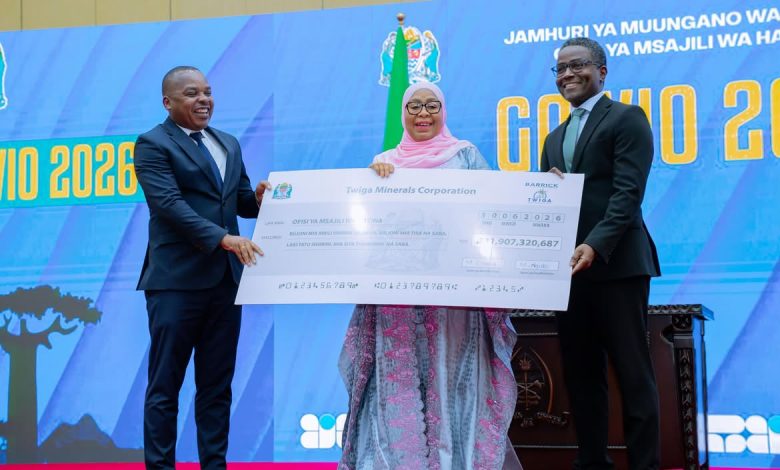
The remaining ten companies each carry a 16 per cent government interest: Twiga Minerals Corporation, Duma TanzGraphite Limited, Faru Graphite Corporation Limited, Kudu Graphite Limited, Tembo Nickel Corporation Limited, Nyati Minerals Sands Limited, Mamba Minerals Corporation Limited, Maganga Matitu Minerals Corporation Limited, Chui Mining Company Limited and Ndovu Graphite Limited.
The variation in stakes reflects the different arrangements under which the State participates in individual mining ventures.
The shift towards greater government participation in mining, however, did not happen overnight.
It can be traced to major legal reforms undertaken in 2017 during the fifth-phase government, when Tanzania made significant changes to the legal framework governing its mineral resources and the State’s participation in the sector.
Amendments to the Mining Act, 2010 introduced a statutory requirement for the government to hold a minimum 16 per cent non-dilutable free-carried interest in the equity capital of companies holding Mining Licences or Special Mining Licences.
The reforms also provided for the government to acquire, in total, up to 50 per cent of a mining company’s shares, commensurate with tax expenditures incurred by the government in favour of the company.
The changes represented an important shift in the state’s relationship with mining investors.
Rather than relying solely on taxes, royalties, fees and other statutory payments, the government would also participate directly as an equity holder in qualifying mining ventures.
The free-carried structure meant that the government could retain its agreed ownership interest without making a corresponding capital contribution.
The investor would bear the financial burden of developing the project, while the State would retain its equity position and the rights attached to that ownership.
The mining interests are also part of a much larger public investment portfolio. Currently, the value of government investments managed through OTR stands at 92.3tri/-, covering public institutions and companies in which the government holds minority interests.
Mining is, therefore, one component of a much larger pool of public capital. As the state’s interests in the sector grow, so too does the importance of ensuring that these assets are effectively monitored and managed.
But the size of the portfolio is not, by itself, a measure of success.
What ultimately matters is whether the underlying businesses are commercially successful, generate profits and deliver sustainable returns from the government’s ownership interests.
A commercially successful mining operation can generate dividends and increase the value of the government’s investment.
Conversely, a company that struggles to achieve commercial viability may provide limited returns regardless of the size of the state’s stake.
That makes the performance of each investment central to the value the government derives from its participation.
It also marks a significant change in the state’s relationship with mining companies. The state remains the regulator of the industry, but it is also an investor with a direct financial interest in the performance of individual projects.
The question, therefore, is not only whether the government holds shares, but how effectively those interests are managed on behalf of the public.
President Samia Suluhu Hassan has placed this issue at the centre of her government’s broader push to improve the performance of public investments, repeatedly stressing that government institutions and shares are assets belonging to Tanzanians and must be managed to deliver results.
At the 2026 Dividend Day, she reiterated that expectation, challenging institutions entrusted with public assets to demonstrate what they have produced, the value they have added and the revenue they have contributed.
Applied to mining investments, that means the focus cannot stop at the percentage of shares the government owns. It must also consider whether the companies are performing, whether the State’s interests are being protected and whether the investments are generating value for the country.
President Samia also linked the performance of public institutions to Tanzania’s development ambitions under Dira 2050, identifying three broad responsibilities: Providing services and infrastructure that enable economic activity; undertaking strategic activities that the private sector alone may not be able to carry out; and generating profits and dividends that strengthen the government’s capacity to finance development.
She also set a target for nontax revenue to reach at least 10 per cent of total government revenue by 2030, from approximately 3 per cent, placing greater emphasis on the contribution of public assets to national finances.
In the mining sector specifically, President Samia called on the Treasury Registrar and other stakeholders to ensure the effective and speedy implementation of the Mining Act in order to increase the sector’s productivity and contribution to the national economy.
Taken together, the president’s directions place government shareholding within a broader objective: Not merely increasing state participation, but ensuring that public investments and the mining sector generate stronger economic outcomes for Tanzania.
ALSO READ: Mining stakeholders request Tanzania to reduce taxes on imported raw materials
For Minister of State in the President’s Office, Planning and Investment, Professor Kitila Mkumbo, that policy direction also places greater demands on the management of the expanding government investment portfolio.
“As the portfolio grows, we must also strengthen the way we monitor and manage these investments,” he said.
He added: “Government participation has to translate into real value, and that requires proper oversight of the companies in which the state has an interest.”
This is where the role of OTR becomes significant, as it is responsible for monitoring investment performance, dividend flows and risks that could affect the value of government’s interests.
The wider economic significance of the portfolio extends beyond the financial performance of individual companies.
Mining operations can create employment, generate demand for Tanzanian goods and services, expand opportunities for local businesses and contribute to skills and technology development.
The government highlighted this broader connection during the 2026 Dividend Day ceremony, noting that money received through dividends helps finance schools, health facilities, roads, water projects, energy, agriculture, transport and other public services.