Tanzania’s quiet infrastructure revolution: Three deals signal new mode
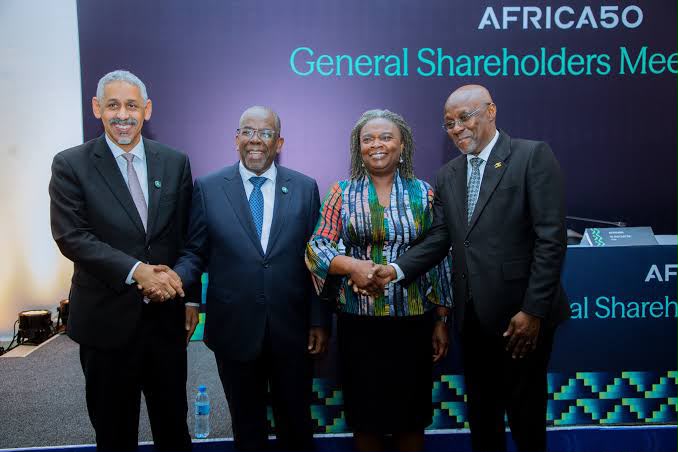
DAR ES SALAAM: DAR ES SALAAM played host this month to something rarer than another high-level infrastructure summit: agreements designed to move projects from aspiration towards implementation.
At the Africa50 General Shareholders’ Meeting and Infra for Africa Forum, Tanzania signed three partnerships covering electricity transmission, renal healthcare and natural gas distribution deals that point to a potentially important shift in how the country finances and delivers infrastructure.
The first partnership brings together Africa50 and the Ministry of Health to expand dialysis and nephrology services across the country, addressing a growing demand for specialised kidneycare services.
The second links Africa50 with Tanzania Electric Supply Company (TANESCO) to develop the country’s first independent power transmission projects through publicprivate partnerships (PPPs), drawing on Africa50’s experience in Kenya.
The third brings together Africa50, the Tanzania Petroleum Development Corporation (TPDC) and Egypt’s TAQA Arabia to develop the first phase of a small-scale liquefied natural gas (LNG) distribution network, supplying domestic gas to industry and the transport sector.
Taken together, the agreements represent more than a list of intentions. They are aimed at developing bankable projects capable of attracting long-term private capital an increasingly important proposition as African governments struggle to finance infrastructure from public budgets alone.
That financing challenge is enormous. Africa needs an estimated $130 billion to $170 billion a year in infrastructure investment, leaving an annual financing gap of between $68 billion and $100 billion.
The implication is clear: governments must increasingly turn national development priorities into projects that investors and financiers can assess, structure and ultimately fund.
That was one of the central messages from the Africa50 gathering, held on August 5–6 at the Julius Nyerere International Convention Centre in Dar es Salaam under the theme, “A Decade of Impact: From Ambition to Delivery.”
The forum brought together more than 1,200 delegates, including African heads of state and government, investors, international financial institutions, development partners and business leaders.
President Samia Suluhu Hassan used the occasion to position Tanzania as an attractive destination for investment, highlighting its political stability, natural resources, business environment and opportunities across key sectors.
She also pointed to government efforts to improve the investment climate through policy reforms and strategic initiatives aimed at attracting domestic and foreign capital, accelerating economic growth and creating jobs.
The message from the government was reinforced by Tanzania Investment and Special Economic Zones Authority (TISEZA) Head of Planning, Research and Innovation Gaudence Mmassy, who outlined investment opportunities and investor facilitation services, including those available through the One Stop Facilitation Centre and Special Economic Zones.
But the more significant story may lie in what happened beyond the speeches. Africa50 also secured a $20 million commitment from British International Investment to its Infrastructure Acceleration Fund, taking the fund’s total commitments to about $330 million.
That capital is particularly relevant to Tanzania’s three partnerships because it illustrates the financing ecosystem needed to turn infrastructure priorities into investable projects.
The transmission agreement, for example, could help address one of the less visible constraints on expanding electricity supply.
Generating more power is only part of the challenge; moving it efficiently and reliably to where it is needed requires adequate transmission infrastructure.
The LNG partnership similarly seeks to connect Tanzania’s domestic natural gas resources with industrial and transport demand.
Tanzania already produces more than 41.5 billion cubic feet of natural gas annually, giving the country a resource base that could support broader industrial and commercial use of gas.
For healthcare, the Africa50-Ministry of Health partnership takes a different route, applying infrastructure investment thinking to specialised medical services.
Expanding dialysis and nephrology capacity requires not only equipment but also facilities, reliable power and water, trained personnel and sustainable financing.
ALSO READ: Kaberuka recounts struggle to launch Africa50
The three projects therefore touch different parts of the economy energy, healthcare and industrial fuel but share a common principle: turning development needs into projects that can be structured and financed.
That may prove to be the more consequential outcome of the Africa50 meeting. Zanzibar’s investment figures provide another indication of the scale of opportunity within Tanzania.
The Zanzibar Investment Promotion Authority has reported 640 projects worth $7.1 billion registered over six years, underlining the breadth of investor interest in the country.
The challenge now is execution. Africa50’s decade-long evolution from identifying infrastructure opportunities to accelerating bankable projects reflects a broader shift across the continent.
The infrastructure debate is no longer simply about what Africa needs to build; it is increasingly about how projects will be structured, financed and delivered.
For Tanzania, the three agreements signed in Dar es Salaam offer a practical test of that new approach. If they move successfully from agreements to financial close, construction and ultimately services delivered to households and businesses, they could demonstrate how public priorities, private capital and development finance can work together.
That would make the quiet significance of the Dar es Salaam meeting much clearer: Tanzania is not simply looking for infrastructure. It is increasingly looking for ways to make infrastructure investable.