

EAC urged to develop home-grown AI solutions
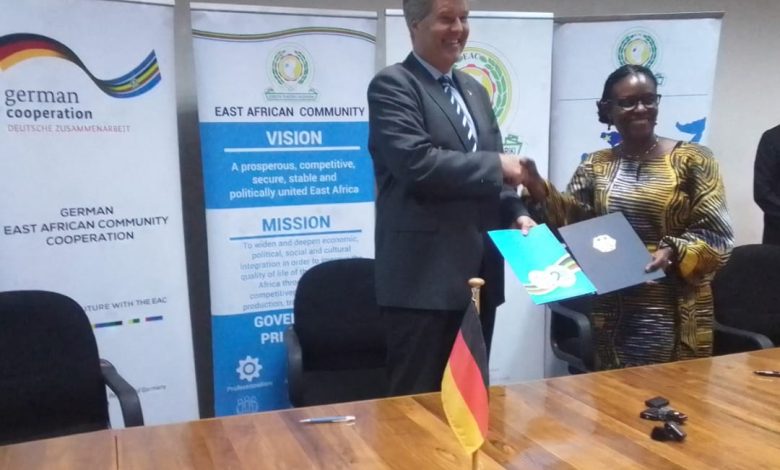
ARUSHA: EAST African countries have been challenged to move beyond consuming artificial intelligence (AI) technologies and develop home-grown solutions to address challenges in key sectors as the East African Community (EAC) and Federal Republic of Germany deepen cooperation in AI and economic development.
The call was made today in Arusha during the launch of the second EAC Artificial Intelligence Challenge (AI4EAC), which seeks to equip young people, researchers and entrepreneurs with skills to develop practical AI applications. The challenge carries USD 50,000 in prize funding for winning teams.
Speaking on behalf of the EAC Secretary General, Deputy Secretary General for Infrastructure, Productive, Social and Political Sectors, Aguer Ariik, said the initiative seeks to position young East Africans as creators rather than consumers of technology.
He said the EAC AI Alliance brings together governments, private-sector players, development partners, universities and research institutions to build a sustainable home-grown AI ecosystem.
“This second edition aims to reach 20,000 East Africans through AI skilling across all EAC Partner States,” said Mr Ariik.
Head of Division for East and Central Africa at Germany’s Federal Ministry for Economic Cooperation and Development (BMZ), Joachim Schmitt said Africa’s AI investment and digital infrastructure remained uneven.
“East Africa reflects the same imbalance, with some countries far ahead while others are just starting. No single country can close this gap alone,” said Mr Schmitt.
Equity Bank Director of Innovation and Technology Winnie Mang’eni said the AI challenge’s financial-sector track would help participants develop inclusive solutions to real-world challenges.
Meanwhile, Germany has committed 39.8 million Euros in grant funding to the EAC to support regional integration, trade, economic development and access to finance for micro, small and medium-sized enterprises (MSMEs).
ALSO READ: Samia to launch children recreation ground
Mr Schmitt said part of the funding would support MSMEs through Germany’s KfW and the East African Development Bank, while 4.8 million Euros would support Ebola preparedness, prevention, response and regional coordination.
EAC Deputy Secretary General for Customs, Trade and Monetary Affairs, Annette Ssemwemba welcomed the support, saying the partnership comes as the EAC implements its Seventh Development Strategy.

Buy European Language Certificates