Analysts hail President’s Constitution initiative
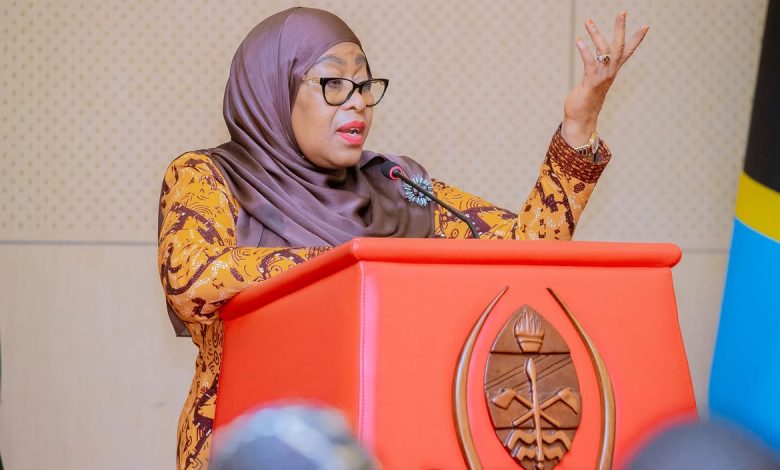
DAR ES SALAAM: POLITICAL analysts have welcomed President Samia Suluhu Hassan’s announcement of plans to establish a Reconciliation Commission to spearhead the country’s journey towards a new Constitution, describing the move as a strong indication of the government’s commitment to socio-political reforms.
However, they emphasised that the success of the process will depend on the meaningful participation of all stakeholders to build a lasting national consensus.
Their remarks follow President Samia’s announcement on Thursday after meeting leaders of the country’s 18 registered political parties, during which she said the government would establish a Reconciliation Commission to fast-track the constitution-making process.
The President said the proposed commission would facilitate consensus-building ahead of constitutional reforms while ensuring the entire process is conducted in accordance with the country’s laws, regulations and established procedures.
Speaking to the ‘Daily News’ yesterday, governance and public administration expert Dr Adam Mnyavanu of the Institute of Accountancy Arusha (IAA) described the announcement as timely and encouraging.
“It shows that the President and the government recognise that we have gone through difficult times and encountered various challenges. This is a positive step forward,” Dr Mnyavanu said.
ALSO READ: Tanzania acquires 50-knot speed boats for maritime security
He added that if there is genuine national commitment and a shared vision, the process of drafting a new Constitution could be completed within a year.
“Political parties are only one group of stakeholders. For the process to succeed, it must involve all key stakeholders,” he said.
According to Dr Mnyavanu, meaningful reconciliation should extend beyond political actors to include civil society organisations, religious leaders, farmers, the business community and ordinary citizens.
“Reconciliation is a national issue that concerns every Tanzanian,” he said.
The National Coordinator of the Tanzania Human Rights Defenders Coalition (THRDC), Mr Onesmo Olengurumwa, said the President’s announcement reflects the implementation of the ruling Chama Cha Mapinduzi (CCM) election manifesto, which pledged to initiate the Constitution review process within 100 days after the General Election.
“Starting the process of obtaining a new Constitution is not only the wish of Tanzanians, but also a commitment made by CCM during the election campaign,” Mr Olengurumwa said.
He stressed that the process should be inclusive and involve all citizens rather than being confined to politicians.
“We should not view constitution-making as a purely political process. The intention may be good, but the approach and the stakeholders involved will determine its success,” he said.
Mr Olengurumwa also cautioned that reconciliation should not be limited to political actors, noting that many Tanzanians from different backgrounds have been affected by political developments in recent years.
“We need genuine national reconciliation that embraces different groups. If we treat reconciliation solely as a political exercise, we risk advancing political interests instead of the national interest,” he said.
ALSO READ: PM directs authorities to ensure patrol boats are well-maintained for operations
Seasoned political analyst Mr Hamiduni Maliseli said the proposed Reconciliation Commission marks the beginning of a new chapter in strengthening national unity as the country prepares for constitutional reforms.
He said the announcement also dispels doubts among those who questioned the ruling party’s commitment to its constitutional reform pledge made during the 2025 General Election campaign.
Meanwhile, University of Dar es Salaam political science lecturer Dr Richard Mbunda echoed similar views, urging the government to ensure the reconciliation process brings together a broad spectrum of stakeholders.
He said, in addition to political parties, the process should involve civil society organisations, religious institutions, the media, trade unions, professional associations, youth groups and ordinary citizens.
Dr Mbunda warned that excluding important groups such as trade unions, faith-based organisations and civil society would weaken the legitimacy and credibility of the constitution-making process.
“An inclusive process will strengthen public confidence and enhance national ownership of the new Constitution,” he said.