Mkapa’s nation-building legacy lives on
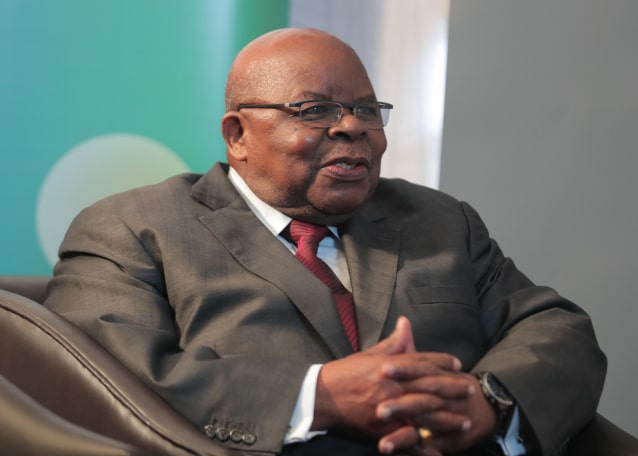
DAR ES SALAAM: TANZANIANS yesterday marked the sixth anniversary of the passing of Third Phase President Benjamin William Mkapa, as national leaders reflected on his enduring legacy of institutional reform, infrastructure expansion, and human capital development.
Leaders and development stakeholders highlighted how the late President’s vision continues to shape the country’s trajectory, noting that foundational reforms initiated during his presidency remain central to the Sixth Phase Government’s development agenda.
Works Minister Abdallah Ulega paid tribute to the late Head of State on his official social media account, identifying the creation of the Road Fund Board as one of Mkapa’s most enduring contributions to sustainable road infrastructure financing.
Mr Ulega noted that Mkapa firmly believed Tanzania should finance and maintain its road network through reliable domestic resources rather than relying solely on external funding.
“The work of building our nation, including roads and bridges, is not the responsibility of one leader. It is a continuous journey that every generation must carry forward,” Mr Ulega said, adding that President Samia Suluhu Hassan’s administration remains committed to strengthening the Road Fund and other strategic mechanisms.
Beyond physical infrastructure, Mkapa is widely remembered for championing structural economic reforms, building resilient public institutions, and instilling fiscal discipline during a pivotal era in Tanzania’s post independence history.
Key achievements associated with his administration include the establishment of the Tanzania Revenue Authority (TRA), the formulation of the Tanzania Development Vision 2025 (TDV 2025), and comprehensive public sector reforms aimed at enhancing governance and service delivery.
Speaking on behalf of President Samia Suluhu Hassan at the Fourth Benjamin Mkapa Legacy Forum and the 20th anniversary of the Benjamin Mkapa Foundation (BMF) in Dar es Salaam recently, Vice-President Dr Emmanuel Nchimbi reiterated the government’s commitment to human capital development in the health sector.
Dr Nchimbi emphasised that sustainable healthcare relies on well-trained professionals, robust institutions and forward-looking leadership, urging young medical practitioners to leverage emerging technologies like artificial intelligence, digital health systems and data analytics to tackle evolving health challenges.
ALSO READ: ‘Safeguard Union legacy’
He commended the Benjamin Mkapa Foundation for complementing state efforts in combating HIV/AIDS, expanding rural health services, and bolstering the medical workforce, adding that BMF exemplifies Mkapa’s belief that strong institutions should outlive individual leaders.
Zanzibar President and BMF Patron, Dr Hussein Mwinyi, remarked that the late President viewed strong leadership, accountable institutions, and youth empowerment as the primary pillars of sustainable national development.
He noted that BMF has significantly improved access to quality healthcare across both Mainland Tanzania and Zanzibar over the past two decades.
Providing institutional metrics, Deputy Minister for Health Dr Florence Samizi disclosed that BMF—in partnership with the government and international agencies—has supported over 19,000 healthcare workers, including 11,000 community health workers, alongside offering scholarships and expanding health infrastructure.
Dr Samizi highlighted that Tanzania’s active healthcare workforce now exceeds 182,000 personnel, with nearly 1,982 doctors undergoing advanced training under the Samia Super Specialisation Scholarship Programme.
Ambassador Liberata Mulamula, Chairperson of the BMF Board of Trustees, applauded the government’s ongoing health investments, noting that increased domestic resource mobilisation is bringing the nation closer to Universal Health Coverage (UHC).
Family representative Mr William Erio observed that the former President’s legacy extends far beyond the foundation bearing his name, pointing to macro-level institutional frameworks like TRA and TDV 2025 that continue to underpin current economic policy.
Adding a continental perspective, World Health Organisation (WHO) Regional Director for Africa, Prof Mohamed Janabi, called on African governments to scale up investments in healthcare workers, warning that the continent risks severe brain drain unless it prioritises health workforce retention.
Six years after his death, Benjamin William Mkapa remains recognised not only as a former Head of State, but as a structural architect whose emphasis on institutional strength, economic discipline and human capital continues to direct Tanzania’s growth path.