Tanzania’s power boom puts renewables in the spotlight
DAR ES SALAAM: TANZANIA’S installed electricity generation capacity has climbed to 4.6 gigawatts (GW), driven largely by the expansion of hydropower, but the country now faces the challenge of attracting enough new investment in renewable energy to meet its target of raising the share of renewables in its generation mix to 75 per cent by 2030.
This is according to the latest figures contained in BloombergNEF’s Sub-Saharan Africa Clean Energy Market Outlook 2026, released on Wednesday, which identifies the 2.1GW Julius Nyerere Hydropower Project (JNHP) as the biggest recent addition to Tanzania’s national grid.
The project began adding generating units in 2024 and reached full operation in 2025, helping large hydropower account for nearly half of the country’s installed generation capacity. Natural gas remains the main source of firm power, according to the report.
The expansion has significantly strengthened Tanzania’s power generation capacity, but it also highlights the scale of the next challenge, diversifying the country’s energy mix while adding enough renewable capacity to keep pace with rising demand and meet its 2030 ambitions.
Under the 2025 National Energy Compact, Tanzania plans to increase the share of renewables in its generation mix from 61.8 per cent in 2025 to 75 per cent by 2030.
That target will require more than 1.8GW of new renewable energy capacity from solar, wind, geothermal and hydropower by 2030. In practical terms, Tanzania would need to add an average of about 360MW of renewable generation capacity every year between 2026 and 2030.
The scale of the required expansion, however, comes as current investment remains below the level needed to deliver that pace of growth.
BloombergNEF says Tanzania has secured around 160MW in solar project financing since 2023, with projects backed by a mix of power purchase agreements involving Tanzania Electric Supply Company (Tanesco) and corporate buyers, particularly in the mining sector.
The report points to solar as the technology best positioned to help Tanzania close the renewable energy gap, with opportunities emerging from both utility-scale projects and corporate demand for electricity.
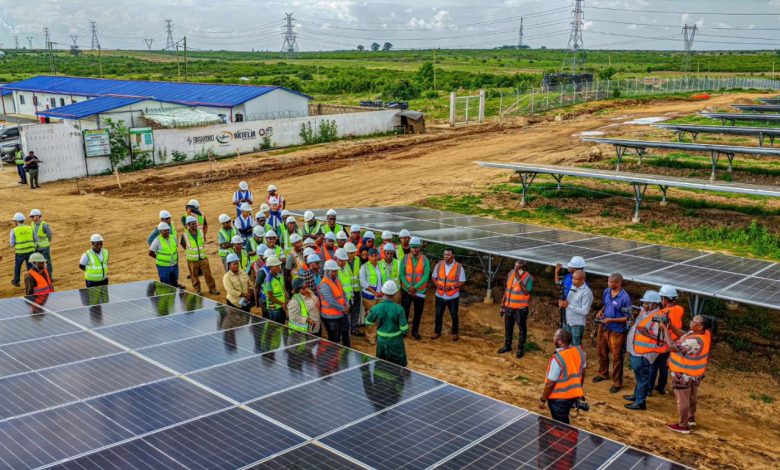
That opportunity is already taking shape at the Kishapu solar project, Tanzania’s first large-scale solar plant. Its initial 50MW phase was completed in February this year, while a planned second phase of 100MW would take the facility’s total capacity to 150MW.
With solar projects beginning to emerge, BloombergNEF expects the technology to dominate Tanzania’s near-term renewable energy investment opportunities. The growth is likely to be driven by projects supplying Tanesco as well as corporate power purchase agreements.
Wind energy, by comparison, remains a relatively small part of Tanzania’s renewable energy investment pipeline, leaving solar and hydropower at the centre of the country’s near-term clean energy expansion.
Tanzania’s push is also part of a wider renewable energy investment trend across Sub-Saharan Africa. The region attracted US$13.5bn in renewable energy investment in 2025, marking the third consecutive year in which annual investment exceeded US$12bn.
Tanzania was among the region’s largest renewable energy markets between 2023 and 2025, attracting US$776mn in investment. The country also recorded growth in small-scale solar as investment in the technology accelerated across the region.
Across Sub-Saharan Africa, investment in small-scale solar more than doubled year-on-year to US$8.5nn in 2025, making it the region’s leading renewable energy technology.
For Tanzania, the completion of the Julius Nyerere project has provided a major boost to electricity generation. The bigger test now is whether the country can sustain investment in solar and other renewable technologies at the pace required to diversify its power mix and achieve its 75 per cent renewable energy target by 2030.