Tanzania’s largest wilderness and premier safari destination
IRINGA: RUAHA National Park is one of Tanzania’s most remarkable wilderness areas, boasting a vast and diverse landscape. Covering 20,226 sq. km, it is the largest national park in Tanzania and one of the largest in Africa.
Located in southcentral Tanzania, Ruaha is an essential part of the Rungwa-Kizigo-Muhesi ecosystem, which spans an impressive 45,000 sq. km. The park’s name is derived from the Hehe word “Luhava,” meaning “great river.”
Landscape & Geography
The park’s dramatic terrain consists of rolling hills, baobab-dotted plains, woodlands, rocky outcrops, and seasonal wetlands.
The Great Ruaha River, a lifeline for the park’s wildlife, forms its southeastern border, while the Njombe River cuts through its rocky landscapes.
The highest point, Ngalambulwa Mountain (1,600m), towers over this untamed land, adding to its breathtaking beauty. Ruaha’s diverse ecosystem offers visitors a chance to experience multiple landscapes within a single safari.
The riverine forests along the Great Ruaha River contrast sharply with the Miombo woodlands, where large mammals thrive.
The semi-arid savannahs, adorned with acacia and baobab trees, give way to open plains where vast herds of herbivores graze. These distinct habitats create an ecological haven for countless species.
Wildlife & Birdlife
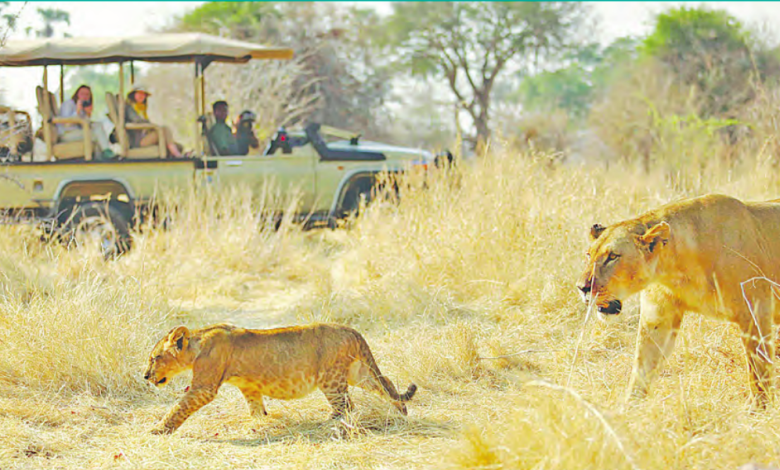
Ruaha is a wildlife haven, offering an authentic safari experience. The park hosts the largest elephant population in Tanzania and is a stronghold for predators, including Lions (one of Tanzania’s Lion Conservation Units, known for exceptionally large prides), Leopards & Cheetahs (often seen in open plains and rocky outcrops), Spotted Hyenas & African Wild Dogs (Ruaha supports one of the largest populations of these rare predators) as well as Buffalo, Giraffe, Hippopotamus, Zebra, and Antelope species The park is home to rarer antelope species such as the Sable, Roan, Greater Kudu, and Lichtenstein’s Hartebeest.
The Lesser Kudu, which is uncommon in most of Africa, can also be found here, making Ruaha a unique destination for wildlife enthusiasts. Ruaha is also a paradise for bird lovers, boasting over 570 recorded species.
Visitors can spot hornbills, raptors, bee-eaters, rollers, and the rare Eleonora’s Falcon (December-January).
The park’s diverse habitats attract both resident and migratory species, making birdwatching an unforgettable experience.
During the wet season, migratory birds from Europe, Asia, and North Africa arrive, increasing the number of species present in the park.
Safari Experiences
Ruaha offers a range of exciting safari activities including Game Drives: Explore the park’s diverse terrain and witness incredible wildlife encounters.
Walking Safaris: Immerse yourself in nature, tracking animal footprints and learning about the ecosystem with an expert guide. Night Game Drives: Experience Ruaha after dark and spot elusive nocturnal creatures like servals, genets, civets, and bush babies.
Boating Safaris: In the Usangu Wetlands, a seasonal boating safari (June-August) offers close encounters with elephants, hippos, and waterbirds. Balloon Safaris: Enjoy a breathtaking aerial view of the park’s landscapes and wildlife from a hot-air balloon.
Bush Meals: Savor a meal in the heart of the wilderness for a truly immersive experience. Cultural Visits: Nearby historical sites such as the Mkwawa Museum and Isimila Stone Age Site add an enriching cultural dimension to a visit.
ALSO: Why TZ is undisputed global leader in wildlife biomass
Climate & Best Time to Visit
Ruaha experiences a single rainy season from November to May, with annual rainfall between 500-800mm. The park’s altitude varies from 750m to 1,868m, influencing its climate.
Best Time for Wildlife Viewing June – October (Dry Season): Ideal for game viewing as animals congregate around water sources. Predators are more visible, and walking safaris offer exceptional experiences.
Best Time for Birdwatching
October – January: A paradise for bird lovers, as migratory species from Europe and Asia arrive, including storks, cranes, sunbirds, and the rare African Skimmer.
Getting There Ruaha is accessible by road and air:
By Road: 625 km from Dar es Salaam, 480 km from Mbeya, and 108 km from Iringa Town and by Air: Daily flights from Dar es Salaam and Arusha land at Msembe and Jongomero Airstrips.
Accommodation Options
Ruaha offers a variety of accommodation choices, from budget-friendly camping to luxury lodges: These includes TANAPA-Managed Facilities: Cottages, Bandas, Rest Houses, Public & Special Campsites also PrivateOwned Lodges & Camps: Permanent tented camps and luxury lodges provide exclusive safari experiences.
Unique Features & Attractions
Baobab Trees: Often called the “Upside-Down Tree,” these ancient giants dominate Ruaha’s landscape. Cultural & Historical Sites: Visit Mkwawa Museum, Isimila Stone Age Site, Mapenza Grave, Nyanywa, Ganga la Mafunyo, and Idinda Rock Paintings. Filming & Photography: With its stunning scenery and abundant wildlife, Ruaha is a photographer’s dream.
Why Visit Ruaha?
Ruaha National Park is a hidden gem, offering an uncrowded and pristine safari experience. Unlike the busier parks in northern Tanzania, Ruaha provides a more exclusive and intimate wildlife encounter.
Its diverse landscapes, extraordinary wildlife, and incredible birdlife make it one of the most rewarding safari destinations in Africa.
Whether you’re an adventurer, a wildlife enthusiast, or a bird lover, Ruaha provides unparalleled encounters with nature in one of Africa’s last great wildernesses.
For those looking to escape the crowds and experience a true African wilderness safari, Ruaha stands out as the ultimate destination.
Its rugged beauty, diverse wildlife, and immersive safari experiences create memories that last a lifetime. Plan your visit to Ruaha National Park and witness the raw, untamed beauty of Tanzania’s largest and wildest safari destination.