

How Tanzania’s nickel strategy could transform global clean energy supply chains
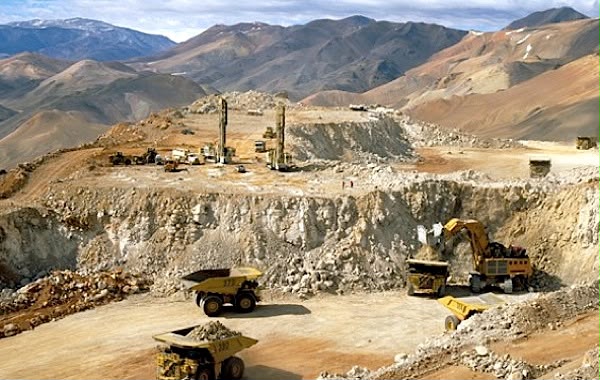
TANZANIA: THE global transition toward green energy is triggering a massive shift in Africa’s industrial landscape. No longer content with exporting raw, unprocessed commodities, Tanzania is transforming its industrial sector by shifting from raw mineral exports to domestic processing.
According to the Critical Minerals Outlook 2025, targeted incentives for cleaner nickel production could unlock sizeable supply volumes outside today’s dominant producers—namely Indonesia, the Philippines, and Russia— and successfully reduce global market concentration by 7 per cent by 2035. Driven by major projects like Kabanga Nickel Initiative and regional refining centres, the country banks on industrial nickel revolution to establish itself as a vital node in the global clean technology supply chain.
At the centre of this industrial revolution is a pioneering network of specialised domestic processing and refining facilities designed to upgrade raw ores into high-purity, market-ready materials right in the country. This strategic move aligns with national economic goals to foster domestic industrial revolution.
The physical footprint of this mineral revolution is strategically spread across multiple administrative hubs to logistically support diverse geological belts. Kabanga Extraction Site (Ngara District, Kagera Region) sits directly on one of the world’s richest unexploited high-grade nickel sulfide deposits.
Unlike oxidised nickel ores, nickel sulfides occur deep underground and are highly sought after because they are chemically easier and cheaper to process into the ultra-pure, battery-grade material needed for clean tech. Managed by Tembo Nickel Corporation, and following the delivery of its definitive feasibility study, partners execute early geotechnical works ahead of the final investment decision (FID) this year, kicking off extraction across an initial 18-year mine life.
Kahama Multi-Metal Refinery (Shinyanga Region) is situated 340 kilometres southwest of the mine within the Buzwagi Special Economic Zone (BSEZ). This facility serves as the industrial heart of the main project, utilising advanced chemical processes to turn raw concentrates into refined, high-purity metal.
Dodoma Processing Plant (Zamahero Village, Bahi District), developed by Zhongzhou Mining Co Ltd, targets regional mining output. It is designed to smelt about 300 tonnes of nickel and copper ore daily, having achieved advanced status to begin operations in February 2026.
Kibaha Sorting and Processing Plant (Kikongo, Kibaha District, Coast Region) development is spearheaded by Coast Nickel Industry Limited, a subsidiary of China’s Ningbo Shuangneng Group. It focuses on mechanical sorting, grading, and raw base-metal processing, having launched its operations in January 2026.
Speaking during a recent strategy interview, Lameck Masanja, the Resident Mines Officer (RMO) for Dar es Salaam and Coast regions, who leads a dedicated Mining Commission team of over 80 personnel stated that structural reforms in the mining sector yield clear benefits not only for the government, but directly for small-scale miners and local communities. He noted that the Dar es Salaam and Coast Region Mines Office functions as the Mining Commission’s strategic arm to coordinate and publicise opportunities in investment, logistics management, and transportation to local and international stakeholders.
He said the emergence of Tanzanian nickel comes at a critical moment for international markets. At a global level, demand is expanding rapidly, driven directly by the electric vehicle (EV) revolution and renewable energy storage systems. High-grade nickel is a fundamental component used in manufacturing high-density lithium-ion battery cathodes, alongside its traditional uses in heavy manufacturing, corrosion-resistant stainless steel, aerospace engineering, defence hardware, and digital infrastructure. This is evidenced in both Critical Minerals Outlook Report 2025 and World Investment Report 2026.
These projects position East and Southern Africa to challenge traditional, fragmented mineral supply corridors. By processing minerals domestically, Tanzania creates an integrated regional value chain that can connect with copper and cobalt networks in Zambia and the Democratic Republic of Congo (DRC). At East Africa level, this infrastructure turns the East African Nickel Belt into a competitive industrial tech hub that attracts transit corridors, heavy industrial machinery, and specialised engineering talent.
Tanzania’s entry into this market challenges the historical dominance of the world’s top nickel producers. Because of its vital economic importance and vulnerability to supply chain shocks, major international frameworks— including the US Department of Energy Critical Materials Assessment, the European Union Critical Raw Materials Act, and the Mineral Security Partnership (MSP)—officially classify nickel as a critical and strategic mineral.
Supported by strategic corporate partnerships, the primary institutional engine behind the venture is Tembo Nickel Corporation, a public-private joint venture owned 84 per cent by Lifezone Metals and 16 per cent by the Government of Tanzania as a statutory free-carried equity interest. The development phase is backed by a $100 million framework from global mining giant BHP Group and international social due diligence from the US International Development Finance Corporation (DFC).
A defining feature of the main Kabanga-Kahama project is its commitment to environmental sustainability through Lifezone’s proprietary Hydromet technology. Traditional nickel processing relies heavily on pyrometallurgical smelting, which burns fossil fuels at extremely high temperatures, releasing massive sulfur dioxide (SO₂) and carbon into the atmosphere.
ALSO READ: Powering Tanzania’s future through strategic energy investment and infrastructure growth
In contrast, the Hydromet process is an advanced hydrometallurgical method that uses water-based chemistry to extract and refine metals. By operating at significantly lower temperatures and trapping by-products in a closed-loop system, this technology eliminates toxic smokestack emissions, slashes carbon footprint output by up to 73 per cent compared to traditional smelting, and uses significantly less power. This clean-tech profile ensures that Tanzanian nickel meets the strict environmental, social, and governance (ESG) standards required by major global EV manufacturers. This comprehensive transition to domestic mineral refining directly implements the core pillars of the Tanzania Development Vision 2050. It supports Tanzania’s strategic roadmap to construct a one trillion-dollar national economy by mid-century by shifting the country from a primary resource exporter to an advanced manufacturing hub.
The global precedent for this strategy is well established. According to the World Investment Report 2026, Indonesia successfully shifted from exporting raw nickel ore to building a domestic processing and battery materials hub based on its 2020 ban on raw nickel exports.
The report highlights: “Between 2019 and 2022, FDI in the mining sector rose by more than 200 per cent, and Indonesia emerged as a major global hub for nickel processing, illustrating how export leverage combined with infrastructure and policy coordination can drive downstream investment when supported by strong resource endowments.”
By mirroring this blueprint through coordinated policy and localised refining, Tanzania is securely positioning its citizens to cash in on the green tech economy of tomorrow.


References:
Lollybet Bonus ohne Einzahlung http://clients1.google.no/url?q=https://lollybet.com.de/
References:
Candy96 Casino com http://slprofessionalcaregivers.lk
References:
Candy96 referral code https://fanajobs.com/profile/britthawdon13
References:
Winnita Casino App careers.cblsolutions.com
References:
Jet Casino Bewertung https://secure.jugem.jp/utf/?mode=gallery&act=list&thumbnail=1&domain=heres.link/tedomm5466164
References:
Candy96 Casino loyalty jobs.maanas.in