

TZ, Afreximbank’s shared vision for growth through affordable finance
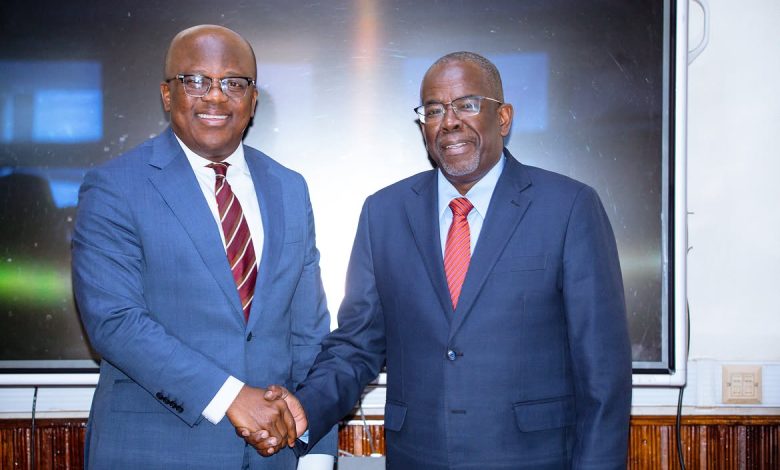
DAR ES SALAAM: THE recent meeting between Tanzania’s Minister for Finance, Ambassador Khamis Mussa Omar and the African Export-Import Bank (Afreximbank) Africa Regional Director, Humphrey Nwugo, signifies more than just a routine diplomatic visit.
It indicates a strategic alignment between Tanzania’s longterm development goals and the interests of one of Africa’s foremost development finance institutions.
As Tanzania works towards realising Vision 2050 and aims to become a one trillion-dollar economy by 2050, the government acknowledges that achieving this goal requires more than sound macroeconomic policies.
Success depends on mobilising substantial long-term capital, enhancing industrial capacity, expanding exports and investing in transformative infrastructure projects.
In this context, Tanzania’s choice, among other financiers, to make Afreximbank a key strategic partner is both economically prudent and developmentally important.
During the meeting, the minister expressed support for Afreximbank’s plan to mobilise an extra 1 billion US dollars (about 2.62tri/-) for investments in Tanzania over the coming year, focusing on manufacturing, infrastructure, and Small and Medium Enterprises (SMEs), key sectors aligned with Vision 2050 and the Fourth FiveYear Development Plan.
Economically, Tanzania aims to reach a trillion-dollar GDP, but this will require decades of sustained high growth, driven by increased investment, productivity, exports and value addition. Relying solely on public resources will not be enough.
While domestic revenue mobilisation has significantly improved, fiscal resources are still limited due to competing priorities such as education, health, social protection and climate resilience.
Therefore, Development Finance Institutions (DFIs) such as Afreximbank are essential because they provide patient, longterm capital that commercial lenders often cannot or are unwilling to offer for large strategic projects.
Tanzania considers Afreximbank a key strategic partner because of its proven commitment to financing transformative infrastructure projects.
The bank, looking at its history, has already issued an 800 million US dollars (about 2.1bn/- ) guarantee for the Julius Nyerere Hydropower Project and around 700 million US dollars (about 1.83bn/-) to fund various phases of the Standard Gauge Railway (SGR).
It has also provided financing to commercial banks and the private sector to support productive investment.
These interventions demonstrate Afreximbank’s capacity to fund projects that boost productivity, reduce business expenses, improve regional connectivity and support long-term economic competitiveness.
Industrialisation is a key focus of Tanzania’s Vision 2050, and here, Afreximbank’s strengths are especially applicable. Economic transformation involves moving from exporting raw materials to developing higher-value manufactured products.
The minister and Afreximbank focused on manufacturing, mining, oil, iron ore, soda ash and value addition as key sectors for upcoming financing efforts.
Promoting these industries aims not only to diversify exports but also to boost local production, create skilled jobs and reduce reliance on imports.
This structural transformation is essential if Tanzania is to sustain the higher growth rates required to reach a trillion-dollar economy.
Afreximbank plays a crucial role in supporting private sector growth. While Vision 2050 aims for a competitive, private sectorled economy, Tanzanian businesses, especially SMEs still face significant challenges in obtaining affordable, long-term financing.
By increasing credit facilities, trade finance, guarantees, and investment capital, Afreximbank helps firms modernise production, adopt new technologies, expand exports and join regional and global value chains. Enhanced access to finance can also promote entrepreneurship, drive innovation and boost productivity in vital sectors of the economy.
Trade expansion is a key aspect of the partnership. As Africa’s leading trade finance institution, Afreximbank is well-placed to assist Tanzania in leveraging opportunities from the African Continental Free Trade Area (AfCFTA).
By offering trade finance, export credit, payment solutions and guarantees, the bank will support the Tanzanian private sector and SOEs operating in joint ventures or Public-Private Partnerships (PPPs) in entering new African markets and reducing barriers across the continent.
This boost in exports can improve foreign exchange earnings, the balance of payments, and resilience to external shocks, all of which are vital for long-term economic growth.
The proposed partnership enhances Tanzania’s capacity to attract investment without heavily increasing public debt.
Instead of relying solely on sovereign borrowing, the government can use Afreximbank’s financial tools, such as guarantees, syndicated loans, structured finance and blended finance to attract private-sector investment into key sectors.
This strategy diversifies funding sources, improves risk distribution and supports the delivery of impactful projects, all while maintaining prudent fiscal discipline.
Additionally, Afreximbank’s support goes beyond funding specific projects; it fosters the development of vibrant economic ecosystems.
Investments in transport corridors, energy infrastructure, logistics, industrial parks and trade facilitation create multiplier effects in sectors such as agriculture, manufacturing, tourism, mining, and services.
These investments reduce transaction costs, enhance competitiveness, and attract both domestic and international investment, ultimately increasing the economy’s productive capacity over time.
The partnership is also timely given the implementation of Tanzania’s Vision 2050 and the Fourth Five-Year Development Plan, in its first year. These frameworks prioritise industrialisation, infrastructure development, export competitiveness, human capital development, digital transformation, and private sector growth.
In any case that might be judged, the meeting showed a common understanding that reaching these goals depends on more than just financial resources.
It also requires innovative financing methods and institutional partnerships to mobilise long-term development capital.
However, to fully realise the partnership’s benefits, Tanzania needs to implement complementary domestic reforms. These include further improving the investment climate, strengthening project preparation capacity, particularly for projects seeking NPC endorsement, accelerating regulatory reforms, strengthening public-private partnerships and building a robust pipeline of bankable projects.
ALSO READ: Minister urges banks to support Vision 2050
Transparent procurement, efficient project execution, and solid governance are crucial to guarantee that Afreximbank’s financing yields tangible economic benefits. Likewise, ongoing efforts to bolster domestic financial institutions and capital markets will help Tanzania better utilise Afreximbank resources.
The partnership should be viewed as a component of a broader strategy for economic sovereignty. Development finance institutions such as Afreximbank provide Africa-driven solutions to the continent’s development challenges, reducing reliance on external funding and encouraging regional integration and industrial expansion.
Tanzania, in close partnership with Afreximbank, seeks to obtain patient capital that supports its national development objectives instead of prioritizing immediate commercial profits.
In the end, the recent interaction between the Ministry of Finance and Afreximbank goes beyond just financing; it signifies a strategic alliance for economic change.
Tanzania understands that achieving a one trillion-dollar economy depends on sustained investment in key sectors, including productive industries, modern infrastructure, export-driven businesses and competitive private companies.
Afreximbank’s proven dedication to securing additional funding, along with its successful track record of backing strategic initiatives, makes it a crucial long-term partner for Tanzania’s development.
If effectively leveraged alongside sound macroeconomic policies and ongoing structural reforms, this partnership could significantly accelerate Tanzania’s transition to one of Africa’s leading industrial and trading economies, thereby advancing the country’s Vision 2050 aspirations.




References:
Legiano Casino Mindesteinzahlung m.en.acmedelavie.com
References:
KingMaker Casino Einzahlung Willkommensbonus vnn.bio
References:
KingMaker Casino 10 Euro einzahlen https://mavlink.to
References:
KingMaker bonus aktivieren https://heres.link/quentin9722262
References:
KingMaker bonus code aktuell google.sc
References:
KingMaker einzahlung kreditkarte google.com.cy
References:
Monro Casino Bonus Bestandskunden adminer.org
References:
Hitnspin casino bewertung forum.bestflowers.ru
References:
Hit n spin bewertung analit.ru
References:
Hitnspin casino kundenbewertungen https://external.playonlinux.com/?url=https://bookmarkdaily.site/item/bonus-800-200-freispiele
References:
Hitnspin casino trustpilot https://slidesgo.com/editor/external-link?target=https://alstr.in/sctcornell6127
References:
Hitnspin casino auszahlungsdauer smartphone.ua
References:
Lollybet Casino No Deposit dlina.wiki.gwdg.de
References:
Lollybet Login http://cse.google.lv/url?q=https://bridgedesign.site/wiki/Deine_Online_Spielothek
References:
Lollybet Casino App Download http://www.google.ru
References:
Lollybet Slots https://toyhou.se/
References:
Hit and spin casino http://2ch.io/https://bridgedesign.site/wiki/HitnSpin_Alternative_Die_5_besten_Alternativen_hier_Mai_2026_hnliche_Casinos_hier
References:
Hit n spin casino clients1.google.com.cu
References:
Australian online pokies payid gitea.octifor.synology.me
References:
Payid online pokies australia https://www.workafrik.com/profile/kalaseeley2557
References:
Payid online pokies australia video.gictafrica.com
References:
Payid pokies aus atlantistechnical.com
References:
Lollybet Deutschland cse.google.co.mz
References:
Lollybet Casino Bonus ohne Umsatzbedingungen https://www.camtomycam.com/external_link/?url=https://famu.cc/kelleheck7457
References:
Lollybet Casino Mindesteinzahlung http://www.google.com.bd/url?q=https://bittyshort.com/arlettemoffat
References:
Lollybet Casino Bonus Code http://images.google.com.ua/
References:
Lollybet Erfahrungen http://maps.google.com.mm/url?sa=t&url=https://link.moumasiweb.com/hudsonbinette2
References:
Lollybet Test http://image.google.tk
References:
Lollybet Casino Blackjack cse.google.bs
References:
Lollybet Casino Bonusbedingungen https://showbiza.com/away/https://short.thejat.in/mercedes61k76
References:
Lollybet Casino Zahlungsmethoden http://www.google.cat/url?q=https://spd.link/milesvando
References:
Lollybet Casino Blackjack https://www.pixiv.net
References:
Lollybet Free Spins http://www.google.tt
References:
Alea casino nottingham academy.tatiosa.com
References:
Victoria casino london https://www.cbl.aero/employer/sofortige-auszahlungen-login/
References:
Lollybet Casino App Download http://sverdlovskfilmstudio.com
References:
Lollybet Casino Kundenservice https://ar.thefreedictionary.com
References:
Lollybet Casino Login https://mjjtop.com/steviebarone4
References:
Payid pokies aus http://kimberly-club.ru/bitrix/redirect.php?event1=&event2=&event3=&goto=https://instantcasinodeutschland.de/fr-fr/
References:
Online pokies with payid http://vmogagarinskiy.ru/bitrix/redirect.php?event1=&event2=&event3=&goto=https://instantcasinodeutschland.de/fr-fr/
References:
Erwin Casino Auszahlung https://atmasangeet.com/
References:
Candy96 casino login realestate.kctech.com.np
References:
Candy96 betting http://shiftlycrew.com/employer/candy96-casino-australia-your-premier-gaming-destination-down-under
References:
Quickwin Casino Auszahlung https://code.a100-cn.com:8081/karissabarracl?tab=repositories&sort=moststars
References:
Candy96 Casino download https://employmentabroad.com/
References:
Casino Bit Erfahrungen clients1.google.vu
References:
Candy96 Casino app for android http://fitnessfestival.co.kr