

Youths and clean cooking: The missing link in Africa’s Energy Future
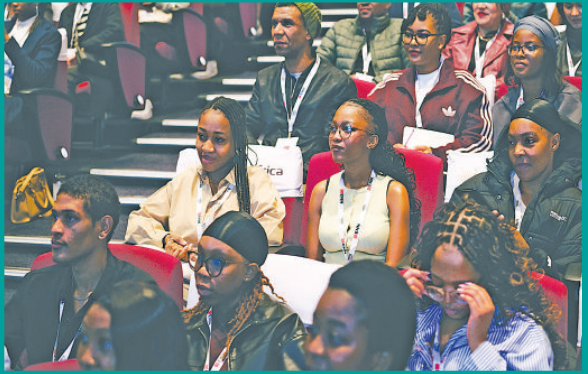
SOUTH AFRICA: AS Africa accelerates its energy transition, young people are emerging as critical drivers of innovation, entrepreneurship and community transformation.
Discussions at the Africa Energy Forum (AEF) increasingly highlight the importance of ensuring that the continent’s youthful population is actively involved in shaping energy solutions, particularly in the area of clean cooking.
Despite remarkable progress in renewable energy investments, nearly one billion Africans still lack access to clean cooking technologies, relying instead on firewood, charcoal and other traditional biomass fuels.
This challenge disproportionately affects women and girls, but it also presents a significant opportunity for young people to lead change through innovation, advocacy and enterprise development. Clean cooking is more than a household issue. It is directly connected to public health, environmental sustainability, gender equality and economic development.
The continued use of traditional cooking methods contributes to respiratory diseases, deforestation and lost educational and economic opportunities.
Expanding access to cleaner alternatives such as liquefied petroleum gas (LPG), electric cooking, ethanol and improved cookstoves is therefore essential for achieving inclusive growth across Africa. Young Africans are uniquely positioned to accelerate this transition.
With creativity, technological skills and growing entrepreneurial ambition, they are already establishing businesses that distribute clean cookstoves, develop digital payment solutions for energy access and educate communities on sustainable practices.
Their involvement not only addresses energy poverty but also creates employment opportunities in a rapidly expanding green economy.
Recent international initiatives have also emphasised the importance of mobilising investments for clean cooking. Global partners and African governments have committed new resources to scale up access, recognising that clean cooking must receive the same urgency as electricity access.
ALSO READ: Dar to host global marine conservation summit
The momentum generated through international forums demonstrates that solving Africa’s cooking energy challenge requires strong collaboration among governments, the private sector, civil society and, importantly, young people.
The Africa Energy Forum provides a valuable platform for amplifying youth voices in these conversations. By investing in youth-led enterprises, supporting innovation hubs and integrating young leaders into policy discussions, Africa can build an energy future that is both sustainable and inclusive.
Clean cooking should not be viewed merely as a social intervention, but as a strategic economic opportunity capable of generating jobs, improving health outcomes and protecting the environment. Ultimately, empowering young people to champion clean cooking solutions is an investment in Africa’s longterm prosperity.
The continent’s energy transition will succeed not only through large-scale infrastructure projects, but also through community-driven innovations that transform everyday lives. The future of clean cooking in Africa, therefore, depends on the energy, ideas and determination of its youths.




References:
Lollybet Casino Bonus ohne Einzahlung forexsklad.org
References:
Lollybet Casino Auszahlungsdauer http://clients1.google.com.om/
References:
%random_anchor_text% https://worship.com.ng/prestongrose4/recently
References:
High Roller Casino Auszahlung https://megane2.ru/
References:
Candy96 Casino withdrawal https://werkstraat.com/companies/candy96-online-casino-adventure
References:
Candy96 Casino welcome offer http://guilairo520.gain.tw/viewthread.php?tid=531073