TR warns underperforming public entities

DAR ES SALAAM: THE government has issued a stern warning to underperforming public entities, urging them to urgently improve their performance or face tougher action, including possible restructuring for persistently poor results.
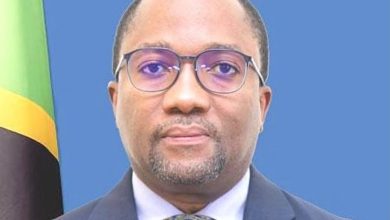
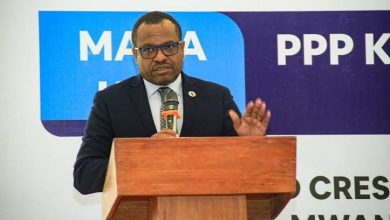
The warning was issued by the Treasury Registrar, Nehemiah Mchechu during a special interview in Dar es Salaam over the weekend ahead of Gawio Day, scheduled for State House on tomorrow. Mr Mchechu said all public entities required to remit dividends and statutory contributions must comply on time, noting that delays deprive the government and citizens of critical revenue.
“Public entities do not belong to boards or management teams. They are public assets held in trust by the government. Returning what rightfully belongs to citizens is, therefore, not a favour, but an obligation,” he said.
He stressed that leaders of public entities must meet profitability targets set for their institutions to maximise their contribution to the national economy.
“Our institutions must meet the profit targets we set. Any leader who consistently fails to deliver dividends over a prolonged period is simply not fit for the job,” he warned.
Mr Mchechu also cautioned against borrowing to finance dividend payments or statutory contributions, saying such practices distort the true financial performance of institutions.
“If you borrow money simply to pay dividends or other government contributions, you are misleading the government and ultimately deceiving yourself,” he said. On whether underperforming entities could be dissolved following the dividend exercise, he clarified that mergers or dissolution follow a structured review process and are not based solely on Gawio Day outcomes. “We do not dissolve institutions based on Gawio Day results. We first allow time for improvement and only take action if there is no meaningful progress,” he said.
During the 2024/25 financial year, the Office of the Treasury Registrar (OTR) collected 1.028tri/- in dividends and other contributions from public entities and companies in which government holds minority shares, the highest level since its establishment in 1959. Despite the record performance, Mr Mchechu said there is still significant untapped potential if efficiency and oversight are further strengthened.
He said OTR expects improved performance in the current financial year and anticipates breaking last year’s record.
“We are entering the new financial year with renewed determination. We expect to break last year’s record this year and set an even higher benchmark next year,” he said.
His remarks echo those of the Minister of State in the President’s Office (Planning and Investment), Professor Kitila Mkumbo, who recently warned that persistently underperforming public entities risk merger or dissolution if they fail to improve.
Prof Mkumbo said it was unacceptable for some institutions to continue failing to pay dividends despite significant public investment. He said the government would allow time for improvement before taking corrective measures, including restructuring where necessary.
ALSO READ: Perseus Mining injects 457.7bn/- into TZ ahead of gold output
“It is better to have fewer commercial public entities that consistently deliver meaningful returns than many that fail to perform,” he said.
According to OTR, the government holds shares in 308 public institutions and companies, of which 91 are commercial entities and 217 are non-commercial service delivery institutions.
Prof Mkumbo said the government expects greater returns from the 92.3tri/- invested in public institutions and enterprises. OTR said it is continuing to strengthen performance management systems to improve efficiency and returns from public investments.
Director of Performance Management, Monitoring and Evaluation for Commercial Public Entities, Lightness Mauki, said effective performance management is key to transforming public institutions.
“We believe effective performance management is the foundation for sustainable transformation across public institutions and enterprises,” she said.
She added that stronger oversight would improve productivity, boost economic growth and increase both tax and non-tax revenues. Meanwhile, Director of Non-Commercial Public Entities, David Shambwe said although non-commercial institutions are not profit-oriented, they must still ensure efficiency and value for money.
“Our goal is to ensure noncommercial public entities deliver high-quality and impactful services that meet citizens’ expectations,” he said. He added that improved monitoring and evaluation systems will enhance accountability and ensure public resources are used efficiently for national development.